
Completed Projects
Happy Customers
Projects in Progress
New Orders This Week
Why Steel Works in Georgia
Steel works in Georgia because every frame is engineered to the loads of its own county, and those loads change between the coast and the mountains. Our steel buildings ship with PE-stamped drawings showing those numbers, so metal buildings in Georgia are designed for Brunswick wind or north Georgia ice, not a statewide average.
Wind reaches the drawings as a design wind speed and exposure category under ASCE 7, set for your site. Tropical storms do not stop at the shoreline. In 2018 Hurricane Michael crossed into Seminole County as a Category 3 storm, the first major hurricane to hit Georgia directly since the 1890s, according to the National Weather Service. Six years later, Hurricane Helene brought hurricane-force gusts to the Valdosta area and to Augusta, by the National Hurricane Center’s report on the storm. No building can promise to ride out every storm; the frame is engineered to the design wind speed of your county. Tornadoes happen here too, and a design wind speed is not a tornado rating.
Georgia’s damp climate works on a building all year. The state falls in the “very heavy” zone of the termite infestation probability map in the International Residential Code, and a steel frame gives termites nothing to eat. Galvanized panels stand up to the humidity. Heat is a comfort issue more than a structural one: an uninsulated steel shell gets hot in July, so many owners add insulation and vents. Our guide to insulating a metal building covers the options.
Winter matters in the north. Snow falls on about five days a year in the northeast Georgia mountains, by the National Weather Service climate summary for the region, and the same office lists ice storms among its winter threats. Snow and ice loads for mountain sites are calculated the same way as wind. How the engineering feeds your permit is covered in the codes and permits section below.
Georgia at a Glance
What We Engineer for:
Design wind speed calculated for each county under ASCE 7
Galvanized panels for Georgia’s damp summers
Steel frames are not a food source in a “very heavy” termite zone
Loads for north Georgia mountain sites, calculated per site
Design wind speed is not a tornado rating; a storm shelter is a separate structure
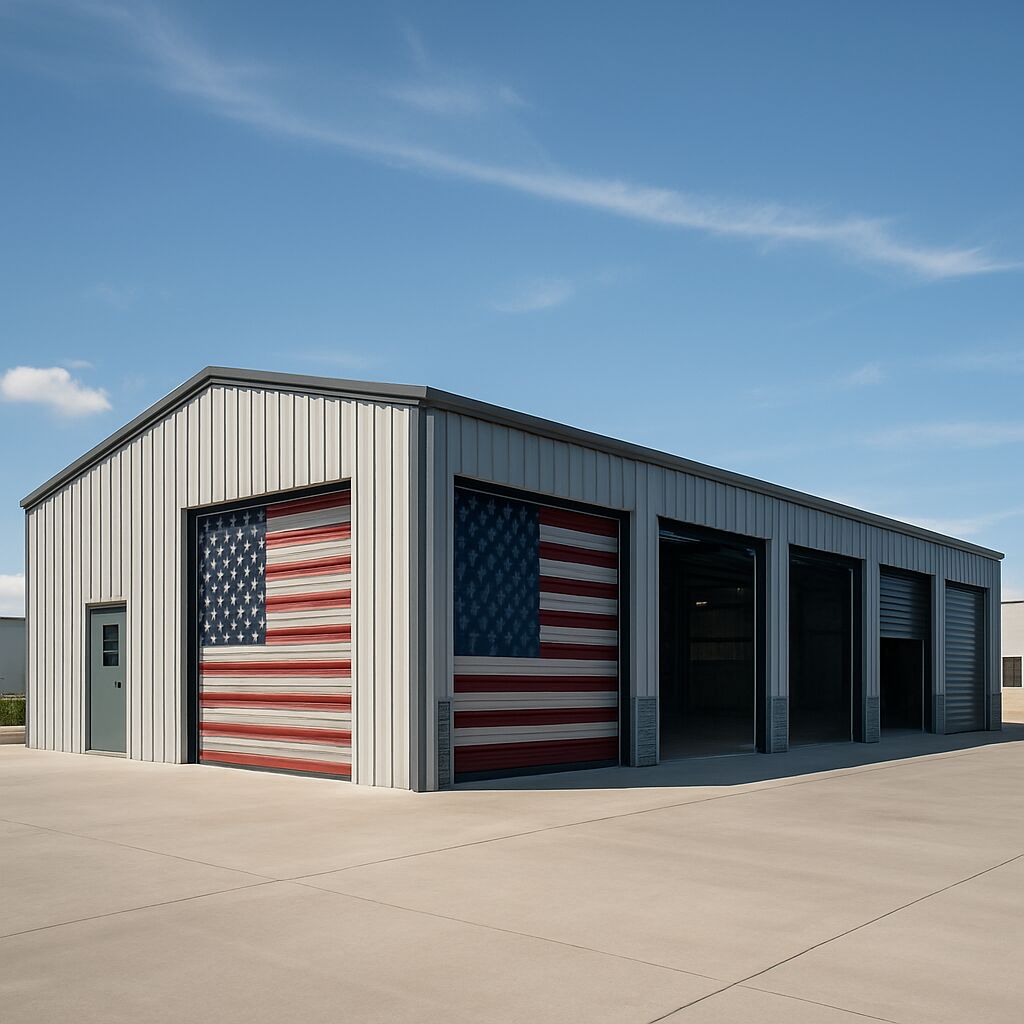
Building Codes and Permits in Georgia

Georgia’s statewide minimum codes are the Georgia State Minimum Standard Codes for Construction, maintained by the Department of Community Affairs (DCA). The building code in that set is the 2024 International Building Code with Georgia Amendments, in effect since January 1, 2026, and that edition takes its wind loads from ASCE 7-22. Your PE-stamped set lists the design wind speed and exposure category used for your county.

The owner or the owner’s contractor pulls the permit; we don’t. Under Georgia law the mandatory state codes apply to all construction, whether or not the local government enforces them. Permits and inspections come from your city or county. In unincorporated Chatham County, for example, that office is Chatham County Building Safety & Regulatory Services. We supply the documents building departments ask for: PE-stamped drawings, load calculations and specifications. Your building department is the authoritative source.

On the coast around Savannah and Brunswick, the engineer checks the code’s coastal wind provisions, including whether the site falls in a wind-borne debris region, and sizes the anchorage for uplift. Salt air is one more reason to stay with galvanized steel. In the mountain counties, the roof is designed for the snow and ice loads of the site. To protect people from tornadoes, build a storm shelter to ICC 500 or FEMA P-361 as a separate structure.

Look up your parcel on the FEMA Flood Map Service Center before ordering. Inside a Special Flood Hazard Area, expect the building department to require flood-zone elevation and anchoring on top of wind design. Name the flood zone when you request a quote and we will engineer the anchorage for it. Don’t count on a farm exemption: Georgia’s covers only NRCS-designed structures on a farm used for manure storage, animal mortality composting or winter feeding.
Georgia’s statewide minimum codes are the Georgia State Minimum Standard Codes for Construction, maintained by the Department of Community Affairs (DCA). The building code in that set is the 2024 International Building Code with Georgia Amendments, in effect since January 1, 2026, and that edition takes its wind loads from ASCE 7-22. Your PE-stamped set lists the design wind speed and exposure category used for your county.
The owner or the owner’s contractor pulls the permit; we don’t. Under Georgia law the mandatory state codes apply to all construction, whether or not the local government enforces them. Permits and inspections come from your city or county. In unincorporated Chatham County, for example, that office is Chatham County Building Safety & Regulatory Services. We supply the documents building departments ask for: PE-stamped drawings, load calculations and specifications. Your building department is the authoritative source.
On the coast around Savannah and Brunswick, the engineer checks the code’s coastal wind provisions, including whether the site falls in a wind-borne debris region, and sizes the anchorage for uplift. Salt air is one more reason to stay with galvanized steel. In the mountain counties, the roof is designed for the snow and ice loads of the site. To protect people from tornadoes, build a storm shelter to ICC 500 or FEMA P-361 as a separate structure.
Look up your parcel on the FEMA Flood Map Service Center before ordering. Inside a Special Flood Hazard Area, expect the building department to require flood-zone elevation and anchoring on top of wind design. Name the flood zone when you request a quote and we will engineer the anchorage for it. Don’t count on a farm exemption: Georgia’s covers only NRCS-designed structures on a farm used for manure storage, animal mortality composting or winter feeding.
Steel Buildings We Deliver Across Georgia

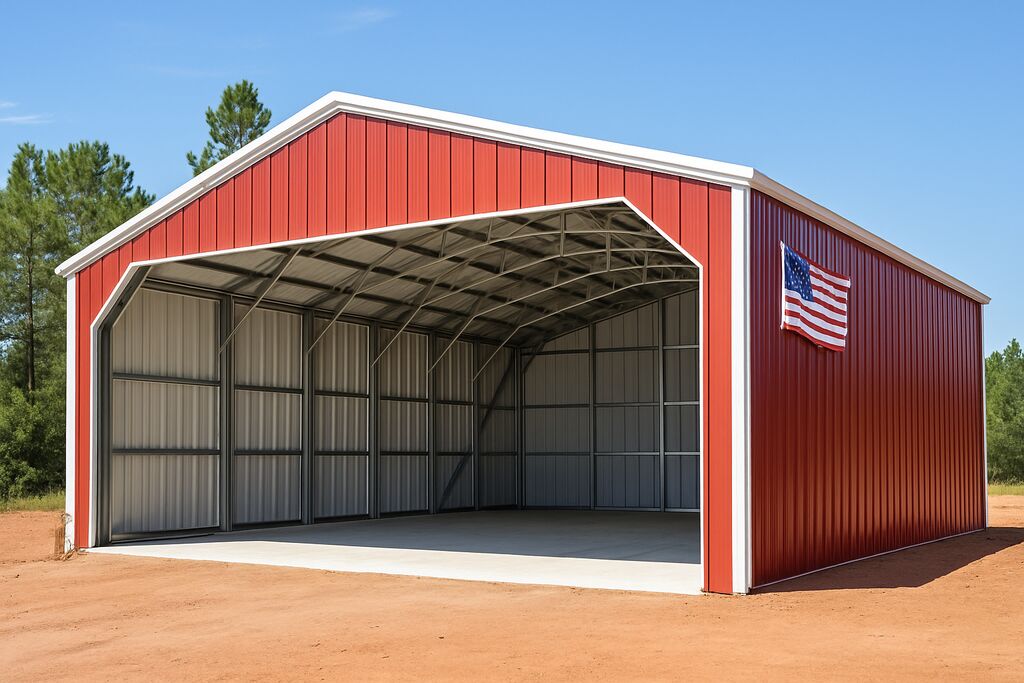
What a Steel Building Costs in Georgia
Size sets most of the price of steel buildings in Georgia; the engineering your county requires and the finish level you choose move it from there. Engineering weighs more at the edges of the state: coastal sites get extra checks for wind and uplift, and mountain sites add snow and ice to the roof design. Your quote is exact for your configuration and your county.

Footprints from 20×20 to 30×40 cover garages and small shops. The 30×50 to 40×80 range fits workshops, small commercial buildings, equipment sheds and fellowship halls for smaller congregations. From 60×80 up you are pricing warehouses, distribution buildings, church halls without interior columns and large farm buildings.
A building for a coastal county, or for a mountain lot that carries snow and ice, can need a heavier frame and more anchorage than the same footprint in Macon, and the kit price follows the steel. Two metal buildings in GA with identical dimensions can be priced differently for that reason. Always give us your county with the quote request.
A bare kit with frame, roof and walls is the entry tier. Insulation, roll-up doors, walk doors, windows and liner panels each move the total up. If you want dollar figures before you call, our metal building cost guide breaks them down by size.
Footprints from 20×20 to 30×40 cover garages and small shops. The 30×50 to 40×80 range fits workshops, small commercial buildings, equipment sheds and fellowship halls for smaller congregations. From 60×80 up you are pricing warehouses, distribution buildings, church halls without interior columns and large farm buildings.
A building for a coastal county, or for a mountain lot that carries snow and ice, can need a heavier frame and more anchorage than the same footprint in Macon, and the kit price follows the steel. Two metal buildings in GA with identical dimensions can be priced differently for that reason. Always give us your county with the quote request.
A bare kit with frame, roof and walls is the entry tier. Insulation, roll-up doors, walk doors, windows and liner panels each move the total up. If you want dollar figures before you call, our metal building cost guide breaks them down by size.
Georgia Cities We Deliver to
Delivery and installation is statewide. These cities have a dedicated page with local permitting detail.
If your city isn’t listed, we still deliver to it. Call (888) 415-1576 or use the quote form above.
How Georgia Owners Use Steel Buildings by Region
Metro Atlanta and the I-75/I-85 corridors (Fulton, DeKalb, Gwinnett, Cobb counties)
Commercial buildings are the main interest in the metro. Hartsfield-Jackson was the world’s busiest passenger airport in 2025 by the count of Airports Council International, and the freight and service companies working around it and along I-285 and I-85 need distribution space and contractor shops. Churches are the other steady group: a congregation that has outgrown a rented room usually wants a hall with no interior columns. Self-storage is a business of its own here, and our metal storage unit kits show the unit layouts. In the metro, span and door sizes tend to shape the frame as much as the loads do.
See also: Commercial metal buildings · Metal office buildings
North Georgia and the mountains (Hall, Forsyth, Cherokee, Gilmer, Habersham counties)
North of the metro, farms and mountain land share the same counties. Gainesville, the Hall County seat, calls itself the Poultry Capital of the World, and poultry operations need equipment and feed storage next to the houses. Horse country starts close to Atlanta: Milton, at the north end of Fulton County, has a city committee for its equestrian community. On mountain lots in Gilmer and Habersham, some owners want a barn and a place to stay under one roof, and our barn with living quarters option does exactly that. Every drawing set for this region includes the snow and ice loads of the site.
See also: Horse barns and stables · Riding arenas
Middle and South Georgia farm belt (Macon, Columbus, Albany, Tifton, Valdosta)
Row crops decide what gets built in middle and south Georgia. The state leads the country in peanut production, according to USDA’s Economic Research Service, and cotton and pecans grow on many of the same farms. On the farm that means tractor sheds and hay storage; in Macon, Columbus and Albany it means shops and small commercial buildings. Pole barns in Georgia farm country are the traditional low-cost option, and owners who plan to live on the land often compare a pole barn house with a steel barndominium. Our pole barn house cost and plans guide covers that choice.
See also: Metal hay barns · Tractor barns
Coastal Georgia (Savannah, Brunswick; Chatham, Bryan, Glynn, Camden counties)
The coast is port country. Garden City Terminal at the Port of Savannah is the largest single-terminal container facility in North America, per the Georgia Ports Authority, and storage and distribution space follows the containers inland. If you are planning metal buildings in Savannah, GA, for that kind of use, our warehouse cost guide gives price ranges by size. Engineering here checks the coastal wind provisions and uplift, and galvanized panels handle the salt air. Check the flood map before you settle on a marsh-side parcel. Boat storage and recreational buildings are the other common coastal project.
See also: Metal warehouses · Recreational steel buildings
What can we design for you today?
Talk to a building specialist to learn more!
Design Your Building NowFrequently Asked Questions
Yes. Every building we engineer for Georgia meets the Georgia State Minimum Standard Codes adopted by the Department of Community Affairs, which currently means the 2024 International Building Code with Georgia Amendments, in effect since January 1, 2026. Cities and counties can add stricter requirements of their own, so tell us where the building will stand and the drawings will follow what that building department enforces.
It is engineered for the design wind speed of your county under ASCE 7-22, which is not the same as surviving any storm. Coastal sites also go through the code’s coastal wind checks. No ordinary building, steel or wood, is designed for a direct tornado strike; protecting people is the job of a storm shelter built to ICC 500 or FEMA P-361. Our article on whether a barndominium can withstand a hurricane goes further.
Usually yes, and the permit comes from your city or county, so ask them before you order. Georgia’s mandatory minimum codes apply to all construction in the state whether or not the local government enforces them, but who issues permits and what gets inspected depends on the jurisdiction. A parcel in a mapped flood zone can need floodplain review as well. State law exempts only a narrow group of farm structures, so a barn or shop should not be assumed exempt.
Yes. We deliver across Georgia, from Savannah and Brunswick to the farm country around Tifton and Valdosta, and coastal buildings are engineered to their county’s wind loads before the kit ships. Rural drops take more coordination, since truck access and county roads differ from parcel to parcel. We confirm your delivery window and site logistics when your order is finalized. Give us the nearest town and the road type with your quote request.
No, neither. We are a dealer of pre-engineered steel building kits made from American steel, in business since 2005, and Georgia orders are handled by our main office in Fort Lauderdale, Florida. Every drawing set carries the stamp of a licensed professional engineer. We supply the engineering, the kit and delivery; your crew or a local erector puts the building up. If you want installation arranged, ask when you request your quote. That is also the honest answer if you searched for metal building manufacturers in Georgia.
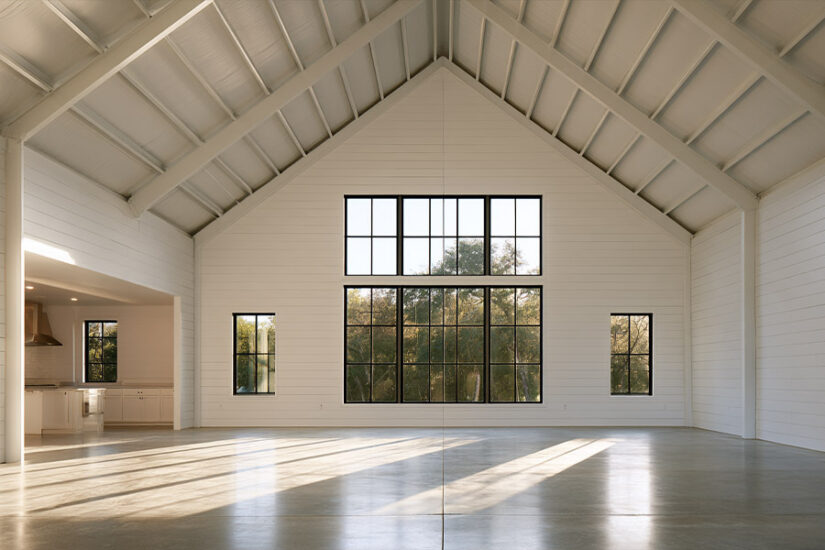
Barndominium Interior Ideas for a Steel-Frame Home
Quick Answer Barndominium interior ideas that hold up start with what the steel frame allows: an open floor with no load-bearing interior walls, and enough height for a loft or a vaulted great room. Behind the finishes, insulation and moisture control keep the rooms dry, and a separation wall divides living space from any shop. […]
Read Article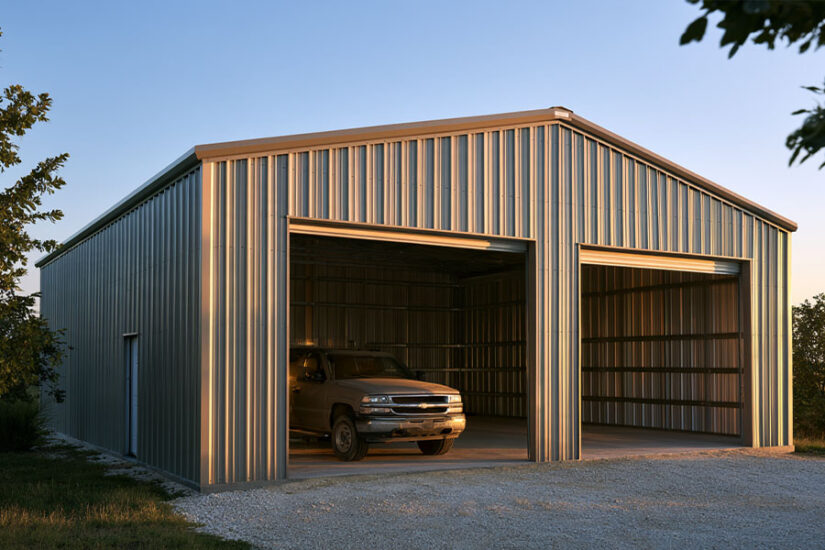
Standard Garage Sizes: 1-, 2- and 3-Car Garage Dimensions
Quick Answer Standard Garage Sizes at a Glance When people say “standard garage size,” they usually mean a two-car garage, and that is what most new houses get. In 2025, 64% of newly completed single-family homes had a two-car garage, according to the Census Bureau’s Characteristics of New Housing data. Garages for three or more […]
Read Article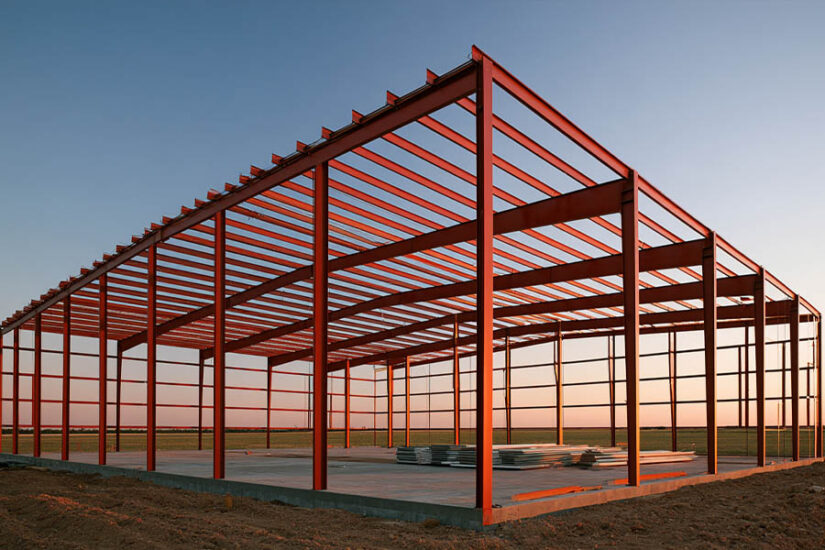
What is a PEMB (Pre-Engineered Metal Building)?
Quick Answer What PEMB Stands for, and What the Industry Actually Calls it PEMB stands for pre-engineered metal building. Contractors and building officials use the acronym for a low-rise steel building that one manufacturer designs and supplies as a complete structural package. The same product appears in quotes under other names too: pre-engineered steel building, […]
Read Article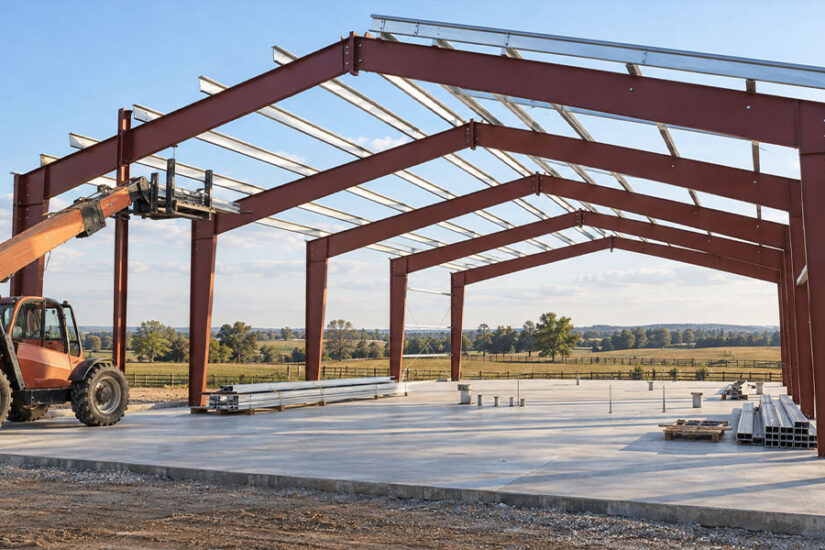
Red Iron Steel Buildings Explained
Quick Answer What Red Iron is and Where the Name Comes From Dealers and classified ads use “red iron” as if it were a material you could order by name. It isn’t. It’s trade shorthand for the heavy structural steel in the primary frame of a metal building, and the phrase stuck because the parts […]
Read Article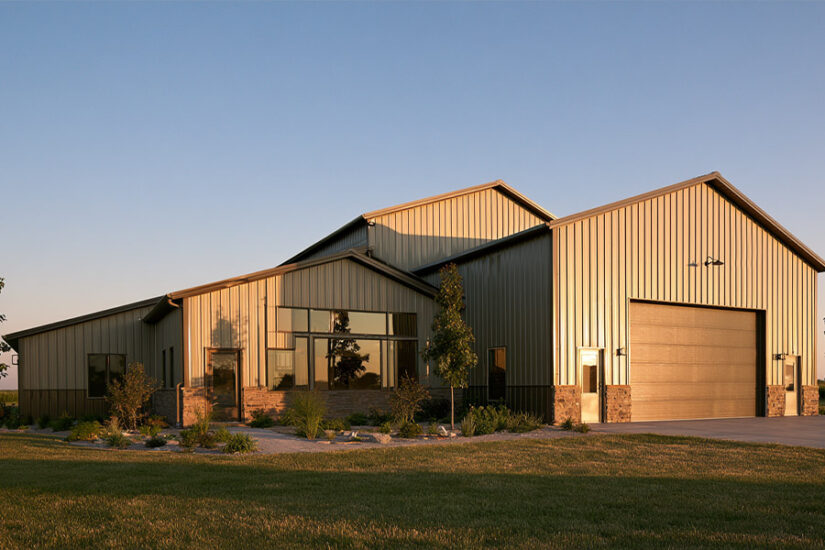
How Much Does it Cost to Build a Barndominium in 2026?
How much does it cost to build a barndominium? Nationally in 2026, a fully turnkey build with standard finishes runs $65 to $160 per square foot, and the steel or post-frame shell alone, the kit plus on-site assembly, runs $30 to $50 per square foot before any interior work starts (Source: HomeGuide, 2026). For a […]
Read Article
How Long Do Metal Roofs Last?
Quick Answer Types of Metal Roofing Panels and Why the Fastening System Matters Panel profile decides how a roof looks. Fastening system decides how long it holds up, and that second factor does more to separate the low end of the 30-to-50-plus-year range from the high end than the choice of steel itself. Three fastening […]
Read Article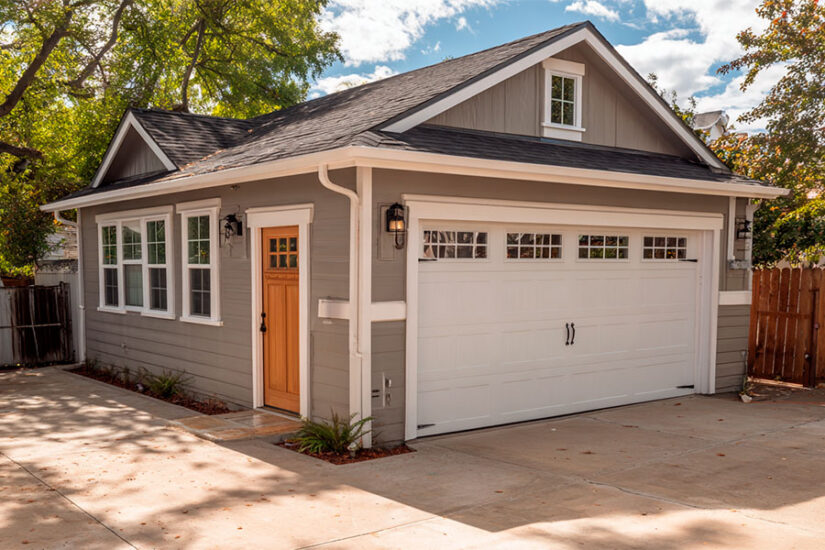
How to Convert a Garage into Living Space: A 2026 Cost and Code Guide
Converting a garage into living space is the process of insulating, sealing, finishing, and reclassifying a garage so it can be permitted and used as a bedroom, home office, family room, or accessory dwelling unit (ADU). The work costs $15,000 to $60,000 in most US regions in 2026, depending on scope, takes 3 to 10 […]
Read Article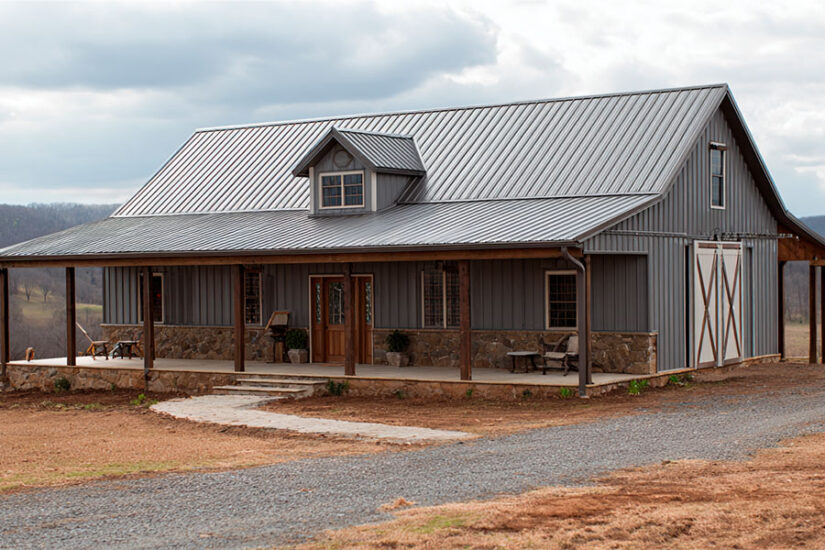
Pole Barn Houses: Costs, Plans, and What They Actually Are in 2026
A pole barn house is a residential home built on a post-frame structure: pressure-treated wood columns set into the ground or onto concrete piers, with a wood truss roof and metal sheeting for the walls and roof. It is closely related to the barndominium but distinct in one important way. A barndominium uses steel framing […]
Read Article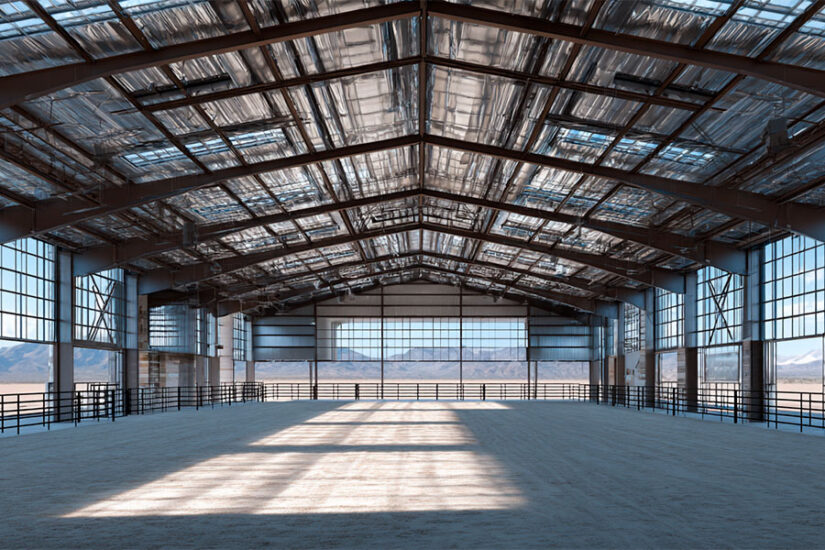
How to Build a Horse Arena: The Owner’s Practical Guide for 2026
The short version of building a horse arena: pick the site carefully, pull the permits, hand off the technical work to people who do it for a living, write a lot of checks, and wait eight to sixteen weeks for an indoor build (three to six for outdoor) before the first horse walks on the […]
Read Article