
Completed Projects
Happy Customers
Projects in Progress
New Orders This Week
Why Steel Works in Florida
Florida’s building environment is harder on structures than most of the country. The combination of hurricane-force winds, year-round humidity, salt air in coastal counties, and an aggressive insect population rules out wood framing for anyone who wants a building that holds up without constant upkeep.
Pre-engineered steel frames solve the main problem directly: they’re designed to a specific wind speed before production starts. For a building in Miami-Dade County, that design wind speed is higher than in Alachua County – and both are higher than a building in Ohio. We calculate the correct wind exposure category and design wind speed for your county and embed those numbers in the PE-stamped drawings that ship with your kit.
Galvanized steel panels resist the corrosion cycle that eats through unprotected metals in Florida’s climate. Salt-laden air near the coast accelerates rust on bare steel; galvanized coatings interrupt that process at the mill, before the panels are ever exposed to Florida air.
For the permitting side of the equation – Florida Building Code requirements, special county-level provisions, and what we supply for your permit application – see the codes and permits section below.
Florida at a Glance
What We Engineer for:
Design wind speeds up to 175 mph in High-Velocity Hurricane Zones
Year-round high humidity – galvanized panels as standard
Salt air in coastal counties – additional corrosion-resistance
Steel frames are not a food source for termites or carpenter ants
No snow load requirement in most of the state
Building Codes and Permits in Florida

Florida buildings are designed to the Florida Building Code (FBC), which adopts and modifies ASCE 7 wind load requirements. The state is divided into wind speed zones. High-Velocity Hurricane Zones (HVHZ) – primarily Miami-Dade and Broward counties – carry the most demanding design wind speeds in the continental U.S. Your PE drawings specify the design wind speed for your county.

The property owner or the general contractor typically pulls the building permit. We supply the documentation most Florida building departments require: PE-stamped structural drawings, load calculations, and project specifications. Some counties may ask for additional items; your local building department is the authoritative source.

Products installed in Miami-Dade County may require Miami-Dade Notice of Acceptance (NOA) or Florida Product Approval (FPA) for specific components. This is separate from the structural drawings requirement. Ask your county building department what product approvals apply to your building type before ordering.

Many Florida counties include FEMA flood zones. If your parcel is in a Special Flood Hazard Area (SFHA), the building department will typically require the structure to meet flood-zone elevation and anchoring standards in addition to standard wind requirements. We can engineer to flood-zone anchoring requirements – tell us your parcel’s flood zone designation when you request your quote.
Florida buildings are designed to the Florida Building Code (FBC), which adopts and modifies ASCE 7 wind load requirements. The state is divided into wind speed zones. High-Velocity Hurricane Zones (HVHZ) – primarily Miami-Dade and Broward counties – carry the most demanding design wind speeds in the continental U.S. Your PE drawings specify the design wind speed for your county.
The property owner or the general contractor typically pulls the building permit. We supply the documentation most Florida building departments require: PE-stamped structural drawings, load calculations, and project specifications. Some counties may ask for additional items; your local building department is the authoritative source.
Products installed in Miami-Dade County may require Miami-Dade Notice of Acceptance (NOA) or Florida Product Approval (FPA) for specific components. This is separate from the structural drawings requirement. Ask your county building department what product approvals apply to your building type before ordering.
Many Florida counties include FEMA flood zones. If your parcel is in a Special Flood Hazard Area (SFHA), the building department will typically require the structure to meet flood-zone elevation and anchoring standards in addition to standard wind requirements. We can engineer to flood-zone anchoring requirements – tell us your parcel’s flood zone designation when you request your quote.
Steel Buildings We Deliver Across Florida

What a Steel Building Costs in Florida
Steel building prices vary by three main inputs: the size of the footprint, the engineering requirements at your location, and the finish level you choose. Florida adds a layer most inland states don’t have: coastal and high-wind zones drive up the steel weight in the frame.

Basic enclosed structures in the 20×20–30×40 range are the most common entry point for residential buyers.
Mid-range footprints in the 30×50–40×80 range suit horse barns, two-bay workshops, and small commercial uses.
Large commercial, equestrian facilities, and warehouses typically start at 60×80 and above.
Buildings in HVHZ (Miami-Dade, Broward) are engineered to higher wind speeds than central or north Florida. That engineering is reflected in the frame weight and the kit price. A building quoted for Tampa Bay will differ from the same footprint quoted for Key West. Always provide your county when requesting a quote.
A bare structural kit – walls, roof, and framing – is the lowest-cost entry point. Insulation, windows, walk doors, overhead doors, and interior liners add to the total. Tell us what you want included and we’ll price each item separately.
Basic enclosed structures in the 20×20–30×40 range are the most common entry point for residential buyers.
Mid-range footprints in the 30×50–40×80 range suit horse barns, two-bay workshops, and small commercial uses.
Large commercial, equestrian facilities, and warehouses typically start at 60×80 and above.
Buildings in HVHZ (Miami-Dade, Broward) are engineered to higher wind speeds than central or north Florida. That engineering is reflected in the frame weight and the kit price. A building quoted for Tampa Bay will differ from the same footprint quoted for Key West. Always provide your county when requesting a quote.
A bare structural kit – walls, roof, and framing – is the lowest-cost entry point. Insulation, windows, walk doors, overhead doors, and interior liners add to the total. Tell us what you want included and we’ll price each item separately.
Florida Cities We Deliver to
Delivery and installation is statewide. These cities have a dedicated page with local permitting detail.
If your city isn’t listed, we still deliver to it. Call (888) 415-1576 or use the quote form above.
How Florida Owners Use Steel Buildings by Region
South Florida (Miami-Dade, Broward, Palm Beach)
Steel dominates commercial and storage construction here for one reason: hurricane wind loads. Wood frame structures in HVHZ require so much engineering reinforcement that the cost difference over steel narrows considerably. Most South Florida buyers order commercial storage buildings, covered equipment shelters, and small commercial workshops. Galvanized panels are non-negotiable at this latitude.
See also: Commercial metal buildings · Metal storage unit kits
Central Florida (Orlando metro, I-4 corridor)
Central Florida’s flat terrain and suburban density drive demand for mid-size residential garages, RV storage, and light commercial buildings. Wind loads here are meaningful but not at HVHZ levels. Residential buyers often order 30×40 and 40×60 workshops and garages.
See also: Metal garage kits · Metal workshops
North Florida and the Panhandle
The Panhandle has a different profile from the peninsula: more agricultural land, colder winters, and a strong tradition of farm buildings and barndominiums. Buyers here routinely order barn-style buildings with living quarters, large agricultural storage buildings, and equestrian facilities. Wind loads are lower than the coast but still significant near the Gulf.
See also: Metal barndominiums · Metal farm buildings
Central Florida horse country (Marion, Alachua, Levy counties)
Marion County is the horse capital of the United States by acreage and registered horses. Ocala sits in the middle of it. Steel barns, riding arenas, and barndominiums with attached barn wings are the dominant building type here. Buyers typically want large clear-span interiors – 60-foot-plus width for arena use – with overhead doors wide enough for horse trailers.
See also: Horse barns and stables · Riding arenas
What can we design for you today?
Talk to a building specialist to learn more!
Design Your Building NowFrequently Asked Questions
Yes. All buildings we ship to Florida are engineered to Florida Building Code requirements. Your PE-stamped drawings include the wind speed design value for your specific county, which is what the FBC requires for permit submission.
We can engineer buildings to the wind loads required in High-Velocity Hurricane Zones. However, Miami-Dade County also requires certain product approvals (Miami-Dade NOA or Florida Product Approval) for specific building components, separate from the structural engineering. We recommend contacting your Miami-Dade building department before ordering to confirm what approvals apply to your building type and site.
Generally: (1) you or your contractor submit plans to your county building department; (2) the department reviews the PE-stamped structural drawings we provide; (3) they issue a permit; (4) inspections occur at footings, framing, and final. Exact steps vary by county. Your building department is the authoritative source for your jurisdiction. We give you the documents – you manage the permit application.
Yes. We deliver statewide, including Monroe County (the Keys) and all South Florida counties. Buildings destined for Monroe County and HVHZ areas are engineered to the higher design wind speeds those areas require. Delivery logistics and lead times may vary for island locations – we’ll confirm when your order is placed.
Lead time depends on your building configuration, the time of year, and your location within the state. We confirm your production schedule and delivery window when your order details are finalized. We don’t quote generic timelines that we can’t always keep.
Barndominium Interior Ideas for a Steel-Frame Home
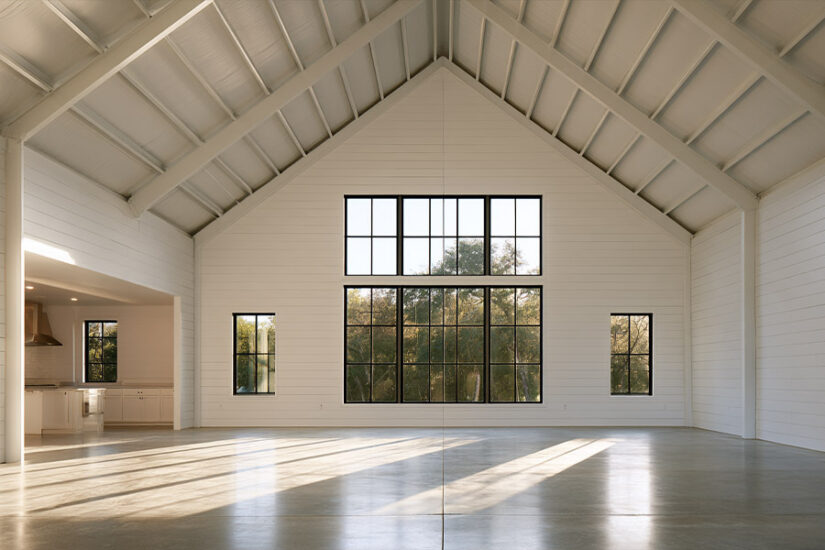
Quick Answer Barndominium interior ideas that hold up start with what the steel frame allows: an open floor with no load-bearing interior walls, and enough height for a loft or a vaulted great room. Behind the finishes, insulation and moisture control keep the rooms dry, and a separation wall divides living space from any shop. […]
Read Article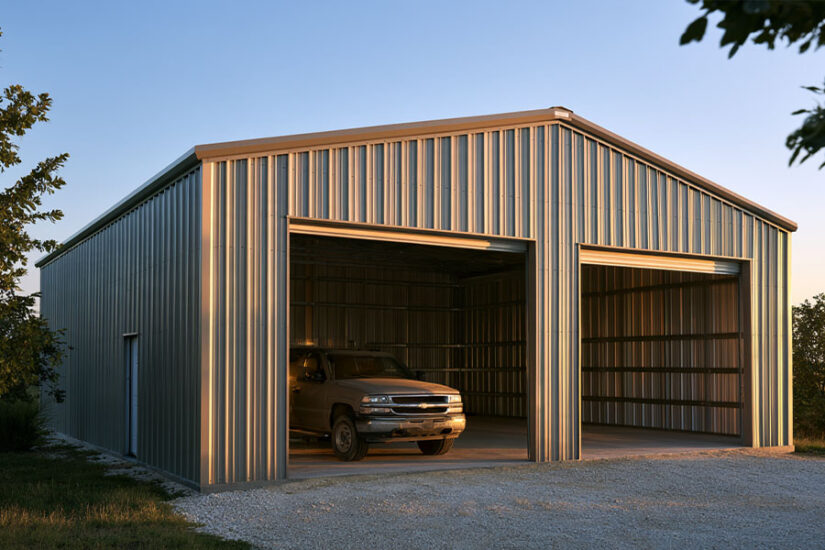
Standard Garage Sizes: 1-, 2- and 3-Car Garage Dimensions
Quick Answer Standard Garage Sizes at a Glance When people say “standard garage size,” they usually mean a two-car garage, and that is what most new houses get. In 2025, 64% of newly completed single-family homes had a two-car garage, according to the Census Bureau’s Characteristics of New Housing data. Garages for three or more […]
Read Article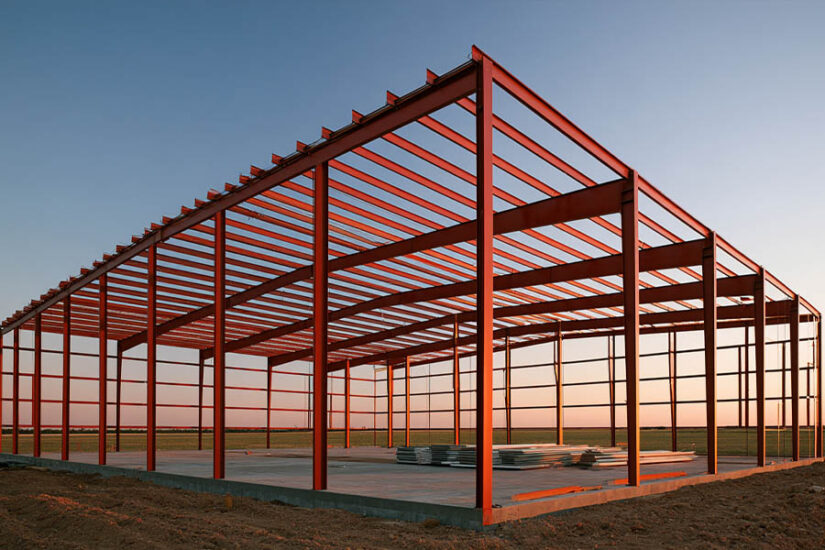
What is a PEMB (Pre-Engineered Metal Building)?
Quick Answer What PEMB Stands for, and What the Industry Actually Calls it PEMB stands for pre-engineered metal building. Contractors and building officials use the acronym for a low-rise steel building that one manufacturer designs and supplies as a complete structural package. The same product appears in quotes under other names too: pre-engineered steel building, […]
Read Article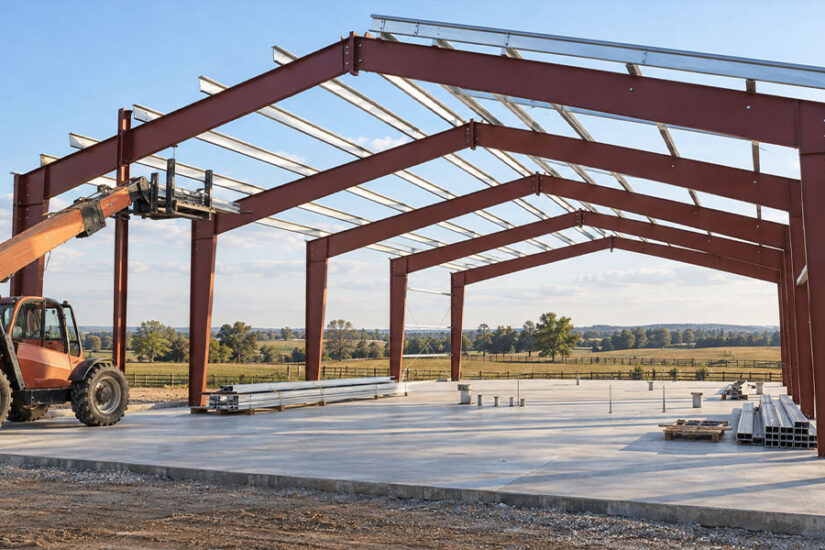
Red Iron Steel Buildings Explained
Quick Answer What Red Iron is and Where the Name Comes From Dealers and classified ads use “red iron” as if it were a material you could order by name. It isn’t. It’s trade shorthand for the heavy structural steel in the primary frame of a metal building, and the phrase stuck because the parts […]
Read Article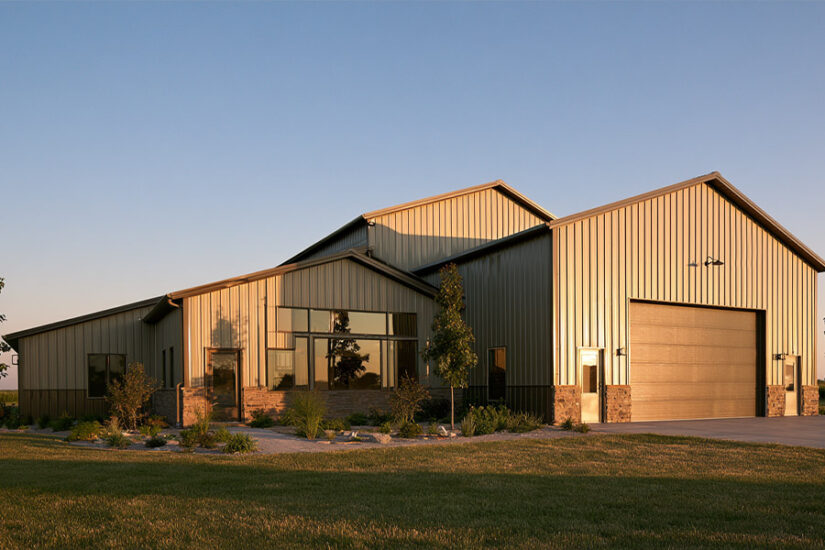
How Much Does it Cost to Build a Barndominium in 2026?
How much does it cost to build a barndominium? Nationally in 2026, a fully turnkey build with standard finishes runs $65 to $160 per square foot, and the steel or post-frame shell alone, the kit plus on-site assembly, runs $30 to $50 per square foot before any interior work starts (Source: HomeGuide, 2026). For a […]
Read Article
How Long Do Metal Roofs Last?
Quick Answer Types of Metal Roofing Panels and Why the Fastening System Matters Panel profile decides how a roof looks. Fastening system decides how long it holds up, and that second factor does more to separate the low end of the 30-to-50-plus-year range from the high end than the choice of steel itself. Three fastening […]
Read Article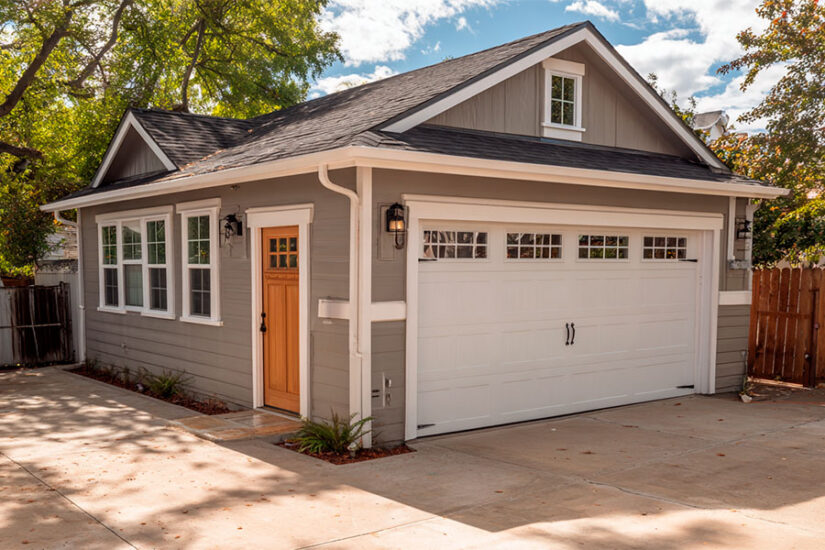
How to Convert a Garage into Living Space: A 2026 Cost and Code Guide
Converting a garage into living space is the process of insulating, sealing, finishing, and reclassifying a garage so it can be permitted and used as a bedroom, home office, family room, or accessory dwelling unit (ADU). The work costs $15,000 to $60,000 in most US regions in 2026, depending on scope, takes 3 to 10 […]
Read Article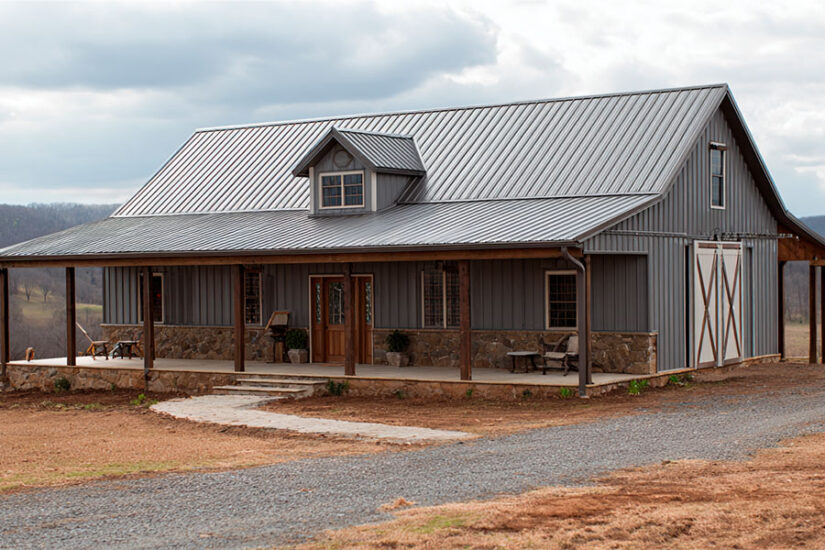
Pole Barn Houses: Costs, Plans, and What They Actually Are in 2026
A pole barn house is a residential home built on a post-frame structure: pressure-treated wood columns set into the ground or onto concrete piers, with a wood truss roof and metal sheeting for the walls and roof. It is closely related to the barndominium but distinct in one important way. A barndominium uses steel framing […]
Read Article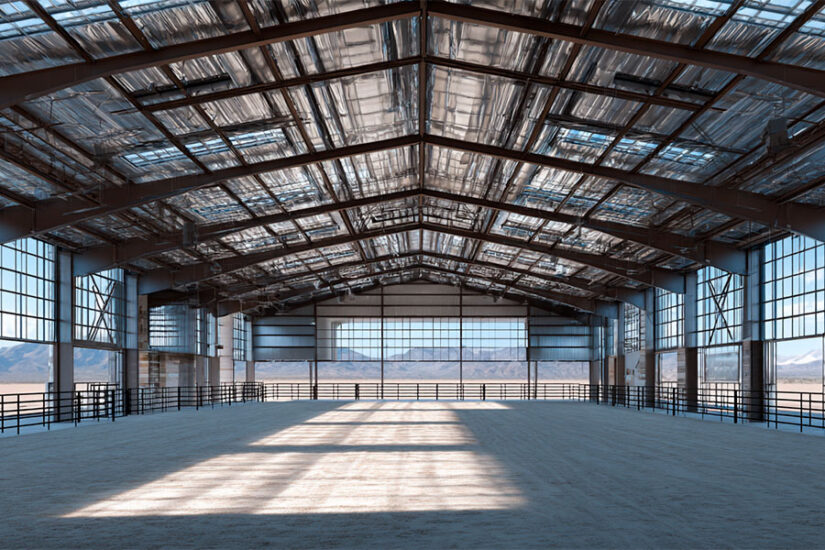
How to Build a Horse Arena: The Owner’s Practical Guide for 2026
The short version of building a horse arena: pick the site carefully, pull the permits, hand off the technical work to people who do it for a living, write a lot of checks, and wait eight to sixteen weeks for an indoor build (three to six for outdoor) before the first horse walks on the […]
Read Article