
Completed Projects
Happy Customers
Projects in Progress
New Orders This Week
Why Steel Works in Virginia
Steel works in Virginia because a pre-engineered frame is sized for the load your parcel actually carries, and here that load shifts across the map: wind toward the coast, snow toward the mountains. Our steel buildings ship with PE-stamped drawings built on your county’s figures, so two metal buildings in Virginia with the same footprint can have different frames.
Wind enters the design as a basic wind speed from ASCE 7, the load standard the Virginia code points to, plus an exposure category for the ground around the building. An open waterfront lot in Hampton Roads catches more wind than a wooded lot in the Piedmont. The coast also has a long storm record, from the Ash Wednesday nor’easter of 1962 to Hurricane Isabel in 2003. Engineering does not make a building immune to a direct hit; it gives the frame and anchor bolts a documented load to check against.
Snow is the other variable, and it climbs from Richmond toward the northern Shenandoah Valley. Frederick County designs for nearly twice the ground snow load Henrico County uses, at the same design wind speed. In the Valley, snow is the figure to watch. Summers statewide run hot and humid, so plan insulation and ventilation with the frame; our guide to insulating a metal building compares the options.
Flood maps are the last check. Coastal parcels and river bottomland can fall inside a FEMA flood zone, and even inland Henrico County maps special flood hazard areas, so look your parcel up before you order. Permits and the farm building exemption are covered in the codes and permits section below.
Virginia at a Glance
What We Engineer for:
Design wind speed calculated per county under ASCE 7, highest along the coast
Ground snow load set per locality, rising toward the Valley and the mountains
Coastal and river parcels; check the FEMA flood map before ordering
One statewide code, the Virginia USBC, enforced by your locality
Humid summers; insulation and vents keep a shop usable in August
Building Codes and Permits in Virginia

Virginia has one building code for the entire state, the Virginia Uniform Statewide Building Code (USBC), as adopted by the Virginia Board of Housing and Community Development. The edition in force is the 2021 USBC, effective January 18, 2024, and its construction volume uses ASCE 7-22 for design loads. By statute the USBC supersedes the building codes of counties and cities, so a locality enforces the state rules and does not write its own. Code texts are on the DHCD codes page.

The building department of the locality where the parcel sits issues the permit and inspects the work. Every incorporated city in Virginia is independent of the surrounding county, so an address that reads “Richmond, VA” may belong to the City of Richmond or to a neighboring county such as Henrico. We confirm the jurisdiction first. We don’t pull the permit; we supply the PE-stamped drawings, load calculations and specifications your application needs.

Your drawings state the design wind speed, exposure category and ground snow load for the site, and the frame, bracing and anchor bolts are sized to those figures. A local concrete contractor pours the foundation to our anchor bolt layout. The drawings document what each connection was designed for; they are not a promise that the building survives any storm. Give us the site address rather than the town when you request a quote.

Under Code of Virginia §36-99, farm buildings are exempt from the USBC, but the exemption is narrow. The building must not be used for residential purposes and must mainly serve the farm, such as crop storage, livestock or equipment. Farm buildings in a floodplain remain subject to flood-proofing rules, and counties such as James City require an exemption affidavit plus zoning review. Check your parcel on the FEMA Flood Map Service Center first.
Virginia has one building code for the entire state, the Virginia Uniform Statewide Building Code (USBC), as adopted by the Virginia Board of Housing and Community Development. The edition in force is the 2021 USBC, effective January 18, 2024, and its construction volume uses ASCE 7-22 for design loads. By statute the USBC supersedes the building codes of counties and cities, so a locality enforces the state rules and does not write its own. Code texts are on the DHCD codes page.
The building department of the locality where the parcel sits issues the permit and inspects the work. Every incorporated city in Virginia is independent of the surrounding county, so an address that reads “Richmond, VA” may belong to the City of Richmond or to a neighboring county such as Henrico. We confirm the jurisdiction first. We don’t pull the permit; we supply the PE-stamped drawings, load calculations and specifications your application needs.
Your drawings state the design wind speed, exposure category and ground snow load for the site, and the frame, bracing and anchor bolts are sized to those figures. A local concrete contractor pours the foundation to our anchor bolt layout. The drawings document what each connection was designed for; they are not a promise that the building survives any storm. Give us the site address rather than the town when you request a quote.
Under Code of Virginia §36-99, farm buildings are exempt from the USBC, but the exemption is narrow. The building must not be used for residential purposes and must mainly serve the farm, such as crop storage, livestock or equipment. Farm buildings in a floodplain remain subject to flood-proofing rules, and counties such as James City require an exemption affidavit plus zoning review. Check your parcel on the FEMA Flood Map Service Center first.
Steel Buildings We Deliver Across Virginia

What a Steel Building Costs in Virginia
The price of a steel building in Virginia depends on how big it is, what loads your site calls for and how finished you want it. In this state the engineering line moves with two variables at once, coastal wind and mountain snow, so the first thing we ask for is your county. Steel building kits for sale across Virginia are priced per configuration, and your quote is written for your parcel.

Small footprints, from 20×20 up to 30×40, are the usual start for a detached garage or a one-bay shop.
Mid-size buildings, from 30×50 up to 40×80, suit horse stables and small commercial space.
Large buildings, from 60×80 up, cover warehouses and office-warehouse combinations.
The same footprint can need a heavier frame on an open waterfront lot in Hampton Roads than on a sheltered lot in Henrico County, and heavier again under the snow load Frederick County designs for. A wide clear span adds steel on top of either. Always give us your county and, if you know it, your flood zone.
A bare kit, meaning the frame with roof and wall panels, sits at the $ tier. Insulation, doors, liner panels and a framed office corner move the building toward $$ or $$$. If you want dollar figures by size, our metal building cost guide lays them out.
Small footprints, from 20×20 up to 30×40, are the usual start for a detached garage or a one-bay shop.
Mid-size buildings, from 30×50 up to 40×80, suit horse stables and small commercial space.
Large buildings, from 60×80 up, cover warehouses and office-warehouse combinations.
The same footprint can need a heavier frame on an open waterfront lot in Hampton Roads than on a sheltered lot in Henrico County, and heavier again under the snow load Frederick County designs for. A wide clear span adds steel on top of either. Always give us your county and, if you know it, your flood zone.
A bare kit, meaning the frame with roof and wall panels, sits at the $ tier. Insulation, doors, liner panels and a framed office corner move the building toward $$ or $$$. If you want dollar figures by size, our metal building cost guide lays them out.
Virginia Cities We Deliver to
Delivery and installation is statewide. These cities have a dedicated page with local permitting detail.
If your city isn’t listed, we still deliver to it. Call (888) 415-1576 or use the quote form above.
How Virginia Owners Use Steel Buildings by Region
Central Virginia and the Richmond metro (Henrico, Chesterfield, Hanover counties)
Central Virginia builds for business. I-95 and I-64 meet in Richmond, and the Port of Virginia runs its Richmond Marine Terminal on the James River along I-95, linked to the Norfolk harbor terminals by container barge. Distribution and light industrial space follows those corridors. Contractors and fleet operators here often need a shop floor and a finished office under one roof, and a steel office-warehouse layout gives them both without a second building. If front-of-house office space is part of your plan, start with our metal office buildings.
See also: Metal auto dealerships · Recreational steel buildings
Northern Virginia and the Piedmont horse country (Loudoun, Fauquier, Albemarle counties)
Horses shape what gets built west of Washington. Loudoun and Fauquier counties are the core of Virginia’s hunt country, with Middleburg at its center; Loudoun’s tourism office puts the county’s horse population above 15,000, and the Virginia Horse Industry Board puts the statewide count at 183,643. Estates and boarding farms here order stables and covered riding space sized to the herd, with room for hay and tack. Closer to the Loudoun and Fairfax suburbs, the need shifts to garages and backyard shops. For stall layouts, see our horse barns and stables.
See also: Riding arenas · Barn with living quarters
Shenandoah Valley and the southwest mountains (Rockingham, Augusta, Roanoke counties)
The Valley is Virginia’s farm engine. In the 2022 Census of Agriculture, Rockingham County ranked first in the state by value of agricultural production and Augusta County second, on the strength of poultry, dairy and cattle. Hay barns and machinery sheds sit near the top of the order list here. It is also snow country by Virginia standards: ground snow loads step up from Richmond through Roanoke to Frederick County at the north end of the Valley, and a frame drawn for a Tidewater lot is the wrong frame for a Valley farm. For agricultural layouts, see our metal farm buildings.
See also: Metal hay barns · Livestock barns
Hampton Roads and Southside (Virginia Beach, Chesapeake, Suffolk, Southampton County)
The coast pairs a working port with open, exposed ground. Norfolk International Terminals is the Port of Virginia’s largest terminal, and waterfront lots across the region face more wind than wooded inland sites, with many parcels needing a flood zone check. Suburban lots around Virginia Beach and Chesapeake call for garages and home workshops; if you are pricing metal buildings in Chesapeake, VA, send the flood zone with the address. Inland, Suffolk and Southampton County grow soybeans, cotton and peanuts, and equipment storage follows the crops. For garages and shops next to the house, see our residential metal buildings.
See also: Metal carports · Metal sheds
What can we design for you today?
Talk to a building specialist to learn more!
Design Your Building NowFrequently Asked Questions
Yes. Every Virginia building we engineer follows the 2021 Virginia Uniform Statewide Building Code, in effect since January 18, 2024, with design loads from ASCE 7-22. The code is set once for the whole state, so your city or county enforces the same rules as its neighbors. What changes from one locality to the next is the site data: wind speed, snow load and flood zone. That is why the drawings need your county.
In most cases yes, from the building department of the city or county where the parcel sits. The main exception is a farm building: a structure on a working farm used mainly for crops, animals or farm equipment, and not lived in, is exempt from the building code. The exemption does not lift floodplain rules, and several counties still ask for an affidavit and a zoning review. Call your building official before you order.
Yes, when the frame is engineered for its site. We size the frame, bracing and anchors to the ground snow load and design wind speed for your county, so a Valley hay barn and a Virginia Beach garage get different steel. Design loads describe what the structure is checked against, not a guarantee through every storm. Our article on whether a barndominium can withstand a hurricane covers coastal storm design in more depth.
Yes, we deliver across Virginia, from the Valley to the far southwest. Mountain parcels take more planning: the delivery truck needs a route it can climb and room to unload. We confirm your production schedule and delivery window when your order is finalized. Your crew or a local erector assembles the building; if you want installation arranged, ask when you request your quote.
You can, but the building then stops being a farm building under Virginia law, and the code exemption goes with it. The state definition covers only buildings not used for residential purposes. A barn with an apartment, or a barndominium on farmland, goes through permits and inspections under the USBC like any other home, so plan it as a house from the first drawing. Mention the living area at the quote stage.
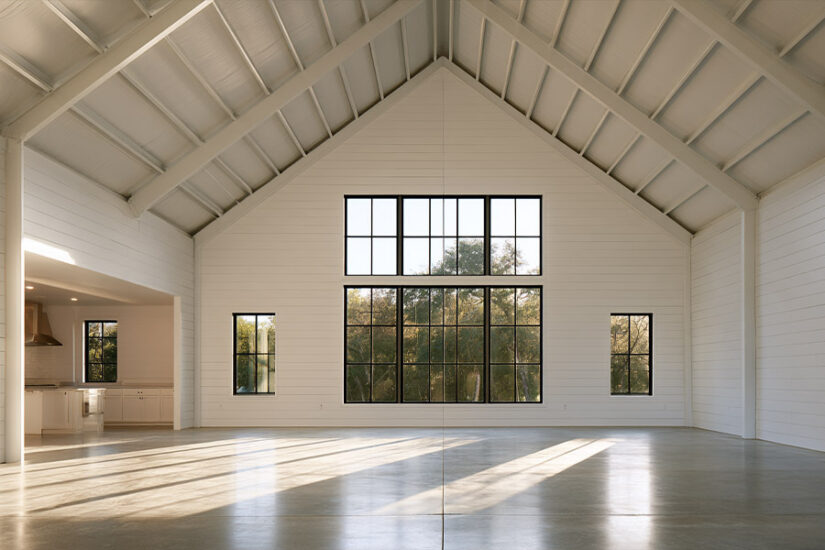
Barndominium Interior Ideas for a Steel-Frame Home
Quick Answer Barndominium interior ideas that hold up start with what the steel frame allows: an open floor with no load-bearing interior walls, and enough height for a loft or a vaulted great room. Behind the finishes, insulation and moisture control keep the rooms dry, and a separation wall divides living space from any shop. […]
Read Article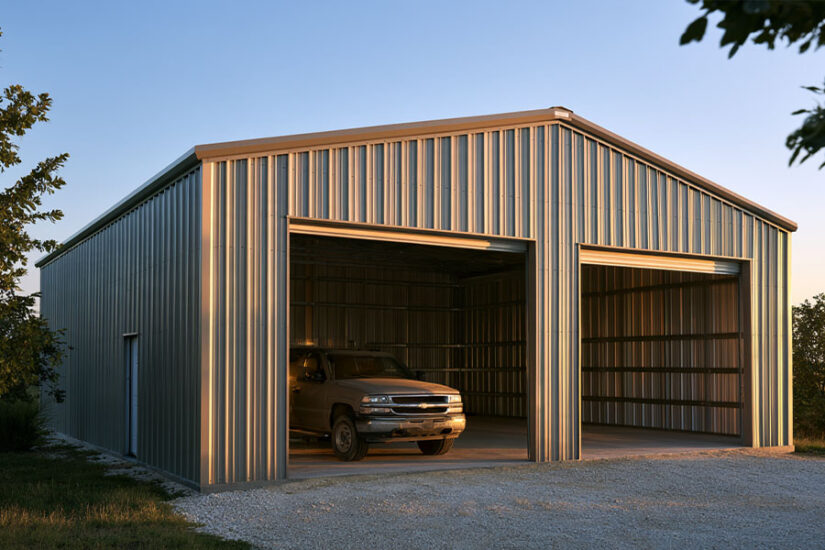
Standard Garage Sizes: 1-, 2- and 3-Car Garage Dimensions
Quick Answer Standard Garage Sizes at a Glance When people say “standard garage size,” they usually mean a two-car garage, and that is what most new houses get. In 2025, 64% of newly completed single-family homes had a two-car garage, according to the Census Bureau’s Characteristics of New Housing data. Garages for three or more […]
Read Article
What is a PEMB (Pre-Engineered Metal Building)?
Quick Answer What PEMB Stands for, and What the Industry Actually Calls it PEMB stands for pre-engineered metal building. Contractors and building officials use the acronym for a low-rise steel building that one manufacturer designs and supplies as a complete structural package. The same product appears in quotes under other names too: pre-engineered steel building, […]
Read Article
Red Iron Steel Buildings Explained
Quick Answer What Red Iron is and Where the Name Comes From Dealers and classified ads use “red iron” as if it were a material you could order by name. It isn’t. It’s trade shorthand for the heavy structural steel in the primary frame of a metal building, and the phrase stuck because the parts […]
Read Article
How Much Does it Cost to Build a Barndominium in 2026?
How much does it cost to build a barndominium? Nationally in 2026, a fully turnkey build with standard finishes runs $65 to $160 per square foot, and the steel or post-frame shell alone, the kit plus on-site assembly, runs $30 to $50 per square foot before any interior work starts (Source: HomeGuide, 2026). For a […]
Read Article
How Long Do Metal Roofs Last?
Quick Answer Types of Metal Roofing Panels and Why the Fastening System Matters Panel profile decides how a roof looks. Fastening system decides how long it holds up, and that second factor does more to separate the low end of the 30-to-50-plus-year range from the high end than the choice of steel itself. Three fastening […]
Read Article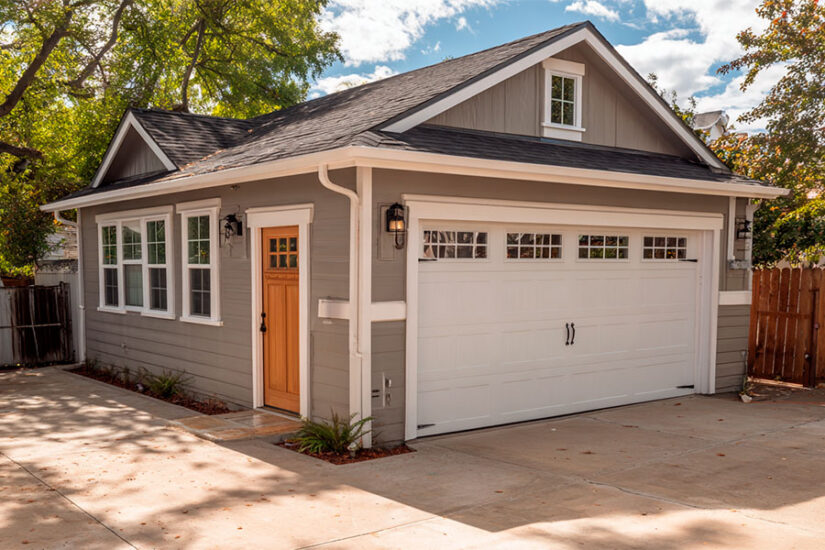
How to Convert a Garage into Living Space: A 2026 Cost and Code Guide
Converting a garage into living space is the process of insulating, sealing, finishing, and reclassifying a garage so it can be permitted and used as a bedroom, home office, family room, or accessory dwelling unit (ADU). The work costs $15,000 to $60,000 in most US regions in 2026, depending on scope, takes 3 to 10 […]
Read Article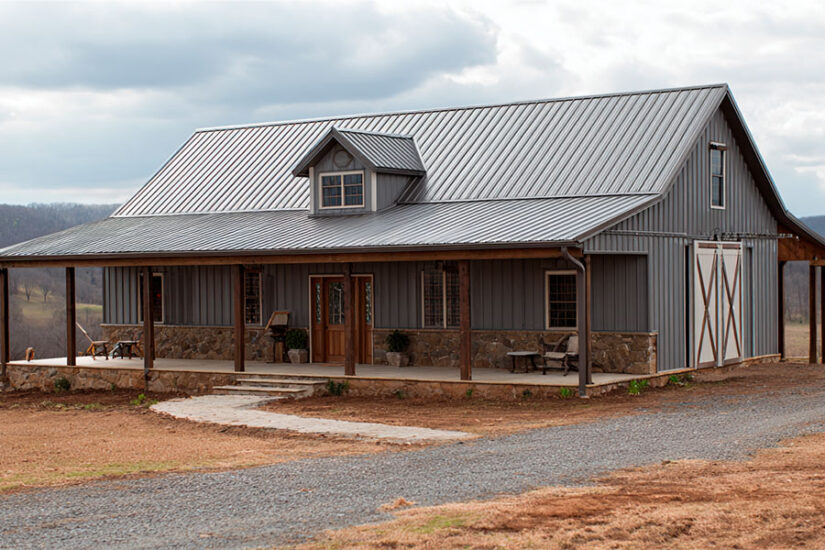
Pole Barn Houses: Costs, Plans, and What They Actually Are in 2026
A pole barn house is a residential home built on a post-frame structure: pressure-treated wood columns set into the ground or onto concrete piers, with a wood truss roof and metal sheeting for the walls and roof. It is closely related to the barndominium but distinct in one important way. A barndominium uses steel framing […]
Read Article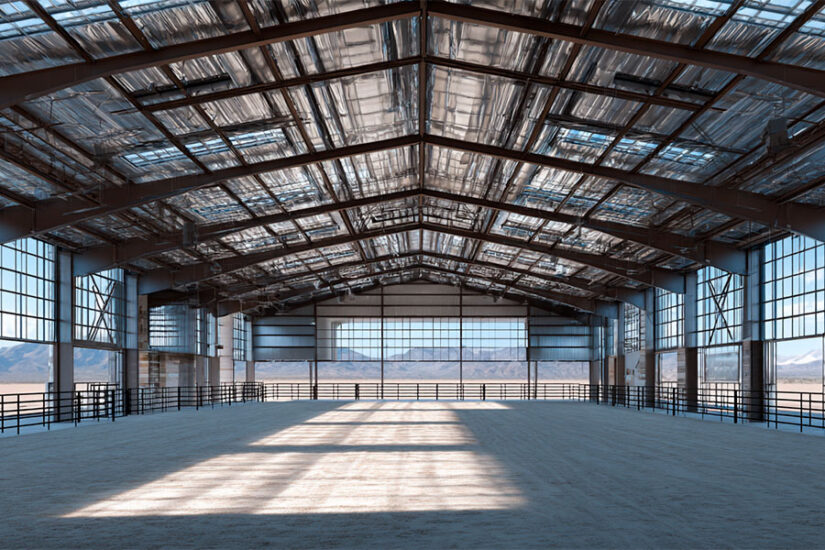
How to Build a Horse Arena: The Owner’s Practical Guide for 2026
The short version of building a horse arena: pick the site carefully, pull the permits, hand off the technical work to people who do it for a living, write a lot of checks, and wait eight to sixteen weeks for an indoor build (three to six for outdoor) before the first horse walks on the […]
Read Article