
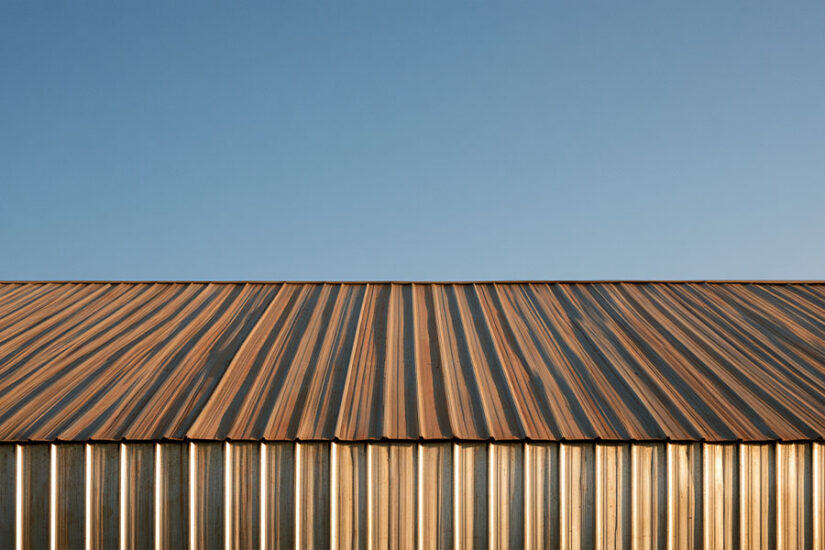

Quick Answer
Metal roof panels typically last 30 to 50 years or more, according to the Metal Roofing Alliance, which puts a well-maintained metal roof at two to three times the service life of a typical asphalt shingle roof. Where a given roof lands in that range has less to do with the metal itself than with panel type and coating. Maintenance, especially how well the fastening system gets kept up, decides the rest.
- Standing seam (concealed-fastener) panels: toward the long end of the range, since there are no exposed fastener penetrations to fail over time
- Exposed-fastener panels (R-panel, corrugated, 5V-crimp): still long-lasting, but fastener washers and sealant need periodic attention
- Hot-dip galvanized base coating: 70 to 90+ maintenance-free years in typical atmospheric exposure, according to the American Galvanizers Association
- Asphalt shingle roofing for comparison: commonly needs replacement around the 20-year mark, according to NAHB data
Types of Metal Roofing Panels and Why the Fastening System Matters
Panel profile decides how a roof looks. Fastening system decides how long it holds up, and that second factor does more to separate the low end of the 30-to-50-plus-year range from the high end than the choice of steel itself.
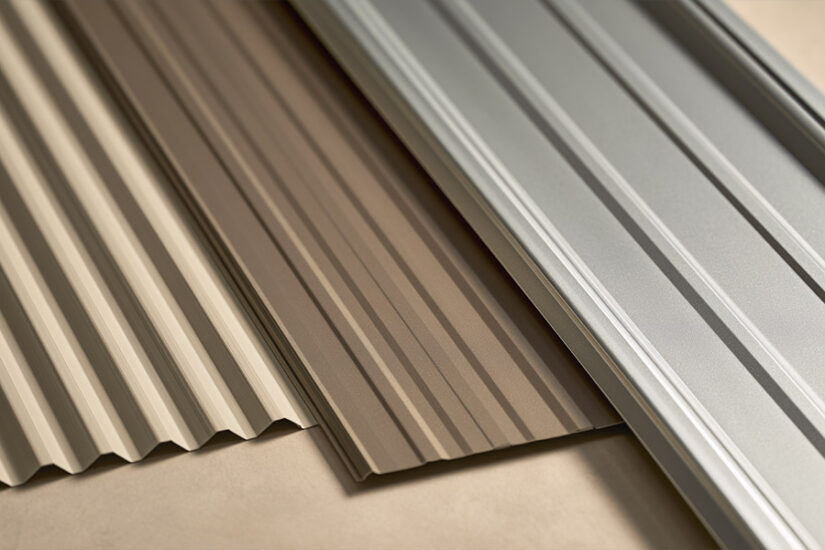
Three fastening approaches cover most of what goes on pre-engineered steel buildings today:
| Panel type | Fastening | Typical use | Lifespan note |
| R-panel / PBR (corrugated) | Exposed fastener | Most common on ag buildings, workshops, steel building kits | Budget-friendly; fastener washers are the first wear point |
| 5V-crimp | Exposed fastener | Traditional look, common in the South and rural US | Same fastener-wear consideration as R-panel |
| Standing seam | Concealed fastener, clips hidden under the seam | Residential, architectural, higher-end commercial | No fastener penetrations through the panel face; typically the longest-lasting system for that reason |
R-panel and PBR are close enough in profile that most buyers treat them as the same category. Together they’re the default on steel building kits and utility structures like workshops and ag buildings, where cost per square foot matters more than architectural detail. 5V-crimp holds a similar place in the market, with a more traditional ribbed look that shows up often in the South and in rural construction. Both fasten straight through the panel face into the structure below.
Standing seam works differently. Concealed clips hold the panel to the roof deck, and the seam itself snaps or is mechanically folded over the top, so no fastener ever penetrates the exposed metal surface. That single design choice is why standing seam tends to sit at the upper end of the lifespan range even when the underlying steel and coating are comparable to an exposed-fastener panel.
Why Exposed vs. Concealed Fasteners Change the Lifespan Math
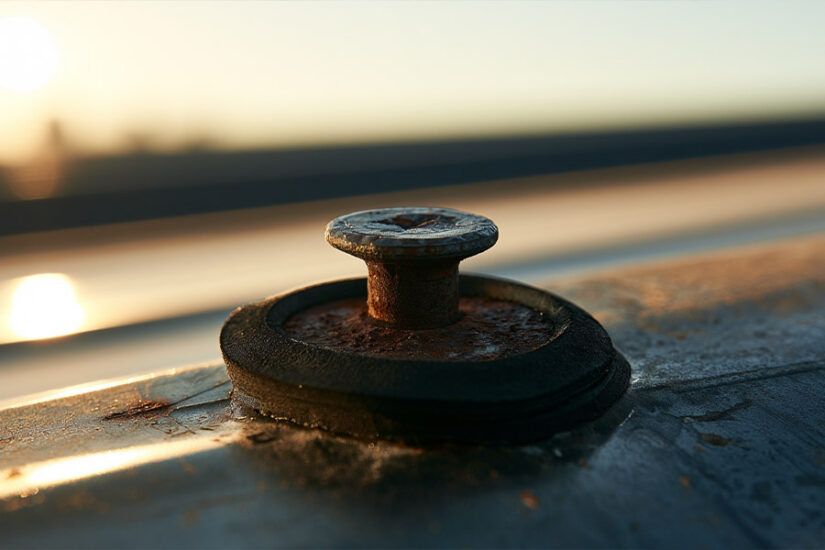
Every screw that goes through an R-panel or 5V-crimp roof carries a rubber washer meant to seal that penetration. Washers age faster than the steel around them: UV exposure dries and cracks the rubber over years of sun, and once a washer fails, that single point becomes a path for water. This is routine, maintainable wear, not a design flaw, and it’s the main reason exposed-fastener roofs need periodic washer checks that standing seam roofs simply don’t.
Standing seam avoids that failure mode by removing exposed penetrations from the equation entirely. That doesn’t make exposed-fastener panels a lesser choice. They remain the most common roofing system on steel buildings for a reason: lower cost and wide availability, plus a maintenance routine that’s straightforward once an owner knows what to check. The real tradeoff is upfront cost against a slightly heavier maintenance schedule, not which system is inherently better.
What Determines How Long a Metal Roof Lasts
Panel type sets the ceiling. Three more variables decide how close a specific roof gets to it.
Roof Panel Gauge and Slope
Roof panels typically run in the 24 to 26 gauge range, thicker than the 26 to 29 gauge common on wall siding panels on the same building. That difference exists because a roof carries snow and wind loads that walls don’t, so it gets the heavier steel. Slope matters just as much as gauge. A lower-slope roof holds water on its surface longer than a steep one, which puts more weight on lap joints, end laps, and sealant doing their job correctly. On a low-slope application, panel and seam type stop being a preference and start being a specification decision.
Coating: the Same Base System, More Exposure
A roof panel and a wall panel on the same building can share an identical coating system, Galvalume or G-90 zinc on the base steel plus a PVDF or SMP finish coat, and still age differently. The roof takes more direct UV and more standing precipitation than a wall ever does, and temperature swings run wider up there too, so the same coating works under harder conditions on top of the building than it does on the sides. According to the American Galvanizers Association, hot-dip galvanized coatings can go 70 to 90-plus years before needing their first maintenance in typical atmospheric exposure. That figure describes the base coating, not a warranty from any single builder. For a closer look at how Galvalume and standard galvanized coatings compare on service life, see galvalume vs galvanized steel.
Climate and Roof-Specific Exposure
Coastal salt air accelerates corrosion at seams and fasteners faster than it does on a wall panel that isn’t catching runoff and standing moisture the same way. High-UV climates push coatings toward chalking and fade sooner, and repeated freeze-thaw cycles stress sealant and lap joints in colder regions. None of this rules metal out anywhere in the country. It changes how often the roof needs a look, a subject the maintenance section below covers directly.
Metal Roofing vs. Asphalt Shingles: How Much Longer Does it Last?
Asphalt shingles remain the most common roofing material in the US, and for good reason: low upfront cost and a contractor in nearly every market who can install them. Longevity is where the comparison shifts. Composition shingle roofing has a typical service life of around 20 years, according to the NAHB Study of Life Expectancy of Home Components, well short of the 30-to-50-plus-year range a properly installed steel roof reaches.
The gap comes down to how each material fails. Asphalt shingles lose their protective granules over time, and once enough granules are gone, UV exposure dries and cracks the underlying mat. Steel panels don’t shed granules and don’t dry out the way an asphalt mat does. Their failure points are fastener washers, sealant, and coating wear, and all three are maintainable rather than terminal. A shingle roof nearing the end of its service life usually needs full replacement. A metal roof at the same age more often needs a fastener and sealant pass, or a recoat, rather than tear-off.
That durability gap isn’t a case against asphalt shingles. A shorter service life is a legitimate tradeoff for a buyer who doesn’t plan to own the property long-term, or who’s prioritizing the lowest install cost on a standard residential reroof. The honest framing is upfront cost against decades of avoided replacement cycles, not “good roofing” against “bad roofing.”
Metal Roof Maintenance: What Actually Extends the Lifespan
None of the ranges above happen automatically. A short list of habits accounts for most of the gap between a roof that reaches the low end of that range and one that reaches 50 years or more.
- Inspect and reseal or replace fastener washers on exposed-fastener roofs on a regular schedule, not only after a leak shows up somewhere else
- Refresh sealant at ridges, end laps, and penetrations such as vents and flue exits, since this is where most roof leaks actually start, not the panel field itself
- Clear valleys and gutters of leaves and debris so water doesn’t sit against the panel or fastener line longer than it needs to
- Recoat on the schedule that matches the coating type, and expect a roof to need it more often than the walls of the same building because of the heavier UV exposure
- Keep attic or under-roof ventilation working. Trapped condensation damages panels from underneath just as effectively as weather damages them from above; see US Patriot Steel’s guide to insulating a metal building for how ventilation and insulation work together
- Walk the roofline after major wind or hail events and note anything that looks different from the last inspection
None of this requires specialized equipment or a large budget. It’s the difference between a small fix staying small and a deferred repair turning into a full recoat or panel replacement years earlier than it should.
Warning Signs Your Metal Roof Needs Attention or Replacement
Most roof problems show themselves before they become structural. Fastener washers that look cracked, dried out, or visibly compressed are the first thing worth checking on an exposed-fastener roof, since a failed washer is a direct path for water even when the panel around it looks fine. Sealant at ridges, end laps, or penetrations that’s cracked or pulling away from the metal is the next most common early sign, and it fails well before the surrounding panel does.
Oil-canning, a visible waviness or rippling in the flat part of a panel, tends to become more noticeable as a roof ages. It’s a cosmetic condition rather than a structural one on its own, but a roof showing more of it over time is worth a closer look at what’s driving it. Rust staining that trails along seams, laps, or fastener lines, rather than showing up as a general dull patch, usually points to a coating breach at that specific spot. For a closer look at how coatings prevent that kind of corrosion and how to catch it early, see US Patriot Steel’s guide to anti-rust coatings.
Stains on an interior ceiling deserve a two-step check rather than an assumption. Confirm attic or under-roof ventilation is working first, since condensation causes the same kind of stain a leak does. If ventilation checks out, then it’s time to trace the roof itself for the source.
Roofing Your Next Steel Building: What to Consider
Whether the project is a new pre-engineered building or a roof going on an existing structure, the same three variables decide where the roof lands in its lifespan range: fastening system, coating, and slope. Getting those right at the spec stage does more for long-term performance than any decision made after the roof is already up.
For commercial and industrial buildings, a durable roof is an operations question as much as a maintenance one. A leak over a warehouse floor or a working shop isn’t just a repair line item, it’s downtime, and downtime usually costs more than the roof itself. That’s the case for treating roof panel and coating choice as part of the building spec from day one on any commercial metal building roofing systems project, not an afterthought once the frame is up.
Roofing is also only one system on the building. Wall panels face a different exposure profile and carry their own gauge and coating considerations; see US Patriot Steel’s guide to wall panel options for how that side of the building compares.
What to Do Next
A few questions narrow down what the right roof spec looks like for a specific project: Is this a new build or a roof replacement on an existing structure? What’s the local snow load and slope requirement? Is the building in a coastal, high-UV, or freeze-thaw climate that pushes toward a heavier coating spec? Is there a realistic plan for periodic fastener and sealant checks, or does the project need a lower-maintenance panel system from the start?
Call (888) 415-1576 or fill out the get a quote form to talk through panel type and coating for your specific roof and site.
Frequently Asked Questions
Metal roof panels typically last 30 to 50 years or more, according to the Metal Roofing Alliance. Panel type and coating set the baseline, and how well the fastening system gets maintained decides whether a specific roof reaches the high end or the low end of that range.
A steel roof commonly reaches 30 to 50 years or more, according to the Metal Roofing Alliance, while composition asphalt shingle roofing has a typical service life of around 20 years, according to NAHB data. The Metal Roofing Alliance puts a well-maintained metal roof at two to three times the service life of a typical asphalt roof, though shingles remain a lower upfront-cost option for shorter ownership horizons.
Generally, yes, all else being equal. Standing seam’s concealed clips eliminate the fastener penetrations that are the main wear point on exposed-fastener systems like R-panel and 5V-crimp. Exposed-fastener panels remain long-lasting and cost less, but they need periodic washer and sealant checks that standing seam doesn’t.
Cracked or compressed fastener washers, sealant pulling away at ridges or penetrations, increasing oil-canning, and rust staining that trails along seams or fastener lines are the earliest warning signs. Interior ceiling stains can mean either a ventilation issue or an actual leak, and it’s worth checking ventilation first before assuming the roof is leaking.
Often, yes. Steel roofs typically fail at the coating, sealant, or fastener level well before the structural panel itself gives out, which is why recoating and fastener servicing extend service life instead of forcing a full tear-off. That’s a meaningful difference from asphalt shingles, which generally require full replacement once they’ve reached the end of their service life.
Roof lifespan is one piece of a larger picture. For the full breakdown of what determines a metal building’s overall lifespan, including steel gauge, foundation conditions, and maintenance, see US Patriot Steel’s guide to how long metal buildings last.
More in this Guide
- How long do metal buildings last overall: the full picture beyond the roof, including gauge, foundation, and climate factors
- Anti-rust coatings and longevity: how protective coatings work and how to spot corrosion early
- Galvalume vs galvanized steel: the coating comparison behind the lifespan numbers above
- Metal building siding options: panel types, gauge, and coating for the wall side of the building
- How to insulate a metal building: insulation and ventilation systems that prevent interior condensation damage
- Commercial metal buildings: structural options for longer-term, higher-load projects
References
- Metal Roofing Alliance. FAQ page on residential metal roofing service life and comparison to asphalt shingle roofing, cited for the 30-to-50-plus-year panel lifespan range and the two-to-three-times comparison above. metalroofing.com/faqs
- American Galvanizers Association. *Estimating the Life of Hot-Dip Galvanized Coatings.* Maintenance-free service life data for galvanized steel by environment. galvanizeit.org
- Metal Construction Association (MCA). Research on coil-coated steel coating performance, cited for base coating and finish coat service life context. metalconstruction.org
- ASTM International. Standard specifications A755 and A924 for metallic-coated, coil-coated steel sheet, referenced for coating and substrate performance practice. astm.org
- National Association of Home Builders (NAHB). *Study of Life Expectancy of Home Components.* Comparative service-life data used for the asphalt shingle roofing comparison above. PDF