
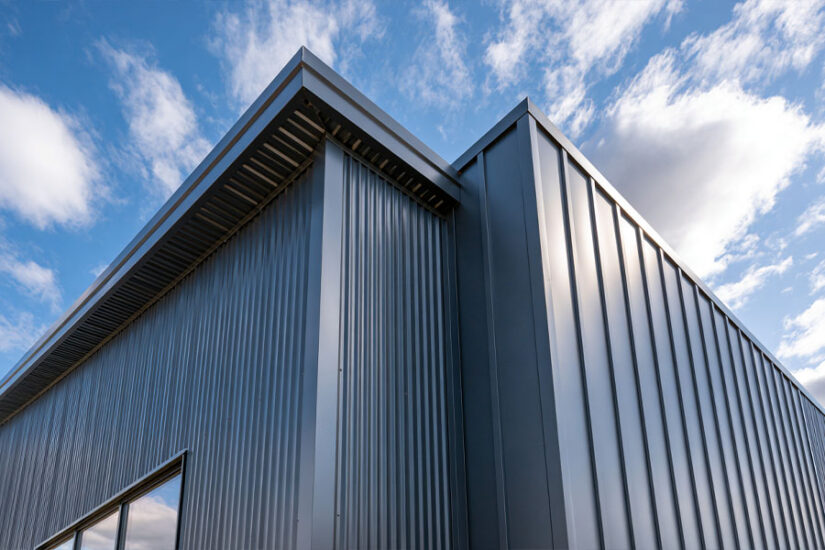

Yes, you can put siding on a metal building. Most steel building kits come with metal panel siding as the standard wall system, and siding can also be added to or replaced on a building that’s already standing. Panel type shapes how the building looks. Steel gauge and coating decide how long the siding holds up, and both move where the project lands in your budget.
That’s a lot of decisions bundled into one word, “siding,” and most buyers hit this page after searching some version of “can you even do this” rather than “which panel profile should I pick.” This guide answers the yes/no question first, then breaks down metal building siding options by panel type, material, color, and the metal-versus-vinyl comparison that usually comes up next.
Quick Answer
Yes, siding goes on metal buildings by default, whether you’re speccing a new kit or adding panels to an existing structure. Common panel options include:
- Corrugated or R-panel steel: the most widely used profile, priced lowest per square foot
- Vertical steel panels (board-and-batten style): a cleaner, more residential look for barndominiums and homes
- Insulated metal panels (IMP): steel skins with a foam core built in for thermal performance
- Horizontal lap steel siding: closer to the look of traditional wood or vinyl lap siding
Panel type and coating quality drive most of the price difference. Steel gauge decides how well the siding holds up over the years.
Can You Put Siding on a Metal Building?
Yes. Steel panel siding is the default wall system on nearly every pre-engineered metal building kit, and it’s also one of the more straightforward upgrades on a building that’s already standing.
On a new build, siding isn’t an afterthought. It’s part of the kit specification from the start, ordered with the frame, roof panels, and trim as one package. Buyers choosing panel type, gauge, and color at that stage are picking a wall system, not decorating a finished shell. This is the point at which a lot of residential steel building kits get specced with a different panel profile on the front elevation than the sides, for curb appeal on the street-facing wall without paying that premium on every wall.
On a retrofit, adding or replacing metal siding on an existing building is routine work. New panels typically go up over furring strips or girts attached to the existing frame, which keeps the fastening pattern correct and creates a gap for ventilation or added insulation behind the new skin. Retrofit projects that touch the wall assembly are also a natural point to upgrade insulation at the same time, rather than opening the wall twice.
One note on scope: metal siding also works on a wood-frame barn or a masonry building. That’s a different retrofit conversation with its own fastening requirements, and it’s outside what this guide covers. The rest of this page is about siding on steel buildings specifically.
Metal Building Siding Options by Panel Type
Four panel styles cover most of what dealers offer as standard options on steel buildings. Exact profile names and availability vary by supplier, so treat the table below as a guide to the categories, not a specific product catalog.
| Panel type | Look | Typical use | Notes |
| Corrugated / R-panel steel | Wavy or trapezoidal ribs | Garages, barns, workshops, agricultural buildings | Lowest cost per sq ft, the most common profile in the category |
| Vertical steel (board-and-batten style) | Clean vertical lines, raised seams | Barndominiums, homes, residential-style buildings | Reads as a modern farmhouse exterior rather than a metal shed |
| Horizontal lap steel siding | Overlapping horizontal panels | Buildings targeting a traditional house look | Mimics the profile of wood or vinyl lap siding |
| Insulated metal panels (IMP) | Smooth or lightly ribbed, thicker profile | Buildings that need built-in thermal performance | Foam core between two steel skins, R-values generally run higher with panel thickness |
Corrugated and R-panel are functionally the same category with slightly different rib spacing, and together they’re what most people picture when they hear “metal siding.” Both work fine on pole barns and agricultural buildings where the priority is cost and durability over a residential look.
Vertical, board-and-batten-style panels have become the default choice for barndominiums for a reason: the seams read as intentional design lines rather than a fastening pattern, which is the visual difference between a metal shed and a house that happens to be built from steel.
Insulated metal panels are a different category entirely. Instead of steel skin over a separate stud-and-batt insulation system, the insulation is factory-bonded between two steel faces as one panel. That matters most on buildings where wall thickness and thermal performance need to be locked in before the wall goes up, not added later.
Trim, the metal pieces that finish corners, openings, and transitions between panel runs, isn’t a cosmetic afterthought either. Poorly fitted trim is where most water intrusion problems on metal-sided buildings actually start, not the panels themselves.
Metal Siding Materials: Gauge and Coating
Two specs, largely invisible once the building is finished, do more to determine how long siding lasts than the panel profile does: steel gauge and coating.
Steel Gauge
Wall siding panels typically run lighter than roof panels on the same building, commonly in the 26 to 29 gauge range for walls versus 24 to 26 gauge for the roof. That gap exists because roof panels carry snow and wind loads that wall panels don’t, so the roof gets the thicker steel. A heavier gauge wall panel resists denting from hail or accidental impact better, which matters more on a building at ground level near equipment or foot traffic.
Galvanized vs. Galvalume Coating
Both coatings protect the steel substrate from rust, but they don’t perform the same. Galvalume-coated panels carry an industry-typical service life of roughly 40 to 60 years under normal atmospheric exposure, according to Metal Construction Association research on coil-coated steel durability. Standard galvanized coatings, by comparison, typically hold up for 30 to 50 years depending on coating weight and local climate. Galvalume generally outlasts galvanized by a wide margin in the same environment. That’s an industry-typical range tied to the coating chemistry itself, not a warranty figure from any one builder. For a closer look at what drives that gap, see the galvalume vs galvanized steel comparison.
Paint Systems: PVDF vs. SMP
The coating protects the steel; the paint on top of it protects the color. PVDF (often sold under the Kynar 500 name) resists fading and chalking under UV exposure longer than SMP, a lower-cost polyester paint. Coating manufacturers typically warranty PVDF finishes for 20 years against fading and chalking, measured against the AAMA 2605 performance benchmark used across the coil-coating industry; some manufacturers extend that coverage to 30 years on premium lines. SMP finishes carry noticeably shorter fade warranties in the same product families. That gap shows up as a visibly duller, chalkier finish on SMP panels years before a PVDF panel in the same climate looks the same way.
None of these numbers are a promise from US Patriot Steel about how long a specific building’s siding will last. They’re industry benchmarks for the coating and paint systems themselves. Actual performance still depends on local climate and on how well the panels were installed and maintained. For more on what protects steel from corrosion long-term, see anti-rust coatings and longevity.
Metal Siding Colors and Finishes
Steel building manufacturers typically offer standard color lines that run from 15 to more than 30 stock colors, depending on the supplier, with custom or premium colors available at added cost on some panel lines. Whites, grays, tans, and dark earth tones tend to be the volume sellers because they read as neutral on both barns and residential-style buildings.
Color and coating quality are linked. A panel finished in PVDF holds its original color and gloss noticeably longer than the same color in SMP, particularly on south- and west-facing walls that see the most direct sun over the life of the building.
Color choice also has a practical side beyond looks. Darker colors absorb more solar heat than light colors, which raises surface temperature on the wall it’s applied to. On a building using insulated metal panels for thermal performance, pairing a dark color with a higher R-value panel offsets some of that heat gain; pairing a dark color with thin, uninsulated panels compounds it. It’s worth factoring into the decision on buildings in hot climates, not just an aesthetic footnote.
Metal Siding vs. Vinyl Siding: Which Lasts Longer?
Steel and vinyl solve the same problem, keeping weather off the frame, in different ways, and the honest comparison depends on what the buyer is optimizing for.
On durability, steel wins in most climates. Vinyl can crack and become brittle in sustained freezing temperatures, and it deforms under close heat exposure, such as from a grill or a reflective window. Steel doesn’t share either failure mode. A properly coated panel resists denting and cracking across a wider temperature range than vinyl, and it won’t warp the way vinyl can under direct heat.
Fire performance is the other clear gap. Steel siding is noncombustible, which matters more on agricultural and commercial buildings subject to fire-code review than it does on a typical house. It’s also a real factor for barns and workshops that store feed, equipment, or welding gear, and for any building near wildland-urban interface zones.
Vinyl still has real advantages worth naming honestly. It costs less to install up front and it’s lighter to handle. Most residential contractors already know how to work with it, which can mean a faster, cheaper install than a metal retrofit on the same wall. For a buyer prioritizing lowest up-front cost on a standard house wall, vinyl remains a legitimate choice.
Energy performance depends heavily on which metal siding is being compared. Standard steel panels over typical wall insulation perform roughly in line with vinyl over the same insulation package; the panel material itself isn’t what’s driving efficiency in that case. Insulated metal panels are a different story, since the insulation is built into the panel rather than added separately, which is where steel siding can meaningfully outperform vinyl on thermal efficiency. For more on pairing panel choice with a building’s overall thermal package, see insulating a metal building.
What Affects Metal Building Siding Cost
Metal building siding runs anywhere from a modest, entry-level cost to a premium investment depending on four factors, without getting into specific dollar figures here: request a quote for pricing on your project.
Panel Type
Corrugated and R-panel sit at the affordable end of the range ($). Vertical and horizontal lap panels run in the middle ($$). Insulated metal panels, with the foam core and factory bonding, sit at the top ($$$) because you’re buying the insulation and the wall skin as one manufactured unit instead of two separate materials.
Steel Gauge
A heavier gauge panel costs more per square foot than a lighter one in the same profile, the tradeoff being better dent and impact resistance.
Coating and Paint System
Galvalume costs more than standard galvanized, and PVDF paint costs more than SMP. Both premiums buy longer service life before the finish needs attention.
New Build vs. Retrofit
Siding ordered as part of a new kit is priced into the structure. Retrofit siding on an existing building adds labor for removal of old material, furring strip installation, and site access, on top of the panel cost itself.
The fastest way to get an accurate number for a specific building is a project quote rather than a generic per-square-foot estimate. Panel choice and gauge move the total, and site conditions move it further.
How to Install Siding on a Metal Building: DIY or Pro?
Metal siding installation follows a consistent pattern regardless of who’s doing the work. Panels attach to girts or furring strips with a specified overlap between them, and fasteners go in at a defined spacing to hold wind load. Every seam and penetration gets sealed against water intrusion.
The fastener spacing and overlap details matter more than they look. Panels spaced too far apart on the fasteners can work loose under wind load over time, and an under-lapped seam is the single most common cause of leaks on metal-sided buildings, more often than a failure in the panel itself.
A handy owner comfortable with basic tools can install siding on a small, ground-level structure, especially on a new build where the frame and girts are already square and ready for panels. Retrofit work on an existing building is usually where hiring a contractor earns its cost, especially above single-story height or on a project with a lot of window and door openings to trim out. The framing may need adjustment and the access equipment adds real time. A poorly sealed retrofit voids the benefit of doing the upgrade at all.
US Patriot Steel supplies steel building kits and siding panels; it isn’t a general contracting crew for hire on every type of installation. For most buyers, the practical path is ordering the right panel system for the project and lining up local erection or retrofit labor separately, unless the deal already includes turnkey installation.
What to Do Next
Three questions narrow down a siding decision fast:
- New build or retrofit on an existing structure?
- Which look fits the building: corrugated for a working barn, vertical panels for a residential-style build, or insulated panels for thermal performance?
- Which budget tier makes sense: standard corrugated, mid-tier lap or vertical panel, or insulated metal panel?
Call (888) 415-1576 or use the quote form to talk through panel type, gauge, and color for your specific project.
Frequently Asked Questions
Yes. Steel panel siding is standard on new metal building kits and can also be added to or replaced on an existing steel structure, typically installed over furring strips or girts attached to the frame.
The main categories are corrugated or R-panel steel (the most common and least expensive), vertical board-and-batten-style panels (a residential look for barndominiums and homes), horizontal lap steel siding (mimics traditional lap siding), and insulated metal panels, which have a foam core built between two steel skins.
Steel generally outperforms vinyl on durability and impact resistance, and it won’t burn the way vinyl can under fire exposure. Insulated metal panels can also outperform vinyl on energy efficiency. Vinyl remains cheaper to install and lighter to work with, which makes it a reasonable choice for buyers prioritizing lowest up-front cost.
Cost depends on panel type, steel gauge, and coating: corrugated and R-panel run at the lower end, insulated metal panels at the higher end, with vertical and lap panels in between. A project quote gives an accurate number for a specific building; request one through the quote form.
A ground-level, new-build installation is within reach for a handy owner comfortable with basic tools and fastener spacing requirements. Retrofit work and upper-story access are usually better handled by a contractor, especially on projects with many door and window openings to trim out.
Galvalume-coated steel siding has an industry-typical service life of roughly 40 to 60 years under normal atmospheric exposure, according to Metal Construction Association research; standard galvanized coatings typically run 30 to 50 years depending on coating weight and climate. These are industry benchmarks for the coating itself, not a warranty figure tied to any specific project.
More in this Guide
- Insulated metal panels explained: cost, R-value, and where IMPs make sense
- Anti-rust coatings and longevity: what actually protects steel from corrosion
- Galvalume vs galvanized steel: the coating comparison behind the lifespan numbers above
- How to insulate a metal building: insulation systems and where siding choice fits in
- Residential steel building kits: US Patriot Steel’s residential product line
- Metal building cost guide: full cost comparison across standard sizes and building types
References
- Metal Building Manufacturers Association (MBMA). Technical standards for pre-engineered metal building systems, including panel gauge and structural specification practice. mbma.com
- Metal Construction Association (MCA). Research on coil-coated steel coating performance and service life, cited for Galvalume and galvanized lifespan ranges above. metalconstruction.org
- ASTM International. Standard specifications A924 and A755 for metallic-coated steel sheet, referenced for coating and substrate performance claims. astm.org
- American Architectural Manufacturers Association (AAMA). AAMA 2605 performance specification for superior-performing organic coatings, referenced for PVDF/Kynar fade and chalk performance benchmarks. aamanet.org