

Quick Answer
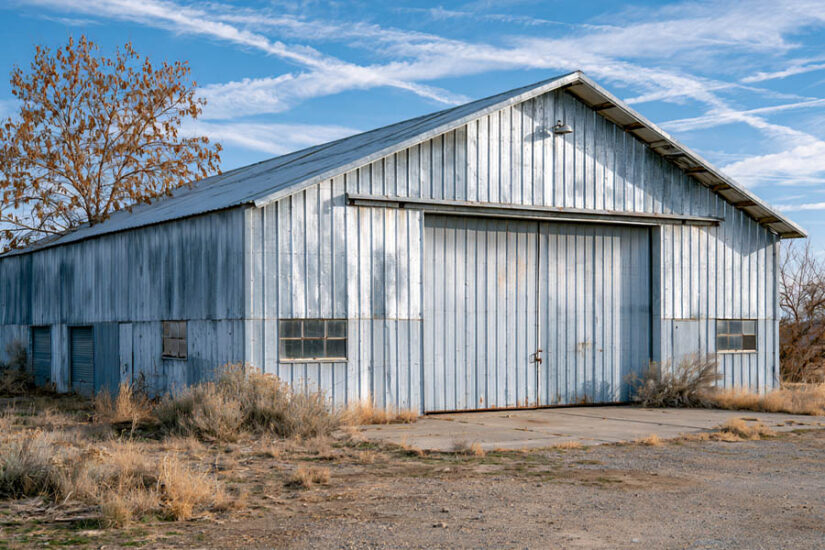
Pre-engineered steel buildings can last 60 years or more with routine maintenance, according to service-life data from the Metal Building Manufacturers Association. Model building codes set a lower baseline: through the ASCE 7 load standard referenced in the International Building Code, most standard-occupancy structures are designed around a 50-year design life. Actual lifespan moves above or below that range depending on steel gauge, the protective coating on the panels, local climate exposure, and how consistently the building gets maintained.
- Pre-engineered steel frame: 60 years or more with routine maintenance (Metal Building Manufacturers Association)
- Standard building-code design life assumption: 50 years (ASCE 7 / International Building Code, Risk Category II)
- Hot-dip galvanized coatings: 70 to 90+ maintenance-free years in typical atmospheric exposure (American Galvanizers Association)
- Wood pole barn posts in ground contact: commonly need attention within 20 to 40 years
How Long Do Buildings Last, in General?
There’s no single number for “how long a building lasts,” because the question mixes two different things: design life and actual service life. Design life is what an engineer plans for on paper. Actual service life is what a building delivers in the real world, which can run shorter or considerably longer depending on how it’s built, where it sits, and how it’s cared for.
In the United States, most standard commercial and residential structures are engineered around a 50-year design life. That figure comes from ASCE 7, the structural load standard the International Building Code references for wind, snow, and seismic design. It’s a planning assumption, not an expiration date. A building can exceed it by decades with good maintenance, or fall short of it if water intrusion, poor drainage, or deferred repairs go unaddressed for years.
Materials age differently within that same 50-year framework. A wood-framed house depends on how well its siding, flashing, and roof shed water, since rot and pest damage are the primary failure modes. Unreinforced masonry holds up well structurally but is vulnerable to freeze-thaw cracking in cold climates. Poured concrete resists most weather but can suffer from rebar corrosion if the concrete cover is too thin. Steel behaves differently from all three: it doesn’t rot, warp, or attract termites, and its main long-term threat is corrosion, which is a problem coatings are specifically engineered to solve. That’s the mechanism this guide walks through next.
What Determines a Metal Building’s Lifespan
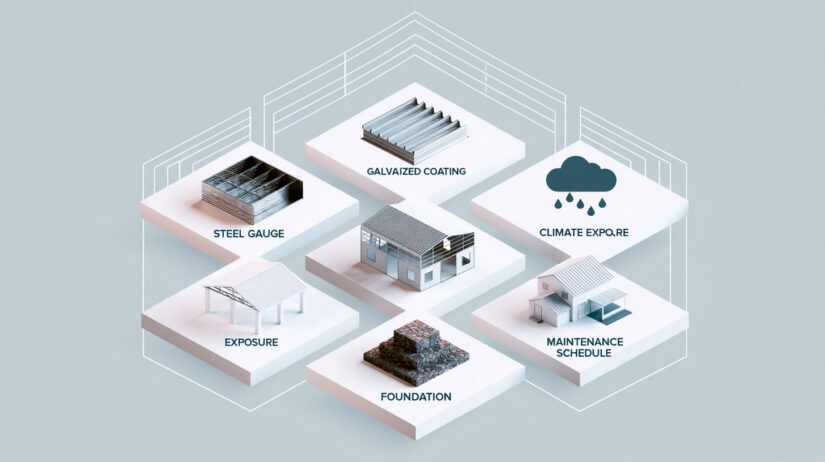
The ranges in the quick answer above aren’t arbitrary. They’re the sum of five variables that each push actual service life up or down from the code-minimum baseline.
Steel Gauge and Structural Design
Thicker steel (a lower gauge number) and a frame engineered for the correct local snow and wind loads form the foundation of a long-lived structure. A building sized to its actual load requirements doesn’t flex, fatigue, or deform faster than its design intends. Undersizing the frame to save on upfront cost is one of the more common ways a metal building’s real-world lifespan falls short of its design potential, regardless of how good the coating is.
Protective Coating and Galvanization
Bare steel rusts. What stands between raw steel and corrosion is galvanization, typically Galvalume or G-90 zinc coating on the base metal, plus a finish coat on the exposed panels. According to the American Galvanizers Association, hot-dip galvanized steel in a typical atmospheric environment, with a coating thickness of roughly 4 to 5 mils, can go 70 years or more before it needs its first maintenance. On top of that base layer, panel finish coatings matter too: PVDF (Kynar-class) finishes generally carry longer color-and-chalk-resistance warranties than lower-cost SMP finishes, even though both typically carry similar film-adhesion warranties. The finish coat is a cosmetic and secondary protective layer, not a substitute for the galvanized base underneath it.
Climate and Corrosion Exposure
Coastal salt air and high humidity speed up corrosion. Industrial airborne pollutants do too, particularly at cut edges, exposed fasteners, or spots where the coating has been scratched through. None of this rules steel out for those climates. It changes the maintenance math: buildings in aggressive environments need a heavier coating spec from the start and more frequent inspection than the same structure would need in a dry inland climate.
Foundation and Site Conditions
A building only lasts as long as what it’s standing on. Poor drainage is the most common culprit, followed by soft or expansive soil and a foundation that doesn’t slope properly away from the walls. Any of these causes early corrosion and movement at the base of the structure, independent of how good the steel above it is. Site work is often the least glamorous line item in a metal building project and one of the most consequential for long-term durability.
Maintenance Schedule
The gap between a building that lasts 25 years and one that lasts 50 or more usually isn’t the material. It comes down to routine: recoating on schedule, gutters that get cleaned instead of ignored, fasteners checked before they work loose. The next section covers what that schedule actually looks like.
Metal Buildings vs. Wood: Why Steel Outlasts Pole Barns and Stick-Built Structures
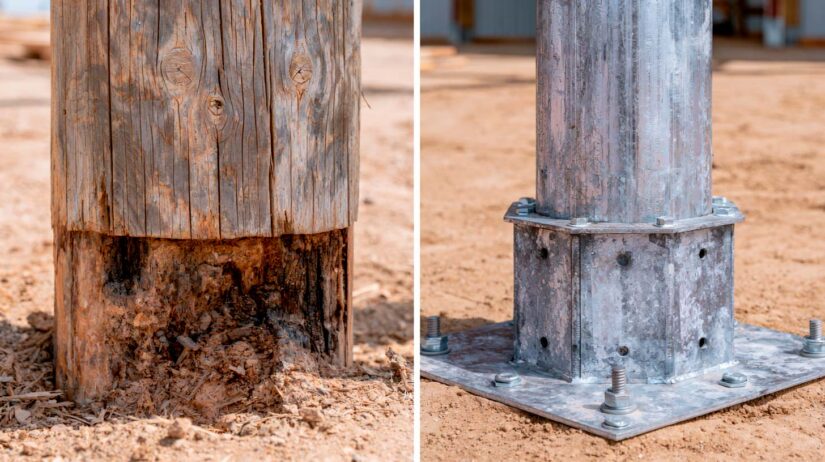
Wood-framed pole barns and stick-built structures face threats steel simply doesn’t. Moisture rots framing members that never fully dry out, and warping follows as humidity swings through the seasons. Termites and other pests go after wood that steel gives them no reason to visit. The most exposed component in a pole barn, the wood posts set directly or indirectly in ground contact, is also usually the first to need attention. Industry data on treated wood in ground contact commonly puts post replacement in the 20-to-40-year range, well short of the 60-year-or-longer structural range for a properly coated steel frame under comparable conditions.
Steel doesn’t solve every problem wood has for free. A steel frame costs more upfront than an equivalent pole barn kit, and that price difference is real. But it buys out the failure modes that shorten wood’s service life in the first place. For a full breakdown of how the two systems compare on cost, structure, and long-term maintenance, see US Patriot Steel’s steel vs wood comparison.
This isn’t a case against wood construction. Wood remains a legitimate, lower-cost choice for buyers who don’t need multi-decade durability or who plan to replace or rebuild on a shorter timeline anyway. The honest comparison is upfront cost against long-term durability, not “good material” against “bad material.”
How to Extend the Life of Your Metal Building
None of the factors above matter much without a maintenance routine behind them. A handful of habits account for most of the difference between a building that reaches the low end of its lifespan range and one that reaches the high end.
- Recoat panels on the schedule that matches your coating type. PVDF finishes generally hold color longer than SMP finishes, but both eventually need attention.
- Clean and inspect gutters and downspouts on a regular schedule. Standing water at the base of the walls is one of the fastest ways to shorten a foundation’s service life.
- Check and retighten fasteners at least once a year, and always after a significant wind event.
- Touch up scratches and chips in the panel finish before rust has a chance to start, not after.
- Keep the building properly ventilated and insulated. Condensation trapped inside a poorly ventilated structure damages panels from the inside just as effectively as weather damages them from the outside; see US Patriot Steel’s guide to insulating a metal building for how ventilation and insulation work together.
- Walk the perimeter after major storms and note anything that looks different from the last inspection, even if it seems minor at the time.
None of these are expensive or specialized. They’re the difference between deferred maintenance turning into a repair bill and a small fix staying small.
Warning Signs Your Metal Building Needs Attention
Most metal building problems give a warning before they become structural. Rust stains around fasteners or seams usually mean the coating has broken down at that specific point, not that the whole panel is failing. Paint that’s flaking or peeling rather than just dulling in color often signals moisture getting underneath the finish. Panels that creak or visibly move in wind may have loosened fasteners rather than a framing problem. Condensation stains on the interior ceiling or walls point to a ventilation gap, not a leaking roof, though it’s worth ruling out an actual leak first. A visible sag or wave in roof panels is the one sign worth calling a structural specialist about right away rather than handling it as routine maintenance.
Catching any of these early is far cheaper than waiting. For a deeper look at how anti-rust coatings work and how to spot corrosion before it spreads, see US Patriot Steel’s full guide to rust prevention. Roof panels have their own service life separate from the building shell, covered in how long do metal roofs last.
Is a Longer-Lasting Building Worth the Higher Upfront Cost?
A building that lasts 60 years instead of 20 to 30 means fewer replacement or major-repair cycles over the life of the property. For a homeowner, that’s a meaningful savings over decades. For a business, it’s often a bigger deal: the building is part of operating infrastructure, not a one-time purchase, and an unplanned structural repair mid-lease or mid-operation costs more in downtime than in materials.
This math matters most on commercial and industrial projects, where the building supports day-to-day operations and a multi-decade ownership horizon is the norm rather than the exception. For buyers weighing that tradeoff, US Patriot Steel’s commercial metal building projects page covers the structural options available for longer-term, higher-load use cases. For the specific dollar-and-cents breakdown of upfront pricing, see the metal building cost guide, which covers cost by size and building type.
What to Do Next
A few questions narrow down what “long-lasting” should mean for a specific project:
Is the building for private use or commercial operations, and how long do you plan to own it? What’s the local climate, coastal, humid, or dry inland? Are you set up to keep a basic maintenance schedule, or does the project need a lower-maintenance coating spec from the start to compensate?
Call (888) 415-1576 or use the quote form to talk through building specs, coating options, and site conditions for your specific project.
Frequently Asked Questions
Pre-engineered steel buildings typically last 60 years or more with routine maintenance, according to Metal Building Manufacturers Association data. Standard building codes set a 50-year design life as a baseline for comparable structures, and actual lifespan depends on steel gauge, coating, climate, and upkeep.
With a consistent maintenance schedule, coated steel structures regularly exceed the 50-year design-life baseline and the Metal Building Manufacturers Association’s six-decades-plus benchmark. The American Galvanizers Association reports hot-dip galvanized coatings can go 70 years or more before needing first maintenance in typical atmospheric exposure, which is one reason well-maintained steel buildings often outlast their design-life assumption.
Yes, for the specific failure modes that shorten wood’s lifespan. Steel doesn’t rot, warp, or attract termites, while wood posts in ground contact commonly need replacement within 20 to 40 years. Wood still has a lower upfront cost, which is a legitimate tradeoff for buyers who don’t need multi-decade durability.
Most standard-occupancy structures, including typical metal buildings, are designed around a 50-year design life under ASCE 7, the load standard referenced by the International Building Code. That’s a code-minimum planning assumption, not a maximum lifespan.
Significantly. Hot-dip galvanization protects the base steel from corrosion, and the American Galvanizers Association rates it for 70-plus maintenance-free years in typical conditions. The exterior finish coat adds a second layer of protection: PVDF (Kynar-class) finishes generally hold color and resist chalking longer than standard SMP finishes.
Recoat panels on schedule, keep gutters and drainage clear, check fasteners annually, touch up scratches before they rust, and maintain proper ventilation to prevent interior condensation. Consistent maintenance is the single biggest factor separating a building that reaches the low end of its expected lifespan from one that reaches the high end.
More in this Guide
- Anti-rust coatings for metal buildings: how protective coatings work and how to spot corrosion early
- How to insulate a metal building: insulation and ventilation systems that prevent interior condensation damage
- Metal building cost guide: cost by size and building type
- Prefab steel vs. stick-built buildings: full cost, structure, and maintenance comparison
- Commercial metal buildings: structural options for longer-term, higher-load projects
- Pole barn vs. metal building: a closer look at the wood-vs-steel decision for barns and garages
References
- Metal Building Manufacturers Association (MBMA). *Resilient by Design.* Service-life data for properly built and maintained steel frame buildings. mbma.com/resilient-design
- American Institute of Steel Construction (AISC). ANSI/AISC 360 structural steel design specification, governing durability and serviceability requirements for structural steel. aisc.org
- American Galvanizers Association. *Estimating the Life of Hot-Dip Galvanized Coatings.* Maintenance-free service life data for galvanized steel by environment. galvanizeit.org
- Steel Framing Industry Association. *Durability.* Industry data on steel framing resistance to rot, pests, and warping compared with wood framing. steelframing.org/durability
- International Code Council (ICC). *International Building Code (IBC).* Model code referencing ASCE 7 structural load standards and the associated 50-year design life assumption for standard-occupancy (Risk Category II) structures. iccsafe.org
- National Association of Home Builders (NAHB). *Study of Life Expectancy of Home Components.* Comparative service-life data for residential building components. PDF