
Completed Projects
Happy Customers
Projects in Progress
New Orders This Week
Why Steel Works in South Carolina
Steel buildings work in South Carolina because each frame is engineered to its own county’s loads, and those loads split hard between the coast and the Upstate. We are a dealer based in Fort Lauderdale, Florida, selling pre-engineered steel building kits made from American steel since 2005, not one of the metal building manufacturers in South Carolina. Our metal buildings in SC ship with PE-stamped drawings for the site.
Wind enters the drawings as a design wind speed under ASCE 7, plus an exposure category for open or sheltered ground. Design speeds run highest near the ocean, for good reason: Hurricane Hugo came ashore at Sullivan’s Island around midnight on September 22, 1989, as a Category 4 storm.
Earthquake design carries real weight around Charleston, one of the most seismically active areas of the eastern United States. Snow is a light design load, seen more often in the Upstate than on the coast. Summers are hot and humid statewide; our guide to insulating a metal building covers vents and insulation.
The farm structure rule and the beachfront setback line are in the codes and permits section below.
South Carolina at a Glance
What We Engineer for:
Design wind speed and exposure category set per county under ASCE 7, highest along the coast
Coastal frames are sized for hurricane-level design wind speeds; a rating, not a storm guarantee
The Charleston area is one of the most seismically active in the eastern US; its seismic design category goes on the drawings
Check the parcel on FEMA flood maps, and the beachfront setback line near the ocean, before ordering
Hot, humid summers statewide; plan insulation and ridge vents with the frame
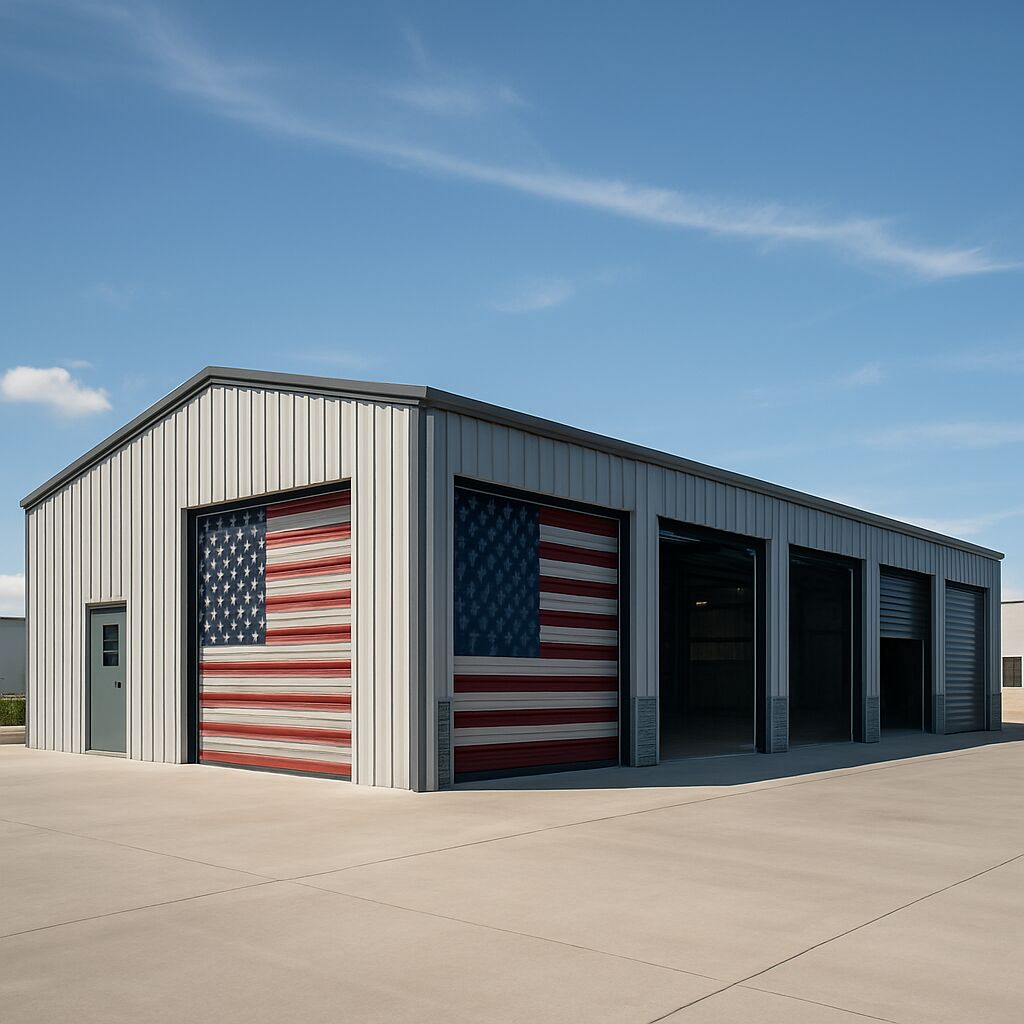
Building Codes and Permits in South Carolina

The Building Codes Council, part of the state Department of Labor, Licensing and Regulation, adopts one set of codes for all of South Carolina, and every county and city must enforce them. The 2021 South Carolina codes have applied since January 1, 2023, with loads from ASCE 7-16; the 2024 editions follow on January 1, 2027. Local changes are valid only with Council approval.

Your local building department issues it: the city inside its limits, the county on unincorporated land. We don’t pull the permit; we supply the PE-stamped drawings, load calculations and specifications your application needs.

Your drawings state the design wind speed, exposure category and seismic design category for the site, and the frame, bracing and anchor bolts are sized to those figures. A local contractor pours the foundation to our anchor bolt layout. The design criteria of your building department show whether the site lies in the wind-borne debris region, where glazed openings need impact protection.

Under S.C. Code §6-9-65, a county or city may not enforce the building code on a farm structure, such as a barn or shed used on the farm and not lived in, once the owner files a farm-use affidavit; a permit can still be required. Check the FEMA flood map, and expect state coastal permitting seaward of the beachfront setback line.
The Building Codes Council, part of the state Department of Labor, Licensing and Regulation, adopts one set of codes for all of South Carolina, and every county and city must enforce them. The 2021 South Carolina codes have applied since January 1, 2023, with loads from ASCE 7-16; the 2024 editions follow on January 1, 2027. Local changes are valid only with Council approval.
Your local building department issues it: the city inside its limits, the county on unincorporated land. We don’t pull the permit; we supply the PE-stamped drawings, load calculations and specifications your application needs.
Your drawings state the design wind speed, exposure category and seismic design category for the site, and the frame, bracing and anchor bolts are sized to those figures. A local contractor pours the foundation to our anchor bolt layout. The design criteria of your building department show whether the site lies in the wind-borne debris region, where glazed openings need impact protection.
Under S.C. Code §6-9-65, a county or city may not enforce the building code on a farm structure, such as a barn or shed used on the farm and not lived in, once the owner files a farm-use affidavit; a permit can still be required. Check the FEMA flood map, and expect state coastal permitting seaward of the beachfront setback line.
Steel Buildings We Deliver Across South Carolina

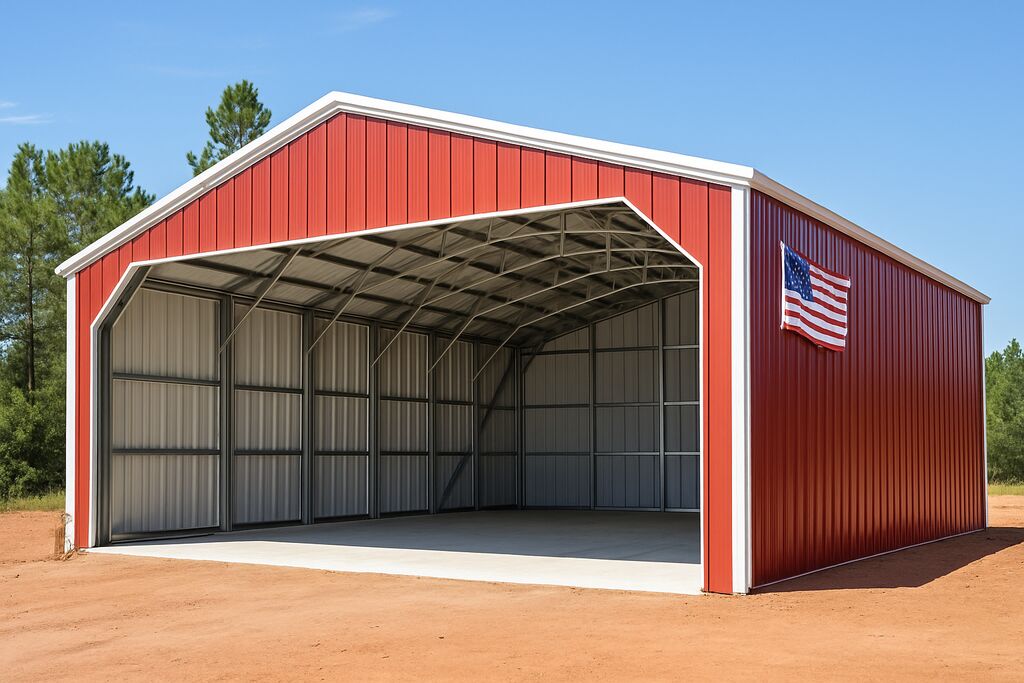
What a Steel Building Costs in South Carolina
A steel building in South Carolina is priced by its size, the engineering its site needs and its finish level. Location moves the engineering: a coastal county adds frame weight for wind and seismic detailing, and an Upstate lot usually adds less. Steel building kits for sale across South Carolina are quoted parcel by parcel.

From 20×20 to 30×40: carports and two-car garages.
From 30×50 to 40×80: horse barns and equipment barns.
From 60×80 up: warehouses and covered riding arenas.
The same 40×60 takes more steel in Charleston County, with coastal wind and the Charleston seismic zone, than in Greenville County in the Upstate. Always give us your county, and your flood zone if you know it.
The $ tier is the bare kit: frame, roof and wall panels. Insulation, roll-up and walk doors or liner panels lift the quote to $$, and a finished interior toward $$$. Dollar ranges by size are in our metal building cost guide.
Popular Metal Building Sizes in South Carolina
South Carolina Cities We Deliver to
Delivery and installation is statewide. These cities have a dedicated page with local permitting detail.
If your city isn’t listed, we still deliver to it. Call (888) 415-1576 or use the quote form above.
How South Carolina Owners Use Steel Buildings by Region
Upstate (Greenville, Spartanburg, Anderson; the I-85 corridor)
The Upstate builds for industry. BMW builds SUVs at its plant in Greer, Michelin North America is headquartered in Greenville, and Inland Port Greer moves containers for both by rail to the Port of Charleston. Suppliers along I-85 order commercial metal buildings for stock and fabrication; for larger clear-span floors, see our metal warehouses.
See also: Metal office buildings · Metal buildings with lean-to
Midlands (Columbia, Aiken, Camden, Sumter)
Horses shape the Midlands. Aiken’s Horse District keeps its roads unpaved around the Aiken Training Track and the polo fields, and Camden hosts the Carolina Cup steeplechase at Springdale Race Course each spring. Farms around Sumter need cover for equipment and hay. Start with our horse barns and stables.
See also: Barn with living quarters · Metal hay barns
Pee Dee (Florence, Darlington, Dillon and Marion counties)
The Pee Dee is row-crop country. Clemson’s Pee Dee Research and Education Center in Florence runs cotton and corn trials, and the farms around it need tall bays for planters and sprayers plus dry storage after harvest. Between seasons, farm trucks and trailers sit under metal carports.
See also: Metal farm buildings · Tractor barns
Lowcountry (Charleston, Summerville, Beaufort; Charleston, Berkeley and Dorchester counties)
The Lowcountry works around the Port of Charleston. Boeing assembles 787 Dreamliners in North Charleston, and Volvo Cars builds vehicles in Ridgeville, Berkeley County. Metal buildings in Charleston, SC, are engineered for coastal wind and the local seismic zone. Suburbs in Berkeley and Dorchester counties add contractor yards and self-storage, plus a few metal building homes; see our metal storage unit kits.
See also: Residential metal buildings · Recreational steel buildings
What can we design for you today?
Talk to a building specialist to learn more!
Design Your Building NowFrequently Asked Questions
Yes. South Carolina has one set of codes statewide, adopted by the Building Codes Council and enforced by every county and city, and we engineer to it. Your drawings name the edition your building department applies and carry the site’s wind and seismic data.
Yes, up to the design wind speed of your coastal county, and that figure is a rating, not a promise against every storm. Frame, bracing and anchor bolts are sized to it, and your inspector checks them on the drawings. More in our article on whether a barndominium can withstand a hurricane.
Usually yes: the city issues it inside its limits, the county on unincorporated land. A farm structure with a farm-use affidavit on file is exempt from code enforcement, but a permit can still be required. Flood zone and beachfront rules apply separately, so call your building department before you order.
Yes. The seismic design category is on every set of drawings we supply, set for your parcel. It matters most around Charleston, where the 1886 earthquake remains the most damaging in the eastern United States. Soil under the site changes the result too, so send the full address, not just a ZIP code.
Yes, we supply steel horse barns and covered riding arenas across South Carolina, from the Aiken training farms to Camden. A shedrow layout and a wide center aisle both work in steel, and ridge vents help through humid summers. Your crew or a local erector puts it up; if you want installation arranged, ask when you request your quote.

Standard Shed Sizes: Common Shed Dimensions and What Fits in Each
Quick Answer Common Shed Sizes at a Glance There is no single standard for shed sizes. What people call standard or common shed sizes are the footprints builders and sellers make most often, and nearly all of them are even numbers of feet. For wood sheds the arithmetic is convenient: 8, 12 and 16 feet […]
Read Article
Texas Barndominiums: Where to Build and What to Plan For
Quick Answer Why Barndominiums are Popular in Texas A barndominium is a steel-frame building with living quarters inside, often with a shop, garage or barn space under the same roof. The guide to what a barndominium is covers the basics; this one is about building it in Texas. The idea fits the way a lot […]
Read Article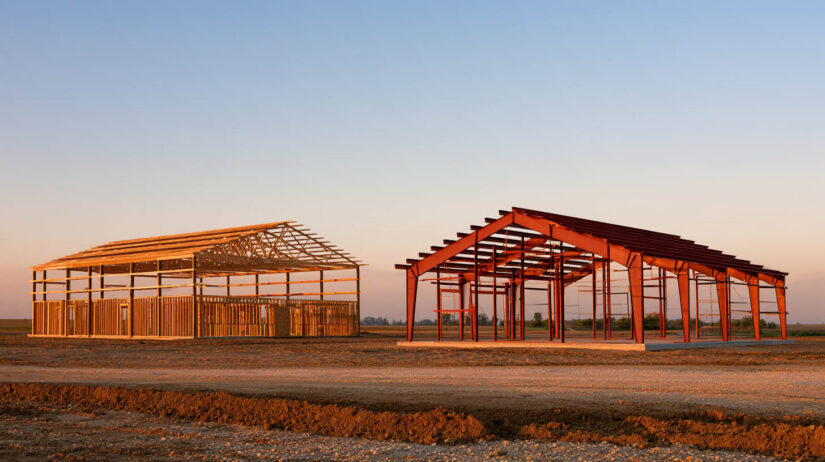
Post-Frame Construction vs Pre-Engineered Steel Buildings: What Actually Differs
Quick Answer What Post-Frame Construction Is Post-frame construction (sometimes written post and frame construction) is a building system in which large wood posts, embedded in the soil or fastened to concrete piers or a slab, carry the roof and the wall cladding without a continuous stud wall. The National Frame Building Association (NFBA) describes it […]
Read Article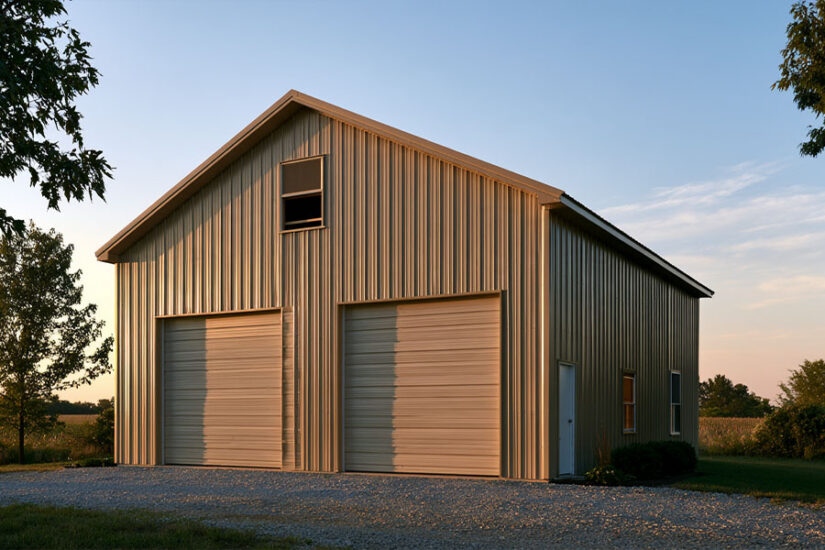
Garage With Loft: Steel Garage Loft Sizes, Heights and Uses
Quick Answer What Counts as a Garage Loft in a Steel Building A garage loft is a second floor level built inside the garage, usually over part of the floor and open to the space below. A wood-framed garage often has an attic inside its roof trusses; a steel garage with an open frame has […]
Read Article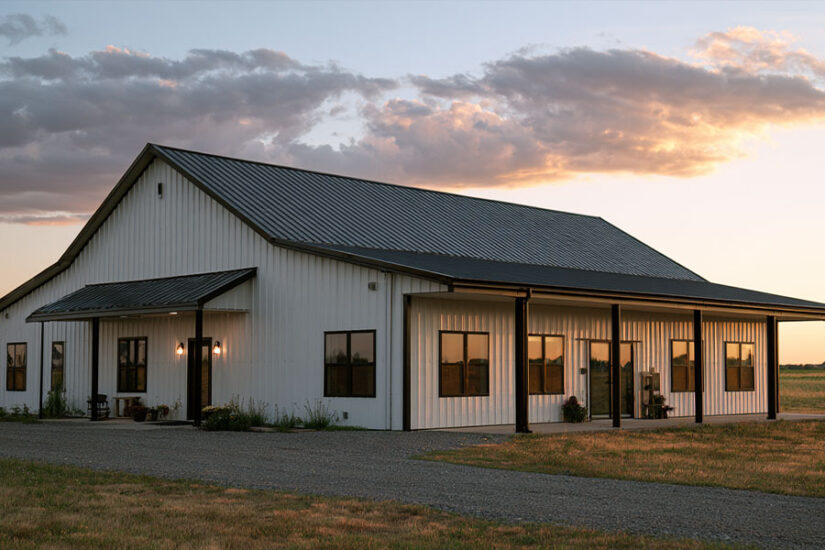
White Barndominium and Farmhouse Exterior Ideas for a Steel Home
Quick Answer A white barndominium is a steel-frame home clad in white wall panels, usually set off by a dark roof and black window and corner trim. Add a covered front porch and a steeper gable, and the same shell reads as a farmhouse barndominium, especially over a stone or wood base. Why White Works […]
Read Article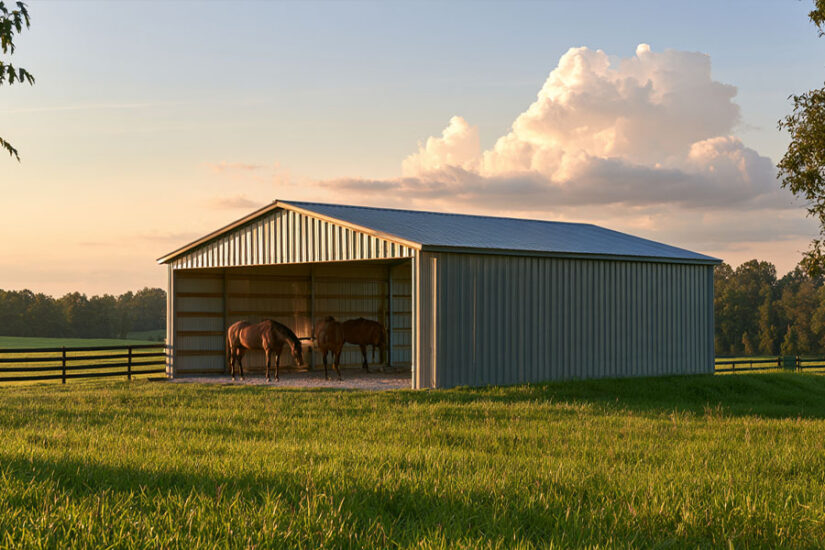
Loafing Shed vs Run-In Shed: Sizes, Layouts, Steel Option
Quick Answer What is a Loafing Shed, and How is it Different From a Run-In Shed? A loafing shed is a roofed shelter, usually closed on three sides and open on the fourth, where livestock rest out of the weather and leave whenever they like. In a barn with stalls each horse is led in […]
Read Article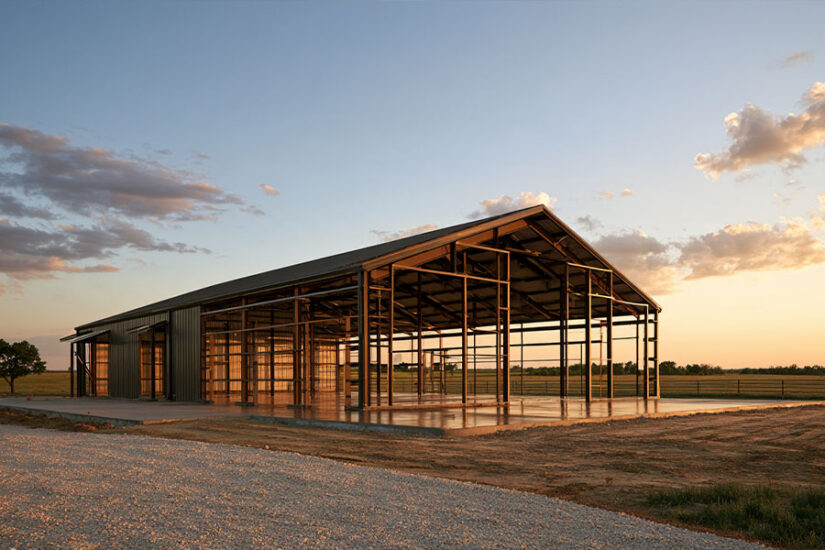
How to Build a Barndominium: Steps From Land to Move-In
Quick Answer Building a barndominium runs in a set order: check the land and local rules, choose the size and plan, get engineered drawings and a permit, order the steel kit, prepare the site and pour the slab, erect the shell, then finish rough-ins, insulation and the interior before the final inspection. A barndominium is […]
Read Article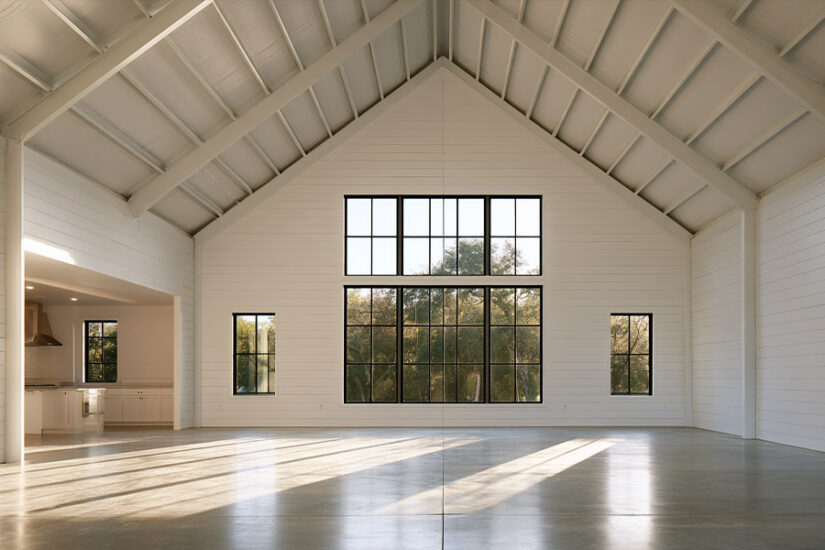
Barndominium Interior Ideas for a Steel-Frame Home
Quick Answer Barndominium interior ideas that hold up start with what the steel frame allows: an open floor with no load-bearing interior walls, and enough height for a loft or a vaulted great room. Behind the finishes, insulation and moisture control keep the rooms dry, and a separation wall divides living space from any shop. […]
Read Article
Standard Garage Sizes: 1, 2, 3 and 4-Car Garage Dimensions
Quick Answer Standard Garage Sizes at a Glance When people say “standard garage size,” they usually mean a two-car garage, and that is what most new houses get. In 2025, 64% of newly completed single-family homes had a two-car garage, according to the Census Bureau’s Characteristics of New Housing data. Garages for three or more […]
Read Article