
Completed Projects
Happy Customers
Projects in Progress
New Orders This Week
Why Steel Works in Montana
Steel buildings hold up in Montana when the frame is engineered for its own site. We are a dealer of pre-engineered steel building kits from American steel, and our metal buildings in Montana arrive with PE-stamped drawings for the parcel.
Snow comes first, and elevation drives it. Montana runs from about 1,800 to 12,800 feet, and the Montana State University Snow Load Finder gives a ground snow load for any point in the state from station records adjusted for elevation. State rules set a floor of 30 psf of roof snow after reductions; Butte-Silver Bow asks for 38 psf.
On the eastern plains, winter brings the Chinook, a warm downslope wind off the Rockies with strong gusts and crosswinds. In January 1972 it raised the temperature at Loma by 103°F in 24 hours, a U.S. record. The west lies in the Intermountain Seismic Belt, where the magnitude 7.3 Hebgen Lake earthquake of 1959 killed 28 people. The drawings carry the seismic design category, design wind speed and exposure category under ASCE 7. For a heated shop, see our guide to insulating a metal building.
Frost depth, flood maps and permit rules are in the codes and permits section below.
Montana at a Glance
What We Engineer for:
Ground snow load for your exact site from the Montana State University Snow Load Finder; roof snow never below 30 psf after reductions
Western Montana lies in the Intermountain Seismic Belt; your parcel’s seismic design category is on every drawing set
Warm downslope winds with strong gusts east of the Rockies; design wind speed and exposure category set per site under ASCE 7
Footings go below the local frost line, 36 inches in Billings and 42 in Butte-Silver Bow; a local contractor pours them to our anchor bolt layout
The state adopted the 2021 IBC and IRC; certified cities and counties enforce them locally, and the state program covers the rest
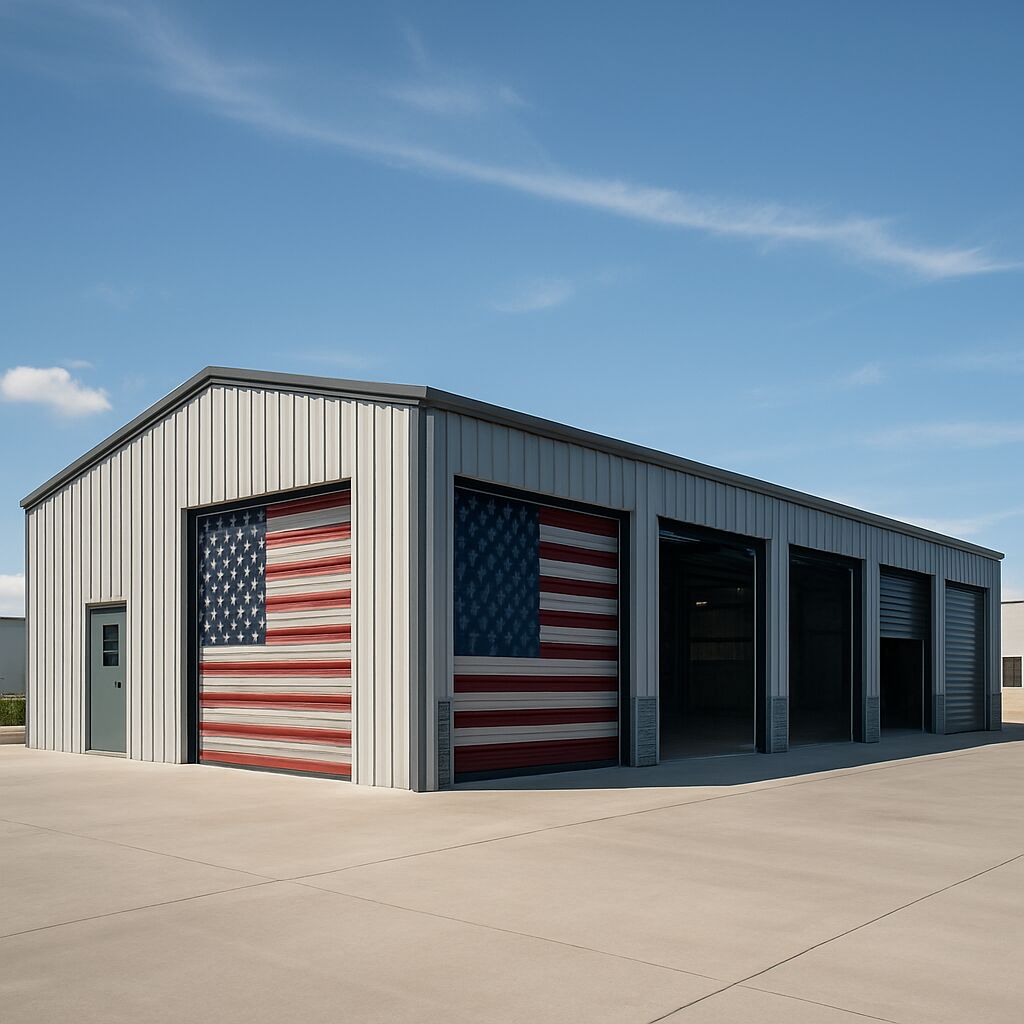
Building Codes and Permits in Montana

Montana adopted the 2021 International Building Code and the 2021 International Residential Code, with state amendments, through the Montana Building Codes Program of the Department of Labor and Industry. Cities, counties and towns certified to run their own program enforce the code inside their limits. Drawings are prepared to the edition your jurisdiction enforces; your building department is the authoritative source.

Inside a city with its own building division, such as Billings or Missoula, start with the city. Some counties run a program too: Missoula County has enforced building codes since 2006. Outside those areas the state program has jurisdiction, and a home there still needs electrical and plumbing permits. We don’t pull the permit; we supply PE-stamped drawings, load calculations and specifications.

State law keeps farm and ranch buildings out of the state building code. State rules define one as a building used for agriculture on 160 or more contiguous acres under one ownership, or on land classified as agricultural for taxes; a building used for manufacturing or retail sales does not qualify. A county with its own program sets its own rule: Missoula County dropped its agricultural exemption in 2022 and brought one back in 2024 for farm buildings not used for living or business.

The foundation needs local figures for frost depth and snow: Billings lists 36 inches of frost depth and Seismic Design Category B, Butte-Silver Bow 42 inches and category D. Outside certified jurisdictions, state rules take the design snow load from ASCE 7-22. A local contractor pours the footings to our anchor bolt layout. Check flood risk on the FEMA Flood Map Service Center and with your county.
Montana adopted the 2021 International Building Code and the 2021 International Residential Code, with state amendments, through the Montana Building Codes Program of the Department of Labor and Industry. Cities, counties and towns certified to run their own program enforce the code inside their limits. Drawings are prepared to the edition your jurisdiction enforces; your building department is the authoritative source.
Inside a city with its own building division, such as Billings or Missoula, start with the city. Some counties run a program too: Missoula County has enforced building codes since 2006. Outside those areas the state program has jurisdiction, and a home there still needs electrical and plumbing permits. We don’t pull the permit; we supply PE-stamped drawings, load calculations and specifications.
State law keeps farm and ranch buildings out of the state building code. State rules define one as a building used for agriculture on 160 or more contiguous acres under one ownership, or on land classified as agricultural for taxes; a building used for manufacturing or retail sales does not qualify. A county with its own program sets its own rule: Missoula County dropped its agricultural exemption in 2022 and brought one back in 2024 for farm buildings not used for living or business.
The foundation needs local figures for frost depth and snow: Billings lists 36 inches of frost depth and Seismic Design Category B, Butte-Silver Bow 42 inches and category D. Outside certified jurisdictions, state rules take the design snow load from ASCE 7-22. A local contractor pours the footings to our anchor bolt layout. Check flood risk on the FEMA Flood Map Service Center and with your county.
Steel Buildings We Deliver Across Montana

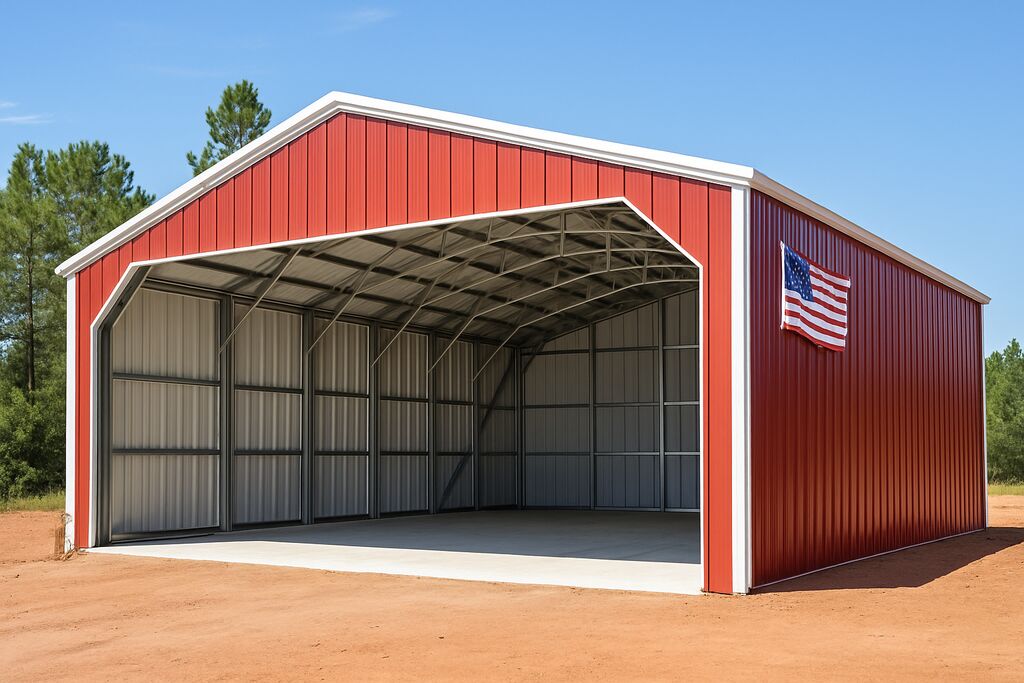
What a Steel Building Costs in Montana
The price of a steel building in Montana depends on its size, the loads of its site and its finish. Mountain snow and seismic bracing add frame weight.

From 20×20 to 30×40: garages, RV garages and equipment shelters.
From 30×50 to 40×80: steel homes, horse barns with stalls and shop buildings.
From 60×100 up: riding arenas, machinery and hay barns, and warehouses.
A 40×60 in Butte-Silver Bow, with 38 psf of roof snow and Seismic Design Category D, gets a heavier frame than the same building near Billings, where the roof floor is 30 psf and the category is B.
The $ tier covers the kit itself: frame, roof and wall panels. Insulation, overhead doors and liner panels move it to $$, and a finished living space or office inside to $$$. Our metal building cost guide lists dollar ranges by size.
From 20×20 to 30×40: garages, RV garages and equipment shelters.
From 30×50 to 40×80: steel homes, horse barns with stalls and shop buildings.
From 60×100 up: riding arenas, machinery and hay barns, and warehouses.
A 40×60 in Butte-Silver Bow, with 38 psf of roof snow and Seismic Design Category D, gets a heavier frame than the same building near Billings, where the roof floor is 30 psf and the category is B.
The $ tier covers the kit itself: frame, roof and wall panels. Insulation, overhead doors and liner panels move it to $$, and a finished living space or office inside to $$$. Our metal building cost guide lists dollar ranges by size.
How Montana Owners Use Steel Buildings by Region
Western Montana (Missoula, Kalispell, Whitefish, Hamilton; Missoula, Flathead, Lake, Ravalli counties)
Western Montana is mountain valley country, with snowy winters and cool summers. The Intermountain Seismic Belt starts here, near Flathead Lake, so frames carry seismic bracing along with the snow load. Families in the Flathead and Bitterroot valleys build homes, garages and shops on acreage, and some choose a steel house. See our residential metal buildings.
See also: RV garages · Metal sheds
Southwest Montana (Bozeman, Belgrade, Butte, Helena, Dillon; Gallatin, Silver Bow, Lewis and Clark, Beaverhead counties)
Southwest Montana is horse country and the state’s earthquake country. The Hebgen Lake earthquake struck near West Yellowstone, a series of earthquakes shook Helena in 1935, and Butte-Silver Bow designs to category D. Montana counted 63,784 horses and ponies in the 2022 Census of Agriculture, and owners in the Gallatin Valley pair stalls with an indoor arena for winter riding. Start with our horse barns and stables.
See also: Barn with living quarters · Metal office buildings
North-central Montana (Great Falls, Havre, Fort Benton, Conrad; Cascade, Hill, Chouteau, Pondera counties)
North-central Montana grows wheat: the state harvested wheat for grain on about 5.2 million acres in 2022, and Chouteau County ranks among the top counties for land in farms. Chinook winds sweep these plains, and Loma in Chouteau County holds the U.S. record for a 24-hour temperature swing. Combines and grain trucks need wide, tall doors; see our tractor barns.
See also: Metal hay barns · Metal carports
Eastern Montana (Billings, Miles City, Glendive, Sidney; Yellowstone, Custer, Dawson, Richland, Big Horn, Rosebud counties)
Eastern Montana is cattle and ranch country. The state held about 2.1 million cattle and calves at the end of 2022, the average Montana farm or ranch covers 2,374 acres, and Big Horn and Rosebud counties lead the state in land in farms. Blizzards are most common in the northeast, about five a year. Calving sheds and feed storage fit under our livestock barns.
See also: Metal warehouses · Metal storage unit kits
What can we design for you today?
Talk to a building specialist to learn more!
Design Your Building NowFrequently Asked Questions
Yes. Montana adopted the 2021 International Building Code and International Residential Code with state amendments. Certified cities, counties and towns enforce them inside their limits, and the state Building Codes Program covers the rest. Our drawings follow your jurisdiction’s edition; your building department has the final word.
It depends on the county and the building’s use. State law keeps farm and ranch buildings out of the state code when they serve agriculture on 160 or more contiguous acres or on land classified as agricultural. A county with its own program, such as Missoula County, sets its own rule, and a home still needs electrical and plumbing permits.
They are engineered for the ground snow load of the exact site, which rises with elevation. Engineers read it from the Montana State University Snow Load Finder or take the figure your building official sets, and the roof never goes below 30 psf after reductions. Send the full address with your quote request.
Yes, we deliver across Montana, from Kalispell to Billings and Glendive. Make sure a truck can reach the pad. We confirm your production schedule and delivery window when your order is finalized. Your crew or a local erector assembles the building; if you want installation arranged, ask when you request your quote.
Yes, both come as pre-engineered steel building kits drawn for your site’s snow and seismic loads. An arena needs a wide clear span and a door big enough for a tractor to groom the footing. Tell us the stall count and arena size with your quote request.
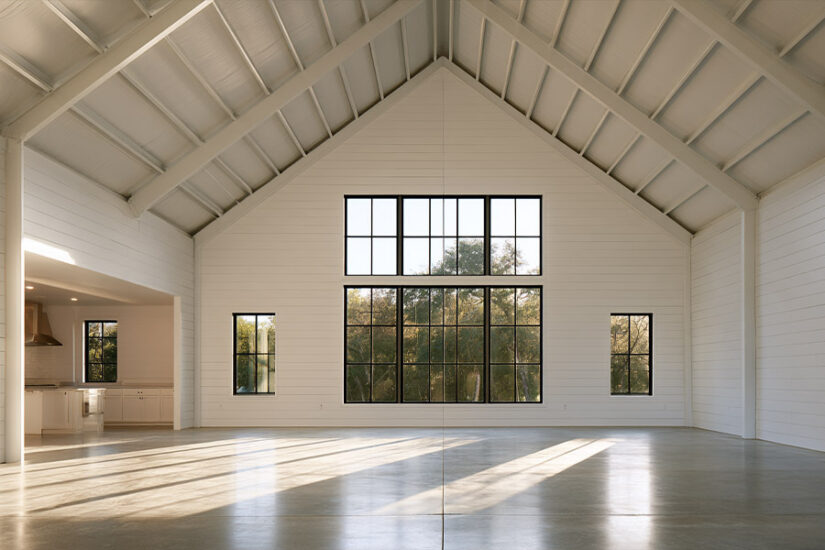
Barndominium Interior Ideas for a Steel-Frame Home
Quick Answer Barndominium interior ideas that hold up start with what the steel frame allows: an open floor with no load-bearing interior walls, and enough height for a loft or a vaulted great room. Behind the finishes, insulation and moisture control keep the rooms dry, and a separation wall divides living space from any shop. […]
Read Article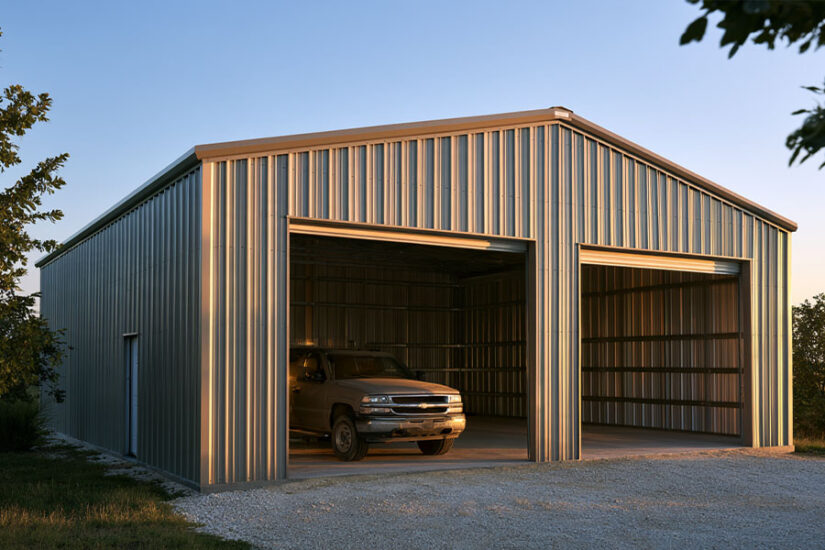
Standard Garage Sizes: 1-, 2- and 3-Car Garage Dimensions
Quick Answer Standard Garage Sizes at a Glance When people say “standard garage size,” they usually mean a two-car garage, and that is what most new houses get. In 2025, 64% of newly completed single-family homes had a two-car garage, according to the Census Bureau’s Characteristics of New Housing data. Garages for three or more […]
Read Article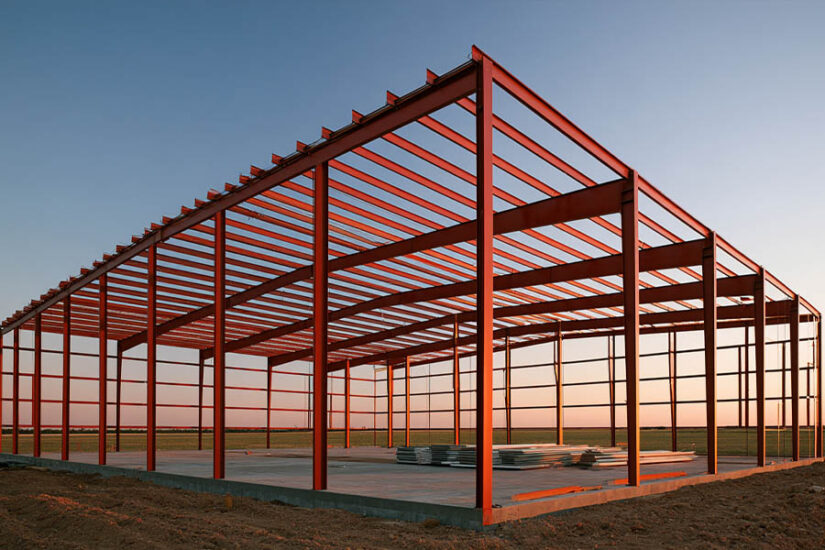
What is a PEMB (Pre-Engineered Metal Building)?
Quick Answer What PEMB Stands for, and What the Industry Actually Calls it PEMB stands for pre-engineered metal building. Contractors and building officials use the acronym for a low-rise steel building that one manufacturer designs and supplies as a complete structural package. The same product appears in quotes under other names too: pre-engineered steel building, […]
Read Article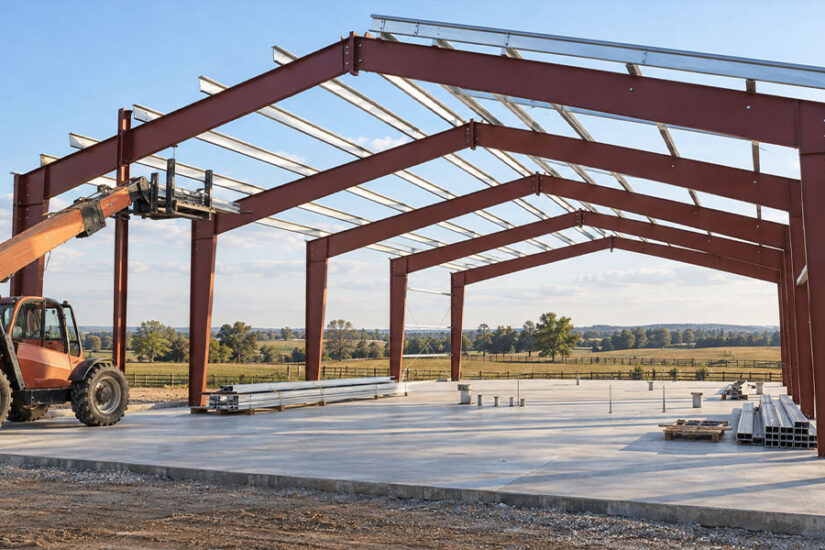
Red Iron Steel Buildings Explained
Quick Answer What Red Iron is and Where the Name Comes From Dealers and classified ads use “red iron” as if it were a material you could order by name. It isn’t. It’s trade shorthand for the heavy structural steel in the primary frame of a metal building, and the phrase stuck because the parts […]
Read Article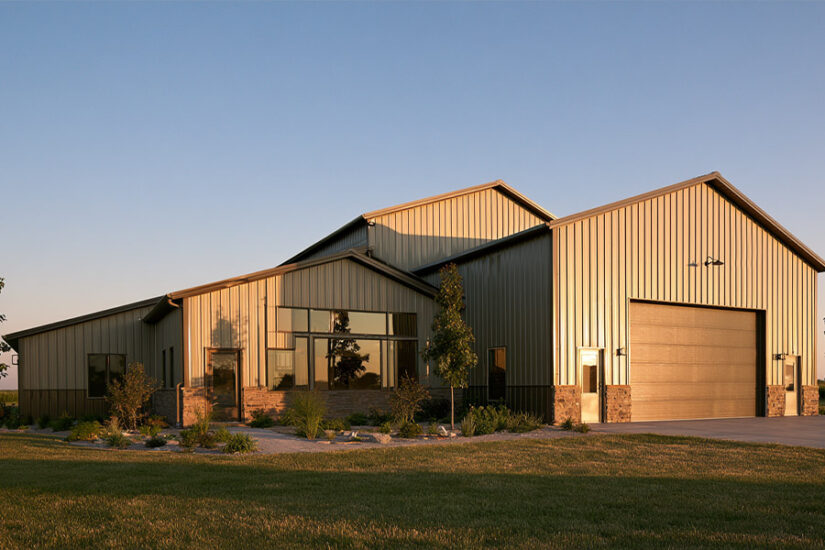
How Much Does it Cost to Build a Barndominium in 2026?
How much does it cost to build a barndominium? Nationally in 2026, a fully turnkey build with standard finishes runs $65 to $160 per square foot, and the steel or post-frame shell alone, the kit plus on-site assembly, runs $30 to $50 per square foot before any interior work starts (Source: HomeGuide, 2026). For a […]
Read Article
How Long Do Metal Roofs Last?
Quick Answer Types of Metal Roofing Panels and Why the Fastening System Matters Panel profile decides how a roof looks. Fastening system decides how long it holds up, and that second factor does more to separate the low end of the 30-to-50-plus-year range from the high end than the choice of steel itself. Three fastening […]
Read Article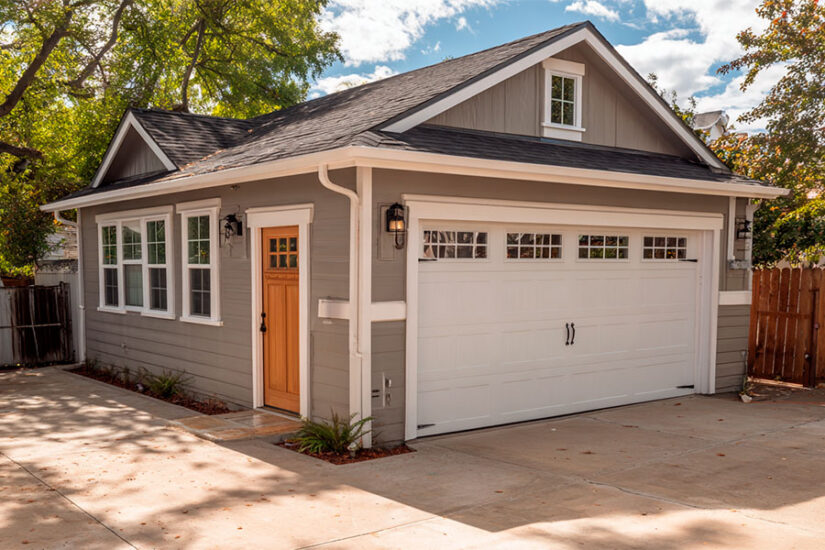
How to Convert a Garage into Living Space: A 2026 Cost and Code Guide
Converting a garage into living space is the process of insulating, sealing, finishing, and reclassifying a garage so it can be permitted and used as a bedroom, home office, family room, or accessory dwelling unit (ADU). The work costs $15,000 to $60,000 in most US regions in 2026, depending on scope, takes 3 to 10 […]
Read Article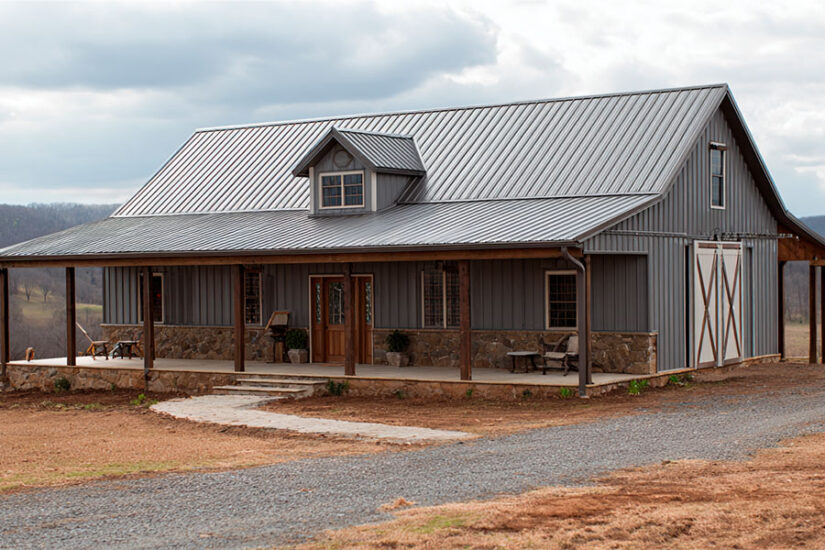
Pole Barn Houses: Costs, Plans, and What They Actually Are in 2026
A pole barn house is a residential home built on a post-frame structure: pressure-treated wood columns set into the ground or onto concrete piers, with a wood truss roof and metal sheeting for the walls and roof. It is closely related to the barndominium but distinct in one important way. A barndominium uses steel framing […]
Read Article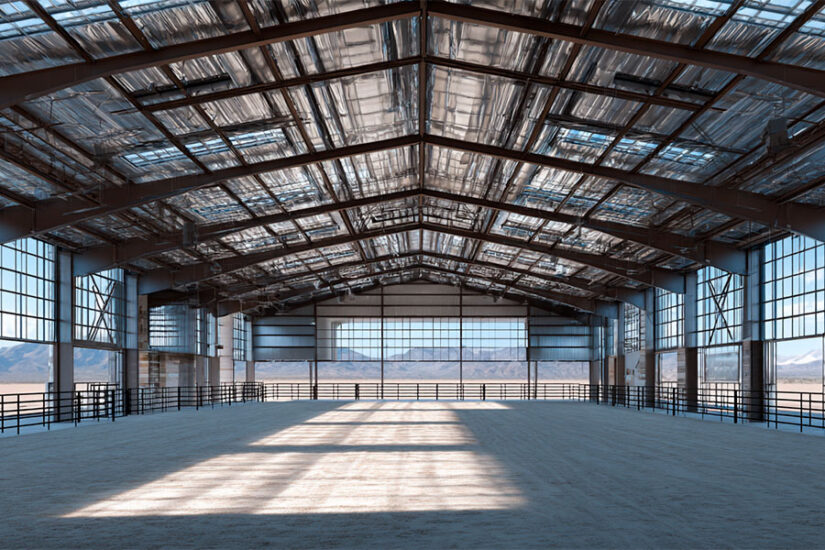
How to Build a Horse Arena: The Owner’s Practical Guide for 2026
The short version of building a horse arena: pick the site carefully, pull the permits, hand off the technical work to people who do it for a living, write a lot of checks, and wait eight to sixteen weeks for an indoor build (three to six for outdoor) before the first horse walks on the […]
Read Article