
Completed Projects
Happy Customers
Projects in Progress
New Orders This Week
Why Steel Works in Wisconsin
Steel buildings hold up in Wisconsin when the frame is engineered for its own site. We are a dealer of pre-engineered steel building kits from American steel, and our metal buildings in Wisconsin, from barndominiums to dairy farm shops, arrive with PE-stamped drawings for the parcel.
Snow and frost come first. Snowfall runs from about 30 inches a year in the south to more than 100 inches along the Gogebic Range, where lake-effect storms come off Lake Superior. The state dwelling code puts home roofs in snow zones, 30 psf in the south and 40 psf in the north, and sets footings at least 48 inches below grade.
Summer brings the wind. The derecho of May 30–31, 1998 drove gusts of 70 to 100 mph, and some areas reported 128 mph. From 1980 to 2020 the state averaged 23 tornadoes a year. Every drawing set carries the design snow load, design wind speed and exposure category under ASCE 7. Weighing a slab against a frost wall? Start with our steel building foundation guide.
Permit rules and the farm building exemptions are in the codes and permits section below.
Wisconsin at a Glance
What We Engineer for:
Home roofs follow the state dwelling code zone map, 30 psf in the south and 40 psf in the north; other buildings get a site snow load under ASCE 7
More than 100 inches a year along the Gogebic Range near Lake Superior, against about 30 inches in the south
Footings at least 48 inches below grade, or below the frost line where it runs deeper; a local contractor pours them to our anchor bolt layout
About 23 tornadoes a year and summer derechos; design wind speed and exposure category set per site under ASCE 7
Homes follow the state Uniform Dwelling Code; workplaces such as shops and warehouses follow the state commercial code, now based on the 2021 IBC
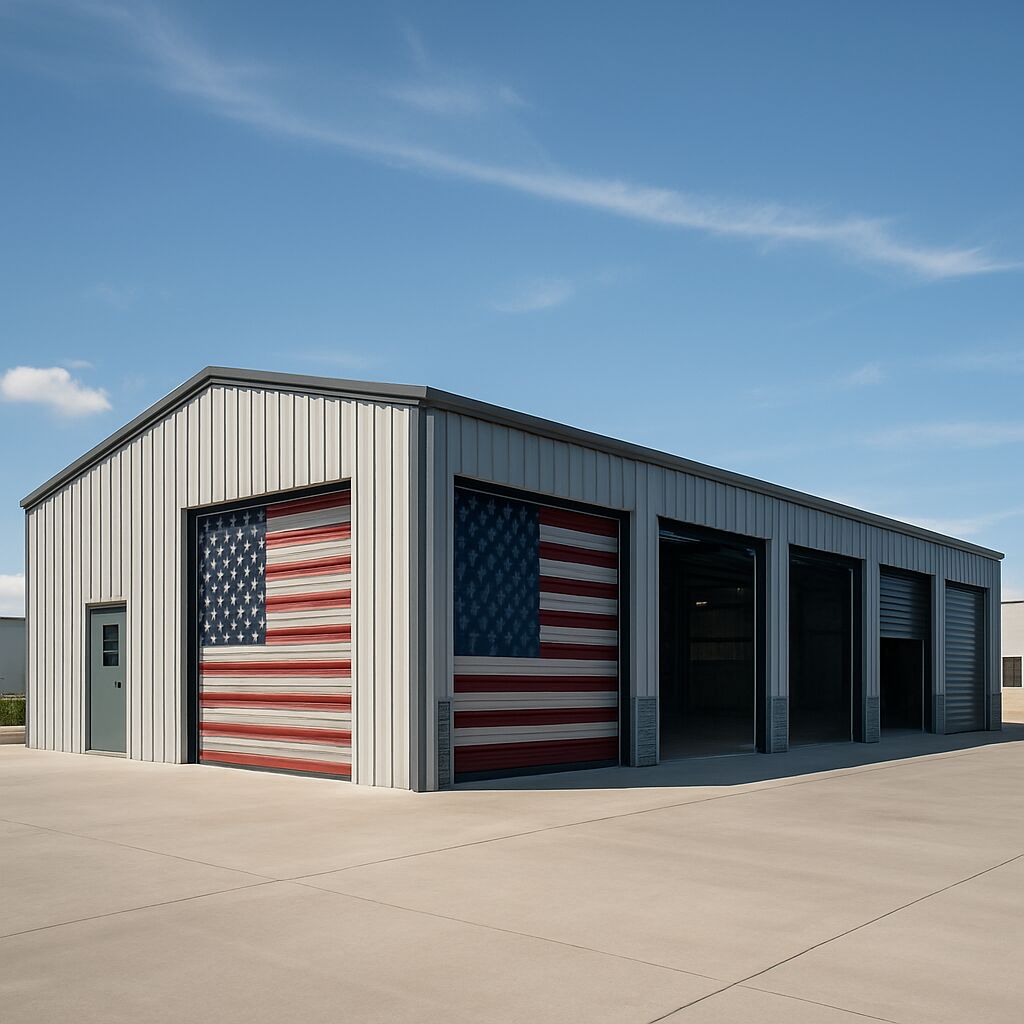
Building Codes and Permits in Wisconsin

Wisconsin writes its own code for homes. The Uniform Dwelling Code, run by the Department of Safety and Professional Services, covers one- and two-family dwellings built since June 1, 1980, barndominiums included. Shops, warehouses and other workplaces fall under the Wisconsin Commercial Building Code, which moved to the 2021 International Building Code in 2025. Drawings are prepared to the code your building department enforces.

For a home, the city, village or town issues the permit and inspects. A municipality of 2,500 people or fewer can instead ask the county or the state to enforce the code. Commercial plans go to the state department, or to a city or county approved to review them; ask about local permits too. We don’t pull the permit; we supply PE-stamped drawings, load calculations and specifications.

Neither state code covers a building used only for farming. The dwelling code leaves out farm buildings not used for living, along with detached garages and accessory buildings. The commercial code leaves out farm buildings too, and a farm stand still qualifies when at least 90 percent of what it sells was grown or produced on that farm. A barndominium you live in is a home, so plan on a dwelling code permit and check local zoning.

The dwelling code puts footings below the frost line and at least 48 inches below grade, and it allows frost-protected shallow foundations designed to ASCE 32. A local contractor pours the footings to our anchor bolt layout. Check flood risk on the FEMA Flood Map Service Center and with your county: in June 2008, several stations in southern Wisconsin recorded more than 10 inches of rain in eight days.
Wisconsin writes its own code for homes. The Uniform Dwelling Code, run by the Department of Safety and Professional Services, covers one- and two-family dwellings built since June 1, 1980, barndominiums included. Shops, warehouses and other workplaces fall under the Wisconsin Commercial Building Code, which moved to the 2021 International Building Code in 2025. Drawings are prepared to the code your building department enforces.
For a home, the city, village or town issues the permit and inspects. A municipality of 2,500 people or fewer can instead ask the county or the state to enforce the code. Commercial plans go to the state department, or to a city or county approved to review them; ask about local permits too. We don’t pull the permit; we supply PE-stamped drawings, load calculations and specifications.
Neither state code covers a building used only for farming. The dwelling code leaves out farm buildings not used for living, along with detached garages and accessory buildings. The commercial code leaves out farm buildings too, and a farm stand still qualifies when at least 90 percent of what it sells was grown or produced on that farm. A barndominium you live in is a home, so plan on a dwelling code permit and check local zoning.
The dwelling code puts footings below the frost line and at least 48 inches below grade, and it allows frost-protected shallow foundations designed to ASCE 32. A local contractor pours the footings to our anchor bolt layout. Check flood risk on the FEMA Flood Map Service Center and with your county: in June 2008, several stations in southern Wisconsin recorded more than 10 inches of rain in eight days.
Steel Buildings We Deliver Across Wisconsin

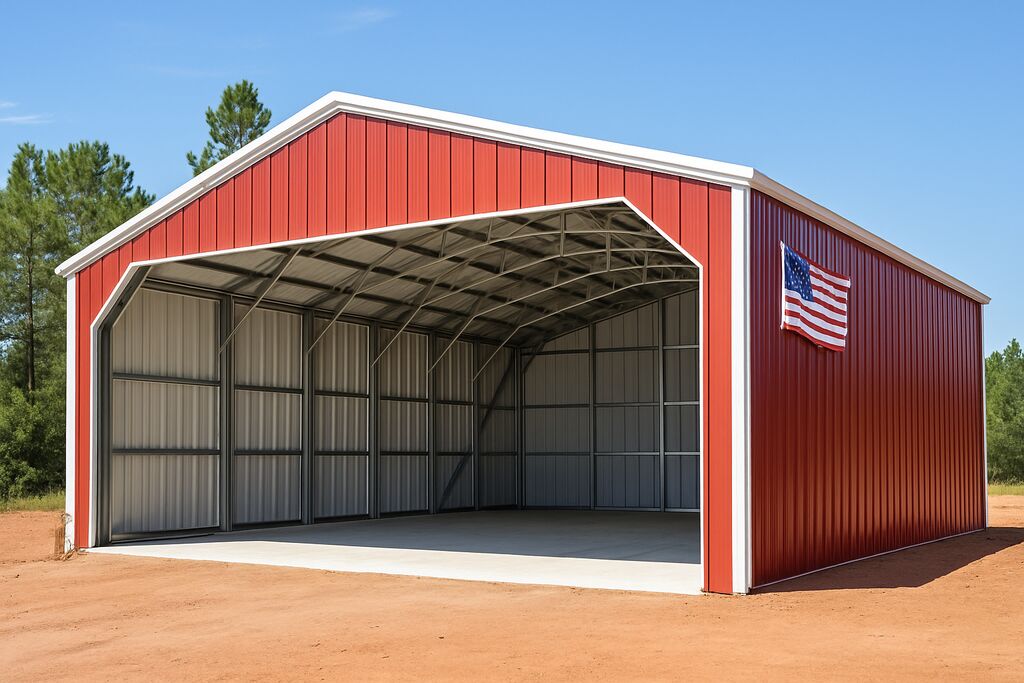
What a Steel Building Costs in Wisconsin
The price of a steel building in Wisconsin depends on its size, the loads of its site and its finish. Northern snow zones add frame weight.

From 20×20 to 30×40: garages, boat storage and equipment sheds.
From 30×50 to 40×80: barndominiums, workshops and farm shops.
From 60×100 up: dairy and machinery barns, warehouses and commercial buildings.
A 40×60 barndominium in Oneida County, in the 40 psf roof zone, gets a heavier frame than the same building in Dane County, where the zone is 30 psf.
The $ tier covers the kit itself: frame, roof and wall panels. Insulation, overhead doors and liner panels move it to $$, and a finished living space or office inside to $$$. Our barndominium cost guide lists dollar ranges.
From 20×20 to 30×40: garages, boat storage and equipment sheds.
From 30×50 to 40×80: barndominiums, workshops and farm shops.
From 60×100 up: dairy and machinery barns, warehouses and commercial buildings.
A 40×60 barndominium in Oneida County, in the 40 psf roof zone, gets a heavier frame than the same building in Dane County, where the zone is 30 psf.
The $ tier covers the kit itself: frame, roof and wall panels. Insulation, overhead doors and liner panels move it to $$, and a finished living space or office inside to $$$. Our barndominium cost guide lists dollar ranges.
How Wisconsin Owners Use Steel Buildings by Region
Southern Wisconsin (Milwaukee, Madison, Janesville, Kenosha, Platteville; Milwaukee, Waukesha, Dane, Rock, Grant counties)
Southern Wisconsin holds the largest cities and the lightest snow zone. Around Milwaukee and Madison, business owners put up shops, storage and contractor buildings. To the west, Grant County leads the state in land in farms and in cattle and hog sales, and Dane County grows about 151,000 acres of corn for grain. On August 25, 2005, 27 tornadoes touched down in southern Wisconsin, a one-day record for the state. For stock and pallets, see our metal warehouses.
See also: Metal office buildings · Metal storage unit kits
Northeast Wisconsin and the Fox Valley (Green Bay, Appleton, Oshkosh, Fond du Lac, Manitowoc; Brown, Outagamie, Winnebago, Fond du Lac, Manitowoc counties)
Northeast Wisconsin is dairy country. The state ranks second in the nation for milk sales, and Fond du Lac and Manitowoc counties rank second and fourth in Wisconsin. In Manitowoc County, forage and corn for silage are the top crops. On April 10, 2011, the northeast saw its largest single tornado outbreak, 15 tornadoes in one day. Housing for cows and young stock fits under our livestock barns.
See also: Metal hay barns · Metal carports
Central Wisconsin (Wausau, Stevens Point, Marshfield, Wisconsin Rapids, Eau Claire; Marathon, Clark, Wood, Portage, Eau Claire counties)
Central Wisconsin pairs dairy farms with cranberry marshes. Clark County leads the state in milk sales and Marathon County ranks third, and both are among the top five counties for land in farms. Wisconsin is the country’s largest cranberry producer, and Wood County leads the state in fruit and berry sales, with more than 5,200 acres in berries. Choppers, wagons and harvest equipment need wide doors; see our tractor barns.
See also: Metal barns · Horse barns and stables
Northern Wisconsin and Lake Superior (Superior, Ashland, Hurley, Rhinelander, Minocqua; Douglas, Ashland, Iron, Oneida, Vilas counties)
Up north, snow sets the frame. Lake-effect storms off Lake Superior bring more than 100 inches a year to the Gogebic Range, and homes in Oneida County design to the 40 psf roof zone. Owners of cabins and lake homes build tall storage for boats, trailers and snowmobiles, and some choose a steel house. Start with our residential metal buildings.
See also: RV garages · Recreational steel buildings
What can we design for you today?
Talk to a building specialist to learn more!
Design Your Building NowFrequently Asked Questions
Yes, two of them. Homes, barndominiums included, follow the state Uniform Dwelling Code, which cities, villages and towns enforce. Shops, warehouses and other workplaces follow the Wisconsin Commercial Building Code, which moved to the 2021 International Building Code in 2025. Our drawings follow the code that applies; your building department has the final word.
Often not under the state codes. Both leave out buildings used only for farming, and a farm stand still qualifies when at least 90 percent of what it sells was grown or produced on that farm. A barn with living space needs a dwelling code permit. Ask your town and county about zoning before you order.
Homes are engineered to the snow zone on the state dwelling code map: 30 psf in the south and 40 psf in the north. Shops and commercial buildings get a site snow load under ASCE 7. Lake-effect country along Lake Superior sees the most snow. Send the full address with your quote request.
Yes, we deliver across Wisconsin, from Kenosha to Green Bay and Superior. Make sure a truck can reach the pad. We confirm your production schedule and delivery window when your order is finalized. Your crew or a local erector assembles the building; if you want installation arranged, ask when you request your quote.
Yes. A barndominium is a one-family home under the Uniform Dwelling Code, so it gets a permit and inspections like any house. The footings go at least 48 inches below grade, and the roof is drawn for your snow zone. Tell us the floor plan and door sizes with your quote request.

Loafing Shed vs Run-In Shed: Sizes, Layouts, Steel Option
Quick Answer What is a Loafing Shed, and How is it Different From a Run-In Shed? A loafing shed is a roofed shelter, usually closed on three sides and open on the fourth, where livestock rest out of the weather and leave whenever they like. In a barn with stalls each horse is led in […]
Read Article
How to Build a Barndominium: Steps From Land to Move-In
Quick Answer Building a barndominium runs in a set order: check the land and local rules, choose the size and plan, get engineered drawings and a permit, order the steel kit, prepare the site and pour the slab, erect the shell, then finish rough-ins, insulation and the interior before the final inspection. A barndominium is […]
Read Article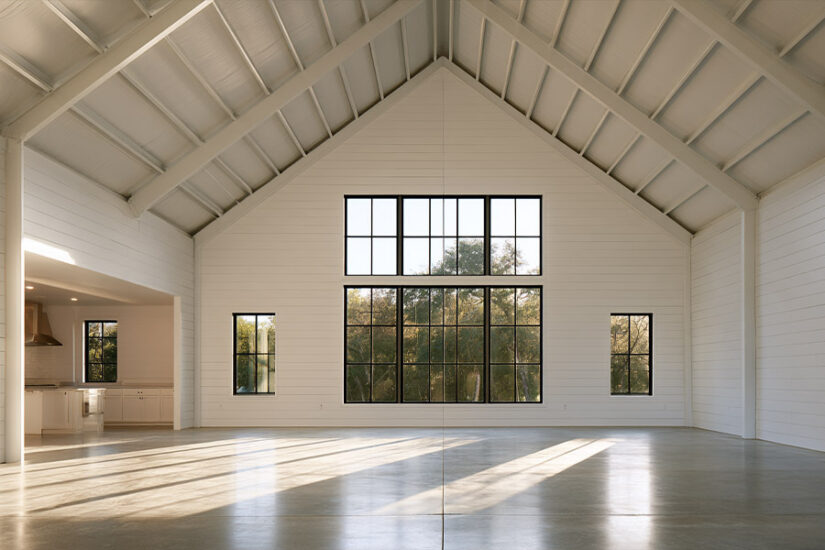
Barndominium Interior Ideas for a Steel-Frame Home
Quick Answer Barndominium interior ideas that hold up start with what the steel frame allows: an open floor with no load-bearing interior walls, and enough height for a loft or a vaulted great room. Behind the finishes, insulation and moisture control keep the rooms dry, and a separation wall divides living space from any shop. […]
Read Article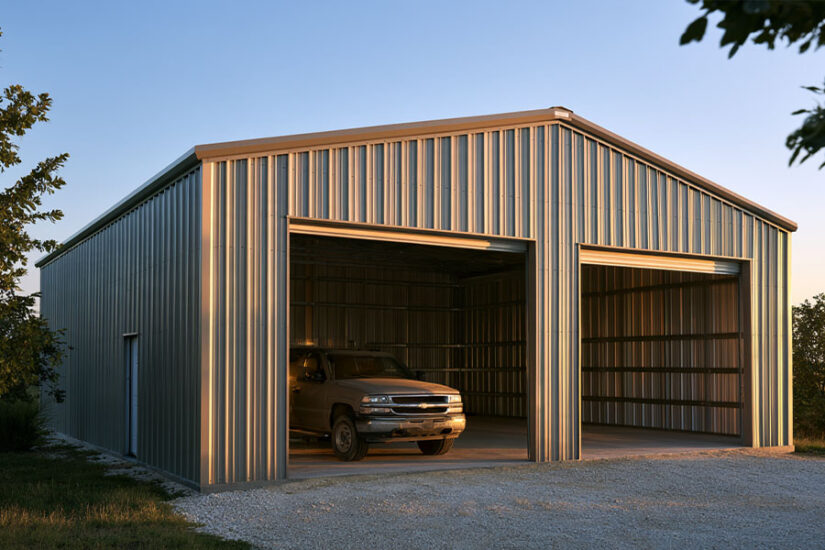
Standard Garage Sizes: 1-, 2- and 3-Car Garage Dimensions
Quick Answer Standard Garage Sizes at a Glance When people say “standard garage size,” they usually mean a two-car garage, and that is what most new houses get. In 2025, 64% of newly completed single-family homes had a two-car garage, according to the Census Bureau’s Characteristics of New Housing data. Garages for three or more […]
Read Article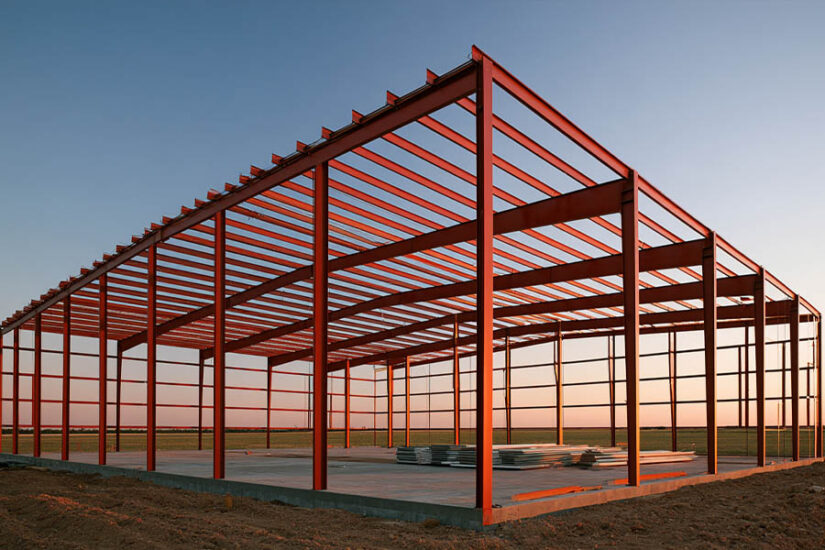
What is a PEMB (Pre-Engineered Metal Building)?
Quick Answer What PEMB Stands for, and What the Industry Actually Calls it PEMB stands for pre-engineered metal building. Contractors and building officials use the acronym for a low-rise steel building that one manufacturer designs and supplies as a complete structural package. The same product appears in quotes under other names too: pre-engineered steel building, […]
Read Article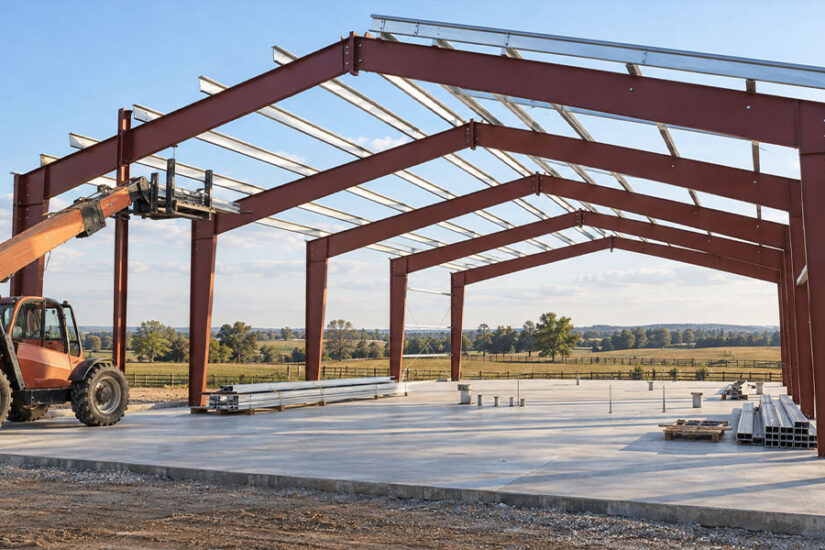
Red Iron Steel Buildings Explained
Quick Answer What Red Iron is and Where the Name Comes From Dealers and classified ads use “red iron” as if it were a material you could order by name. It isn’t. It’s trade shorthand for the heavy structural steel in the primary frame of a metal building, and the phrase stuck because the parts […]
Read Article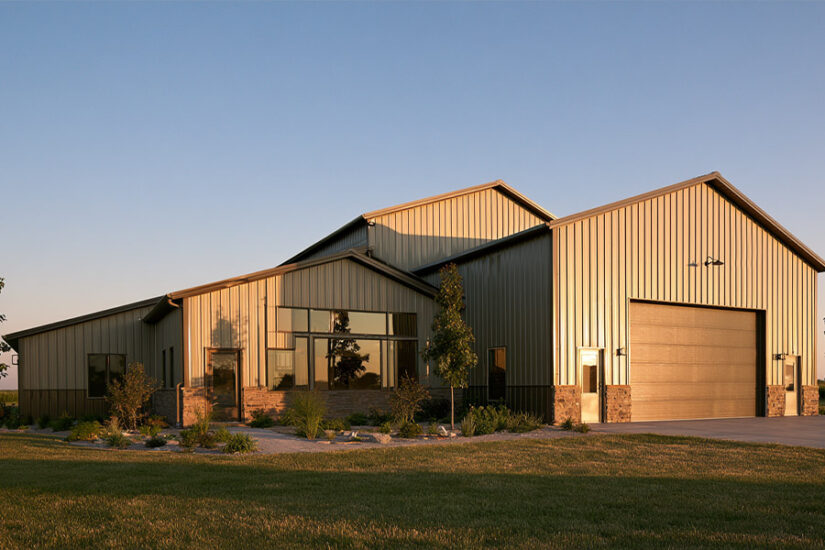
How Much Does it Cost to Build a Barndominium in 2026?
How much does it cost to build a barndominium? Nationally in 2026, a fully turnkey build with standard finishes runs $65 to $160 per square foot, and the steel or post-frame shell alone, the kit plus on-site assembly, runs $30 to $50 per square foot before any interior work starts (Source: HomeGuide, 2026). For a […]
Read Article
How Long Do Metal Roofs Last?
Quick Answer Types of Metal Roofing Panels and Why the Fastening System Matters Panel profile decides how a roof looks. Fastening system decides how long it holds up, and that second factor does more to separate the low end of the 30-to-50-plus-year range from the high end than the choice of steel itself. Three fastening […]
Read Article
How to Convert a Garage into Living Space: A 2026 Cost and Code Guide
Converting a garage into living space is the process of insulating, sealing, finishing, and reclassifying a garage so it can be permitted and used as a bedroom, home office, family room, or accessory dwelling unit (ADU). The work costs $15,000 to $60,000 in most US regions in 2026, depending on scope, takes 3 to 10 […]
Read Article