

Quick Answer
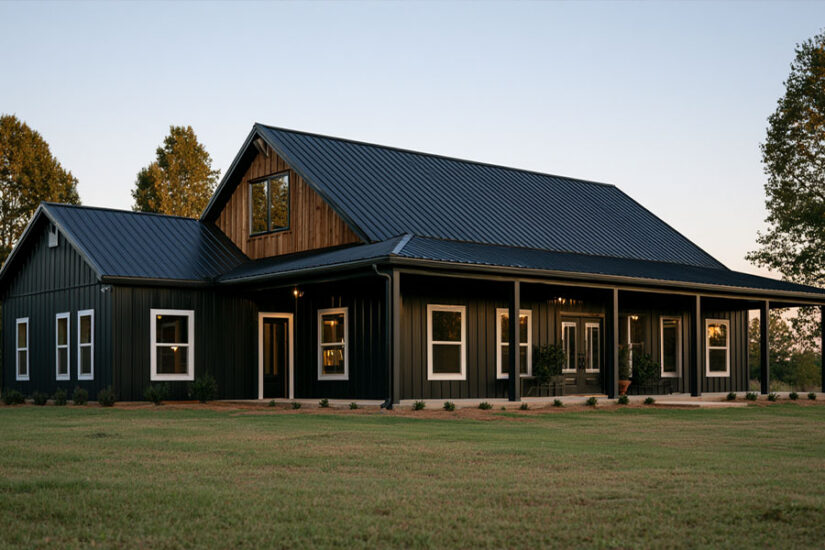
Black is one of the most requested barndominium exterior colors right now, usually paired with white trim, natural wood accents, or a stone foundation for contrast. A black exterior costs about the same to build as any other standard panel color, but it runs hotter in direct sun and shows UV fading more visibly over time than a lighter shade.
- The pairing that shows up most often is black wall panels with white trim, windows, and garage doors; wood-accent and stone-base versions follow
- A dark roof compounds the heat gain, so many black builds pair black walls with a lighter roof color rather than going black on both
- PVDF (Kynar 500) coatings hold color longer than standard SMP paint, which matters more on dark colors than light ones
- Regular rinsing keeps water spots and dust streaks from standing out against dark panels
Why Black Barndominium Exteriors are so Popular
A black barndominium reads differently depending on what’s around it. Set against a tree line or dense pasture at dusk, the dark panels blend into the shadows and white trim becomes the visual anchor instead of the walls. On an open, flat lot with no tree cover, that same black exterior becomes the highest-contrast structure on the property, visible from the road long before any other feature of the build.
That range is part of why the color shows up so often in modern farmhouse and barn-style designs. A charcoal or matte black finish reads as more architectural than a traditional red or tan barn color, and it photographs well against almost any landscape, which is part of why it dominates barndominium inspiration boards online.
Black also does something practical that lighter colors don’t: it reduces the visual weight of large, flat panel runs. A pole-barn-scale wall in white or light gray can look plain at a distance. The same wall in black reads as a single, deliberate block of color, and window and door trim stand out against it instead of blending into a similar shade.
None of that changes how the building performs. Color is a finish decision layered on top of the same steel frame, panel gauge, and insulation package as any other exterior color. The tradeoffs worth knowing before committing to black are practical: heat, fading, and upkeep, covered in detail below.
Everything on this page assumes the reader has already settled on a barndominium as the structure type. Anyone still weighing whether a barndominium fits their project should start with US Patriot Steel’s what is a barndominium guide before narrowing down exterior colors.
Black Barndominium Exterior Colors: Combinations that Work
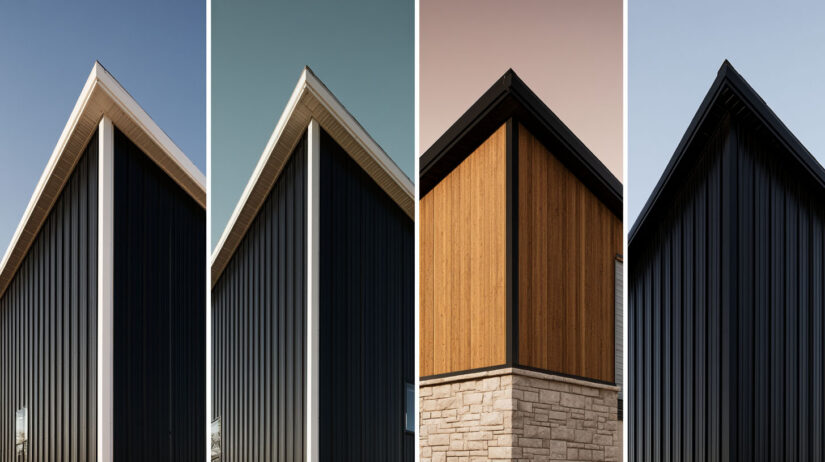
Black rarely stands alone on a barndominium exterior. Because the color absorbs so much visual weight, most builds pair it with a lighter or warmer material somewhere on the facade, whether that’s trim, an accent wall, or the foundation itself. A few pairings show up again and again in black and white barndominium galleries and on black metal barndominium projects across different regions, and each does a different visual job.
Black with White Trim
White trim around windows, doors, and roof edges is the most requested pairing on a black barndominium, and searches for a black barndominium with white trim usually mean exactly this look. White trim breaks large black panel runs into defined sections, which keeps the building from reading as one flat block from a distance. It also makes window and door openings easier to see at a glance, from the driveway or the road. Most owners run white trim on fascia, soffits, garage door frames, and window casings, then leave the roof either black to match the walls or a contrasting lighter tone.
Black With Natural Wood Accents
Cedar or pine accents on a gable end, entry overhang, or garage door face add warmth that black panels alone don’t provide. The wood usually goes on a single focal area, the front gable, an entry canopy, or a covered porch beam, rather than across the whole facade, since too much wood competes with the clean lines that make black siding read as modern in the first place. Untreated or lightly stained cedar also weathers to a silvery gray over time, which keeps working with a black exterior even as the wood ages, unlike a painted wood accent that needs recoating to stay in the same color family.
Black With Stone or Brick Foundation
A stone or brick foundation wall gives a black exterior a visual base instead of letting the panels run straight to grade. Fieldstone, cultured stone veneer, and brick are the foundation materials that show up most often for this look. Their texture and lighter color contrast with the flat black siding above, and the heavier material at ground level reads as more permanent, offsetting some of the industrial association that all-metal walls can carry on their own.
All-Black: Roof and Walls in the Same Tone
A monochrome build, black roof and black walls in the same or a closely matched shade, is the boldest version of the look and the one that photographs best in the right light. It also carries the most risk. Without trim, wood, or stone to break up the surface, a large all-black facade can look flat and featureless in direct midday sun, especially on a simple rectangular footprint. The buildings that pull it off tend to have architectural detail working in place of color contrast: a covered porch, varied roof pitches, or window groupings that create shadow lines across the panels.
Color pairing is one layer of a barndominium’s exterior style. Roof pitch, porch design, and overall massing shape the rest, covered in US Patriot Steel’s guide to types of barndominiums.
Does a Black Metal Exterior get Hotter?
Questions about black metal roof heat usually come down to one distinction: surface temperature versus what actually reaches the living space. Dark steel absorbs far more solar energy than a light color does, and that shows up first on the surface, not necessarily as indoor discomfort.
The building science behind it comes down to solar reflectance. The Cool Roof Rating Council rates roofing products on a scale from 0 to 1, where 1 means the surface reflects all of the sunlight that hits it. Dark colors sit near the bottom of that scale and absorb most of the sunlight instead of sending it back, and a black metal barndominium exterior belongs in that group alongside any other black building material.
A widely cited Florida Power & Light study that tested six common residential roofing materials side by side found dark gray roofing reflected only about 8 percent of the sun’s heat, compared to roughly 25 percent for white shingles and 34 percent for terra cotta tile. Wall panels behave the same way: a black-painted panel in direct sun runs noticeably hotter to the touch than a white or tan panel a few feet away.
That surface heat mostly stays at the surface. A properly insulated wall or roof assembly, batt, rigid board, or spray foam behind the panel, keeps most of that extra heat from reaching the interior. Roof color matters more than wall color for indoor comfort, since the roof takes the most direct sun and sits closest to attic or ceiling space. A black roof over an uninsulated or poorly ventilated attic pushes heat into the building faster than black wall panels alone ever would.
For barndominium owners in warmer climates, insulation package and ventilation design do more for comfort than avoiding black altogether. See US Patriot Steel’s guide to barndominium energy efficiency for how insulation, radiant barriers, and ventilation work together to offset color-driven heat gain.
Will Black Metal Siding Fade Over Time?
Every painted metal exterior fades under UV exposure eventually. Black shows the change more visibly than lighter colors, because the visual contrast between the original finish and a slightly faded one is larger on a dark surface than a pale one, even when the underlying rate of coating breakdown is similar.
The coating system used on the panels decides how fast that fading shows up. Standard SMP (silicone-modified polyester) paint is the more common, lower-cost finish on steel building panels, and it tends to show visible fading and a chalky surface residue sooner than a premium system. PVDF coatings, most often sold under the Kynar 500 brand name, use a stronger fluoropolymer resin bond and hold color and gloss noticeably longer under the same sun exposure, according to coil-coating manufacturer McElroy Metal.
The industry has a formal way to measure that difference. AAMA 2605, the high-performance exterior specification most PVDF coatings meet, requires ten years of South Florida weathering exposure with minimal color shift and a chalk rating that allows only trace residue. AAMA 2604, the intermediate specification more common on SMP systems, only requires five years of the same testing. That gap in testing duration is the practical difference buyers are paying for when they choose a premium coating.
Chalking is the specific symptom worth knowing about on a black panel. It’s a fine, powdery residue that forms on the coating surface as UV breaks down the paint’s binder, and it shows up as a dulling of the finish rather than as visible flaking or peeling. Because it changes how light reflects off the surface rather than removing paint outright, chalking is more noticeable on black and other dark colors than on white or tan, where the same amount of surface breakdown produces a much smaller visible contrast.
None of this is a reason to avoid black. It’s a reason to ask about coating type, SMP or PVDF, before choosing a color, the same way a buyer would ask about panel gauge.
Cleaning and Maintaining a Black Metal Exterior
A garden hose and a soft-bristle brush handle most routine cleaning on a metal exterior, black included. Avoid pressure washers on painted panels: the force can drive water behind seams and trim, and repeated use can dull the coating. A mild detergent works on caked-on dirt, pollen, or bird droppings that a plain rinse won’t move.
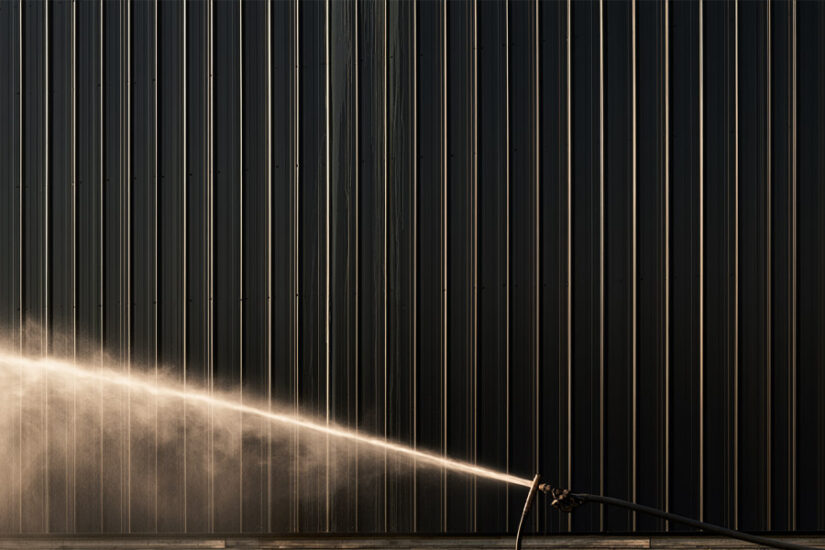
How often that’s needed depends more on the property’s surroundings than the color itself. Buildings near unpaved roads or active fields collect dust faster. Coastal properties need more frequent rinsing to clear salt residue before it accelerates coating wear at seams and fasteners. Heavy pollen season in spring is usually the single biggest driver of a visible film on any exterior color.
Where black does show more than other colors is water spotting and streaking. Mineral deposits left behind after rain runs down a wall or dries on a panel show up as pale streaks against black siding in a way they don’t against a lighter panel, even though the same residue forms on every color. Rinsing panels before they air-dry in full sun, particularly after a light rain that doesn’t fully wash the surface, keeps those streaks from setting.
Touch-up paint matched to the panel manufacturer’s exact black formulation is worth keeping on hand for scratches from ladders, equipment, or storm debris. A close-but-not-exact black touch-up stands out more than a mismatched lighter color would, since the eye picks up subtle tone differences in dark colors more readily than in light ones.
For homeowners comparing black against other exterior options before finalizing a design, US Patriot Steel’s residential steel building homes page covers the color and panel systems available on barndominium and home-style builds.
Is Black the Right Color for Your Climate?
In consistently hot, high-UV regions, black remains workable, but it works best paired with a mitigation strategy rather than chosen on its own. A reflective, or “cool color,” coating uses pigments that reflect near-infrared solar energy while still appearing black to the eye, and can noticeably reduce how much heat a dark panel absorbs without changing the color a homeowner sees. Lawrence Berkeley National Laboratory’s Heat Island Group has found that on a typical summer afternoon, a cool-pigmented surface reflecting around 35 percent of sunlight runs about 22 degrees Fahrenheit cooler than a standard dark finish reflecting only about 10 percent, even though both can look the same shade of black.
Pairing black walls with a lighter roof color is the other common approach, since the roof does more work than the walls in driving indoor heat gain. A well-insulated, properly ventilated attic or roof assembly closes most of the remaining gap regardless of exterior color.
In moderate and cold climates, the heat difference between black and lighter colors rarely matters enough to factor into the decision. Fading and UV exposure still apply everywhere sunlight reaches the panels, just at a slower pace in regions with less annual sun.
Ready to Talk Color and Coating Options?
Call (888) 415-1576 or fill out the get a quote form to talk through panel colors, coating systems, and what fits your site and climate.
Frequently Asked Questions
Yes. Dark steel absorbs more solar energy than lighter colors, so surface temperatures run higher on black panels than white or tan ones in direct sun. Proper insulation and ventilation keep most of that extra heat from reaching the interior, and roof color affects indoor comfort more than wall color does.
All painted metal exteriors fade gradually under UV exposure, and the change is more visible on black than on lighter colors. PVDF (Kynar 500) coatings resist fading and chalking noticeably longer than standard SMP paint, which is the main reason coating type matters more on dark colors.
White trim is the most common pairing, along with natural wood accents and a stone or brick foundation for properties that want more visual weight at ground level. Each creates contrast against black panels in a different way, from defining window and door openings to adding warmth below the roofline.
Color itself adds little to the base construction cost. A premium coating that resists fading longer costs more than a standard finish, and that’s the main price difference tied to color choice. For a full breakdown of what drives barndominium construction costs, see US Patriot Steel’s barndominium cost breakdown.
Not necessarily. Pairing black panels with a reflective “cool color” coating, a lighter roof, or a stronger insulation package keeps heat gain manageable in hot regions without giving up the look. In moderate and cold climates, the color makes little practical difference.
More in this Guide
- What is a barndominium?
- Barndominium cost to build
- Barndominium floor plans
- Types of barndominiums
- Barndominium energy efficiency
- Is a barndominium safe in a storm?
References
- Cool Roof Rating Council. *What Is a Cool Roof.* Solar reflectance and thermal emittance rating scale, cited for the reflectance scale above. coolroofs.org/resources/what-is-a-cool-roof
- Lawrence Berkeley National Laboratory, Heat Island Group. *Cool Roofs.* Research on cool-color, near-infrared-reflective pigments and comparative surface temperature, cited for the climate section above. heatisland.lbl.gov/coolscience/cool-roofs
- Florida Power & Light. *Energy Study Helps Homeowners Keep Cooling Costs From Going Through the Roof.* Four-month controlled test comparing six residential roofing materials, cited for the solar heat reflectance figures above. newsroom.fpl.com/2001-02-07-Energy-Study-Helps-Homeowners-Keep-Cooling-Costs-From-Going-Through-The-Roof
- McElroy Metal. *Metal Roof Paint Systems: Kynar 500 vs. SMP.* Coil-coating manufacturer comparison of PVDF and SMP fade and chalk performance, cited above. blog.mcelroymetal.com/metal-roofing-and-siding/metal-roof-paint-systems-kynar-500-vs-smp
- PPG. *FGIA/AAMA 2605.* Requirements of the AAMA 2605 specification, cited for the ten-year South Florida weathering test and chalk resistance rating above. ppg.com/en-US/industrialcoatings/fgia-aama-2605
- Colourific Coatings. *Understanding AAMA Standards and Powder Warranties.* Requirements of the AAMA 2604 specification, cited for the five-year South Florida weathering test above. colourific.com/powder-101/understanding-aama-standards-and-powder-warranties