
When most people picture a metal building, they focus on what’s above ground – the steel frame, the roofline, or how much space it provides. But the true stability of any metal structure starts below the surface. Anchors are what keep a building grounded, resisting wind, weather, and the gradual movement of the earth over time.
A metal building can be engineered perfectly, but without the right anchoring system, it can still shift, lift, or suffer structural stress. In simple terms, anchors are to a metal building what roots are to a tree. You may never see them, but everything depends on them.
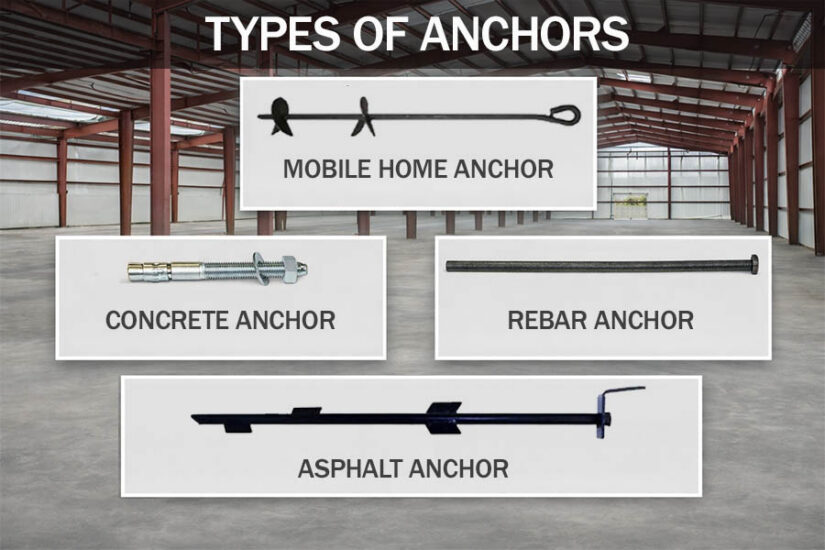
This article explains the three most common anchor systems used for metal buildings – rebar anchors, mobile (auger) anchors, and concrete anchors – and helps you understand how to choose the right one based on your site, soil, climate, and long-term goals. Anchoring works hand in hand with the foundation itself; for the bigger picture, see the complete guide to steel building foundations.
Why Anchoring Matters for Metal Buildings
Every metal building is constantly dealing with forces trying to move it. Wind pushes against walls and creates uplift that can pull a structure upward. Snow adds weight to the roof, transferring stress downward through the frame. In some regions, seismic activity introduces sideways motion that can cause sliding or cracking if the building isn’t securely tied to the ground.
All of these forces travel through the structure and end at the anchors. If the anchors aren’t strong enough, deep enough, or properly installed, the entire building is at risk.
This is why anchoring is also tightly connected to building codes. Local and state regulations specify anchor types, spacing, and load capacity based on regional risks. These rules aren’t arbitrary – they’re designed to prevent failures that have already happened elsewhere.
Beyond code requirements, practical factors such as soil composition, building size, and exposure to weather all influence which anchoring system makes sense.
Rebar Anchors
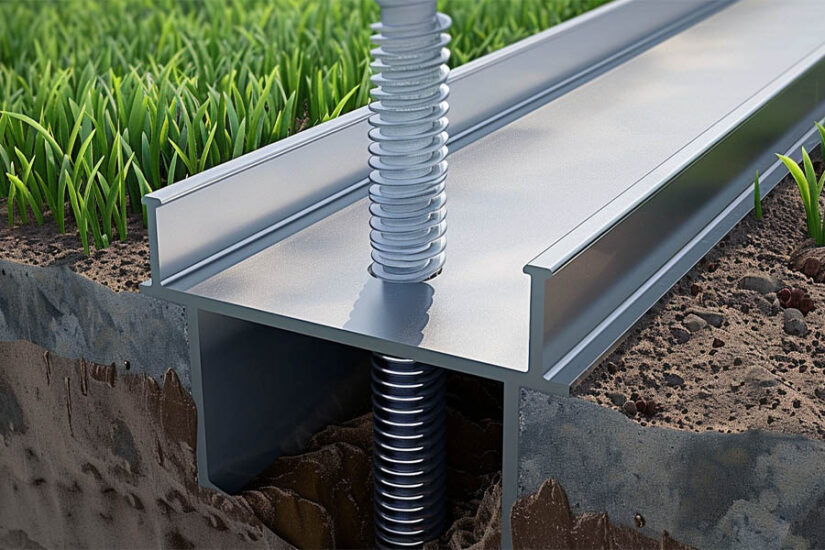
Rebar anchors are the simplest and most affordable anchoring option. They consist of long steel rods driven through the base of the building and deep into the ground. Their holding power comes from friction between the steel and the surrounding soil.
Because of their simplicity, rebar anchors are quick to install. Once the building is positioned and squared, the rebar is driven into the ground and secured at the base rail. There’s no concrete involved and no waiting period, which makes this option appealing for smaller projects.
Rebar anchors work best for lightweight or open structures such as carports, agricultural shelters, or temporary buildings installed on firm, compact soil. However, their effectiveness drops significantly in loose, sandy, or wet ground. They also provide limited resistance to uplift, which makes them less suitable for large or enclosed buildings in windy regions.
The biggest advantage of rebar anchors is cost. They are inexpensive and require minimal labor. The tradeoff is reduced strength and limited code acceptance in higher-risk areas.
Mobile Home Anchors (Auger Anchors)
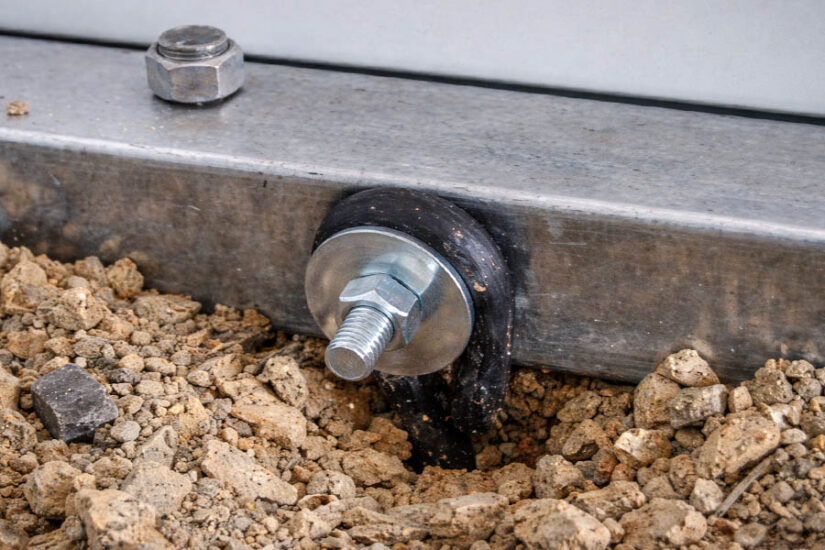
Mobile home anchors – often called auger or screw anchors – offer a noticeable step up in strength. These anchors resemble oversized screws with spiral blades that twist into the ground rather than being driven straight down.
As an auger anchor is installed, the spiral plate compresses the surrounding soil. This creates strong resistance against uplift and sideways movement. A useful way to think about the difference is that rebar anchors behave like nails, while auger anchors behave like screws. The screw simply holds better.
Despite the name, these anchors are widely used for metal buildings. They were originally designed for manufactured housing, which must meet strict wind-resistance standards, and that same reliability makes them well suited for garages, RV covers, and small workshops.
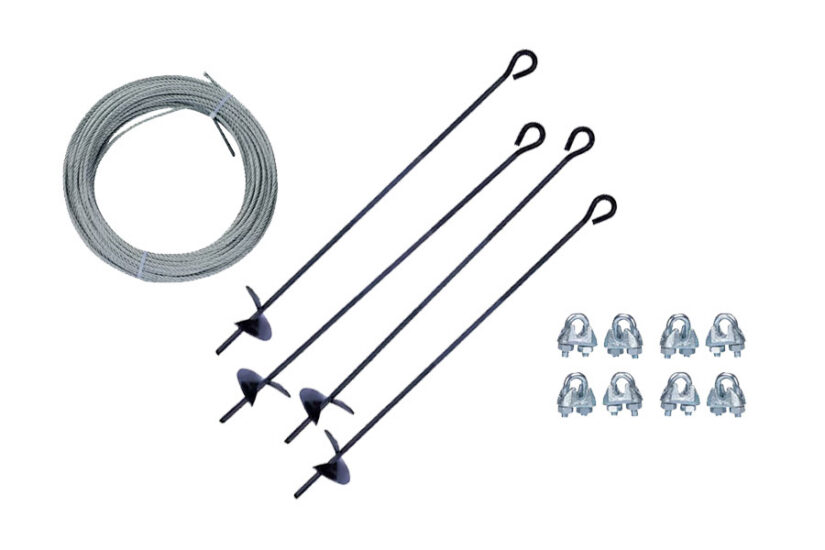
Installation is straightforward and typically faster than pouring concrete. The anchors are screwed into the ground using manual tools or power equipment, then connected to the building frame with brackets or straps. No curing time is required.
Auger anchors perform well in many soil types, especially clay and mixed soils, and they provide excellent performance in moderate to high wind conditions. Their main limitations appear in rocky ground, where installation can be difficult or impossible.
From a cost perspective, auger anchors sit in the middle range. They are more expensive than rebar anchors but significantly less costly than concrete foundations, making them a popular balance of strength and affordability.
Concrete Anchors
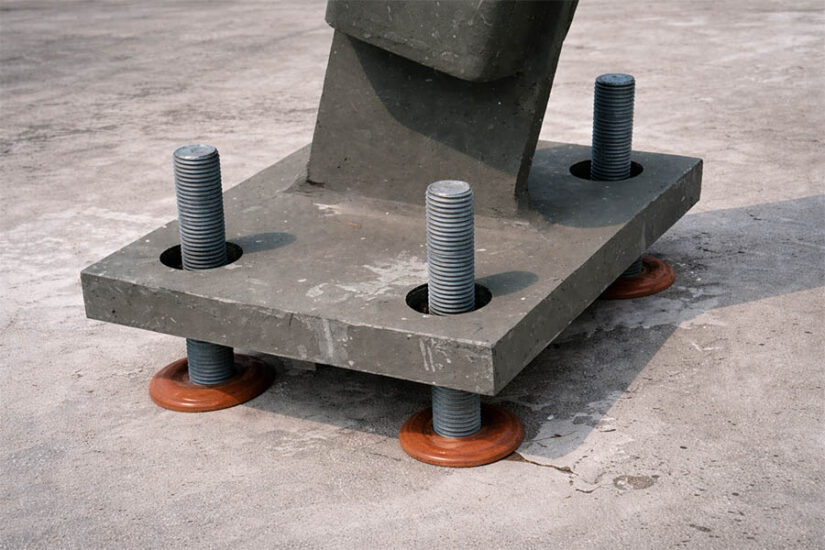
Concrete anchors are the most permanent and robust anchoring solution for metal buildings. They secure the structure directly to a concrete slab or footing, creating a rigid connection designed to last decades.
Several anchor styles are commonly used with concrete. Wedge and sleeve anchors expand inside drilled holes as they are tightened, gripping the concrete mechanically. Epoxy anchors rely on high-strength adhesive to bond threaded rods into the slab, which is especially useful near edges or in high-load situations.
Concrete foundations are often required for large, fully enclosed, or commercial metal buildings, as well as in regions with strict building codes. They are also the preferred option when long-term durability and resale value matter.
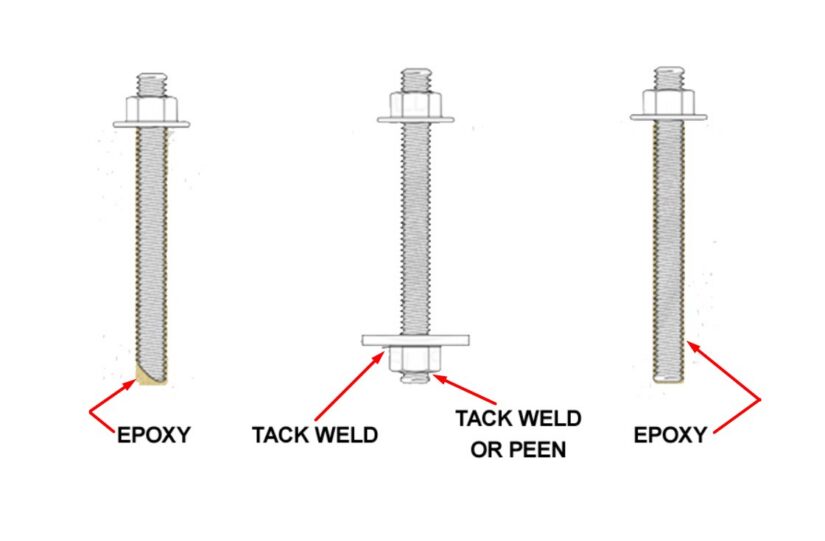
Installation requires careful planning. The concrete must be poured and fully cured before anchors are installed. Anchor placement, depth, and torque must be precise, and epoxy systems require additional curing time before full loading.
While concrete anchors come with the highest upfront cost, they also offer the greatest stability, resistance to weather, and long-term peace of mind.
How to Choose the Right Anchor
Choosing the right anchor isn’t about always selecting the strongest option. It’s about matching the anchoring system to the building and its environment.
Soil conditions play a major role. Firm, compact soil can support ground anchors effectively, while loose or shifting soil often points toward concrete solutions. For larger or permanent structures, soil testing can provide valuable insight into load capacity and long-term performance.
Climate is just as important. High-wind areas demand strong uplift resistance, cold climates must account for frost heave, and wet environments can weaken ground-based anchors over time. The more extreme the conditions, the less margin there is for compromise.
Installation Best Practices
Regardless of anchor type, proper installation is critical. Many anchoring failures occur not because of poor materials, but because anchors were installed too shallow, spaced incorrectly, or tightened improperly.
Working on level ground, following manufacturer specifications, using the correct tools, and double-checking alignment all make a measurable difference. Anchors should never feel forced or improvised – if something seems off, it usually is.
Conclusion
Anchors are the unseen foundation of every metal building’s performance. Rebar anchors offer a low-cost solution for small, low-risk structures. Auger anchors provide stronger holding power and versatility without the commitment of concrete. Concrete anchors deliver maximum strength, durability, and code compliance for permanent buildings.
The right choice depends on soil, climate, building size, and long-term plans. When those factors are aligned, a metal building remains secure, stable, and reliable for decades.
For projects where anchoring decisions must balance engineering requirements, site conditions, and real-world use, working with experienced providers like US Patriot Steel helps ensure the building is designed and anchored correctly from the ground up.