
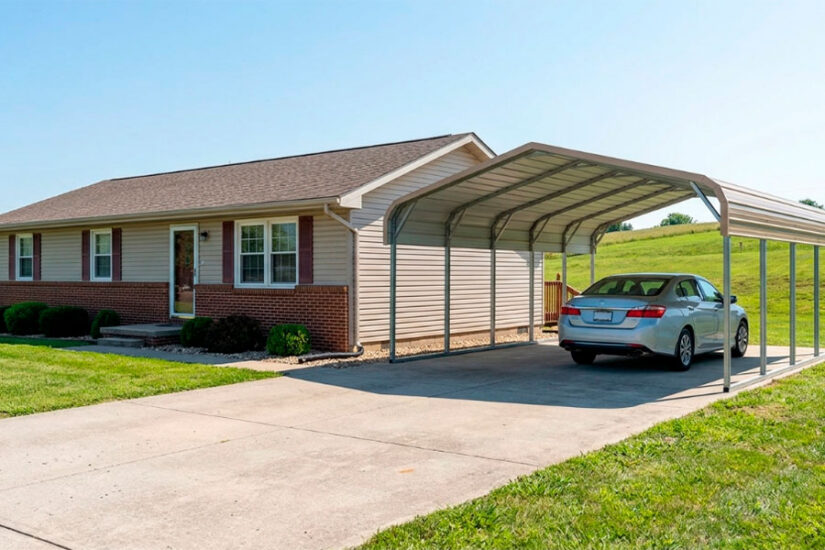

A carport is a covered structure that shelters vehicles from the sun, rain, snow, and other elements. Unlike an enclosed garage, a metal carport usually has open sides and a roof supported by posts. It may be a structure all on its own or attached to the house.
However, you often need a carport permit to build or install one. Permit rules vary by state, city, county, and even HOA, so the same carport may be approved easily in one location and require engineered drawings in another. Factors such as size, height, materials, anchoring method, and whether the carport is attached or freestanding all play a part.
Below, we take a closer look at how carport permitting typically works in the United States. We also include a general state-by-state overview to help you understand what usually affects approval in different regions. However, the following is not legal advice; for specific regulations and requirements that apply to your project, consult your local building department.
Do You Need a Permit for a Carport?
In many cases, yes, especially for permanent structures. While permanent installations typically require a permit, temporary or smaller structures may be exempt in some areas. However, again, this varies, and it’s always essential to check the carport building permit requirements in your specific area.
The safest assumption is that a permit is likely required until you confirm otherwise. Local building departments have the final authority on what does and doesn’t need approval in your area, and a quick call or website check is usually the fastest way to get a clear answer before you buy or build.
As a general rule, attached carports, anchored metal carports, larger carports, and structures built in high-wind or heavy-snow areas are more likely to require permits. Smaller portable carports may face fewer requirements, but they are not automatically exempt.
Why Carport Permits Are Required
Ultimately, carport permits exist for the safety of yourself, your neighbors, and even future occupants of your property. But safety isn’t the sole reason.
Here’s usually why permits are required (and why there are certain carport zoning rules):
- Structural safety: Any structure, including a carport, needs to be able to support its own weight, as well as withstand various weather changes.
- Wind, snow, and load requirements: This is especially important in the northern states, where heavy snow can weigh down the structure, so it must be able to withstand the load. The same goes for heavy rain or high winds. In fact, building codes typically specify minimum load ratings so that structures can withstand local conditions.
- Zoning and property boundaries: Permits help confirm that a carport is located within allowed setbacks, doesn’t encroach on easements, and is consistent with the property’s intended use. This avoids disputes with neighbors and complications down the road.
- Compliance with local building codes: Codes and rules change and are updated over time. Permits ensure that municipalities can verify that new structures stay up-to-date with these new and improved standards.
State-by-State Overview
Carport permit rules vary a lot across the United States, and local jurisdictions often override state guidance. The table below is not a substitute for local code review, but it gives a practical overview of how permitting commonly works in different states. The table below is not a substitute for local code review, but it gives a practical overview of how permitting commonly works in different states.
| State / Region | Permit Pattern | Common Factors |
| California | Often strict | Local zoning, seismic rules, wildfire zones, setbacks, and city-level review |
| Florida | Usually strict | Hurricane wind loads, anchoring, engineered drawings, coastal exposure |
| Texas | Varies widely | Large cities often require permits; rural counties may be more flexible |
| Ohio | Usually required for permanent structures | Snow load, wind load, setbacks, and township/county rules |
| New York | Often strict | Snow load, zoning, inspections, and local building department approval |
| Pennsylvania | Moderate to strict | Township rules, snow load, property setbacks, and size thresholds |
| North Carolina / South Carolina | Moderate | Wind exposure, coastal rules, setbacks, and attached vs. detached status |
| Georgia / Alabama / Tennessee | Moderate | City/county rules, storm exposure, anchoring, and accessory structure limits |
| Midwest States | Moderate to strict | Snow load, wind exposure, agricultural use, and local zoning |
| Mountain States | Varies by elevation | Snow load can be the deciding factor, especially in higher elevations |
| Rural Western States | Often more flexible | County rules, structure size, fire zones, and land-use classification |
The biggest takeaway: there is no single national carport permit rule. State climate matters, but city and county rules usually make the final decision.
States with Strict Permit Requirements
In some parts of the country, permitting tends to be more involved. This is especially true in regions prone to severe weather events, such as heavy snowfall, hurricanes, and more. It’s also common in densely populated states or cities.
Within these areas, permits are often required regardless of carport size, and the process may involve engineered plans, anchoring specifications, and one or more inspections before the project can be signed off.
Examples include many jurisdictions in California, Florida, New York, and coastal or high-density metro areas where accessory structures are reviewed closely.
States with Moderate Requirements
A large portion of the country sits somewhere in the middle. And often, whether you need a permit usually depends on the details of the project itself.
For instance, a modest, freestanding carport might fly under the radar, but anything larger, taller, or attached to the home generally triggers a review. In other words, common factors, such as size, height, and the structural anchors, may play a bigger role in permit requirements. And some jurisdictions only get involved once a project crosses a specific threshold.
This is common in many Midwest and Southern states, where requirements can shift significantly from one county or township to the next.
States with More Flexible Rules
In rural areas or regions with simpler building codes, smaller, non-anchored carports may not require a permit. Additionally, portable structures may be treated differently from permanent ones.
However, even with this flexibility, zoning rules, HOA restrictions, and county-level requirements can still apply even when a building permit isn’t needed.
A “no building permit required” answer does not always mean “no rules apply.” You may still need to follow setback, drainage, easement, or property-use requirements.
Attached vs. Detached Carports
Attached carports usually face stricter permit requirements because they connect to an existing home or building. This can affect roof loads, drainage, fire separation, and the structural integrity of the main property. Local officials may require more detailed drawings or inspections for attached carports.
Detached carports are often reviewed as accessory structures. They may be easier to permit, especially if they are small, freestanding, and located within required setbacks. However, permanent detached carports can still require approval, particularly when they are anchored, large, tall, or built in high-wind or heavy-snow areas.
Local Factors That Affect Carport Permits
Ultimately, whether you need a carport permit or not (and the type of permit required) typically depends on the following factors:
- Size and height of the carport
- Permanent vs portable structure
- Attachment to existing buildings
- Property setbacks and zoning rules
- Wind/snow load zones
- Foundation or anchoring method
- HOA restrictions
- Electrical work, if lighting or EV charging is added
In some areas, a carport under a certain size may be exempt, while the same structure may require a permit elsewhere. Common thresholds such as 120 or 200 square feet may appear in local codes, but they are not universal. Always verify the exact rule for your address.
Documents You May Need for a Carport Permit
If a permit is required, your local building department may ask for:
- A site plan showing property lines and carport placement
- Carport dimensions, including width, length, and height
- Setback distances from property lines, fences, easements, and other structures
- Anchoring or foundation details
- Wind and snow load ratings
- Engineering drawings or manufacturer specifications
- HOA approval, if applicable
- Electrical plans, if the carport includes lighting, outlets, or EV charging
Having these documents ready before applying can reduce delays and help avoid rejected applications.
How to Check Carport Permit Requirements in Your Area
Since rules vary depending on your location, the best first step is to check with your local building department (typically at the city or county level). Simply call them to ask about your specific project size and scope to get a clear answer on whether a permit is needed.
On the city’s or county’s website, however, you can usually also find specifics. Most have a page (or pages) dedicated to size thresholds, fee schedules, required documents, and any zoning considerations specific to residential accessory structures. Some even offer online permit applications and status tracking.
If a permit is required, you may need to submit plans showing the carport’s dimensions, location on the property, anchoring method, and, sometimes, structural details such as load ratings.
Working with a building provider familiar with local codes can also make the process that much smoother. They know what documentation your specific region requires and can typically supply specifications, drawings, or load certifications that align with your local standards.
What Happens If You Skip a Permit?
Skipping the permit process can be tempting, but you might pay the consequences down the line. Without a permit, you risk fines or penalties (often exceeding the cost of the original permit), removal or modification necessities, or issues with insurance and property sale when the time comes.
In particular, when selling your property, unpermitted structures tend to show up during inspections, appraisals, or title reviews and may need to be resolved before a sale can close. This can delay the process and create a bit of a hassle for everyone involved.
Insurance can also become an issue. If an unpermitted carport fails during a storm or damages a vehicle, your carrier may ask whether the structure was properly approved and installed according to local requirements.
How Metal Building Providers Support the Permit Process
When it comes to getting a metal carport permit, a building provider can make the process noticeably smoother. While they can’t issue permits or guarantee approval, they can provide engineered drawings for permit approval, ensure the structure matches local requirements, and assist with documentation.
A provider may be able to supply:
- Engineered drawings
- Wind and snow load certifications
- Anchoring specifications
- Building dimensions and material details
- Foundation recommendations
- Manufacturer documentation for local review
At US Patriot Steel, we can help with the design and build your metal structure, whether that’s a carport or garage. Our team can provide the specifications and documentation many local building departments request when reviewing metal carport permits. Call us at 888-415-1576 or get a free quote today to learn more.
Frequently Asked Questions
No, local rules can vary, and permits may not be required for smaller structures. Always check with your local city or county to determine what’s necessary before you commit to building.
In some jurisdictions, portable carports can be exempt from permits. But this isn’t a universal rule and always depends on your specific location.
This also depends on the location and project. Some may be approved within days, but for bigger projects, it could take several days or even weeks.
In some cases, yes, particularly for smaller or exempt structures.
Yes, even within the same state, which is why checking with your local building department is always the best first step.