
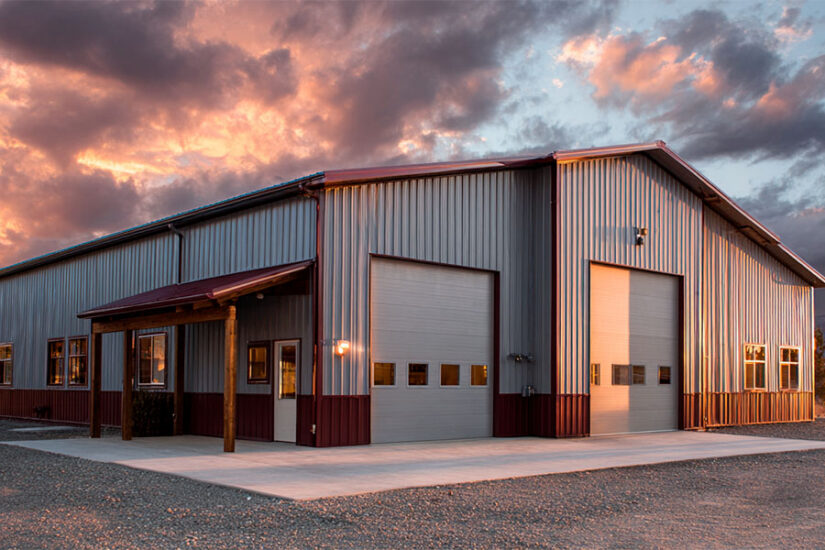

A shouse is a single steel-framed building where a working shop and a finished living area share the same roof, the same slab, and usually the same wall. The shop side stays cold or heated to a working temperature. The house side runs full HVAC, full insulation, full plumbing. Both sides are designed at the same time, on the same footing, with one set of permits.
The word shows up in two places that matter. Search bars where buyers type what is a shouse trying to figure out what a sales rep meant on the phone. And in pole-barn forums where someone is comparing it to a barndominium and getting half-correct answers in the replies.
This guide settles both. What a shouse actually is, how it differs from the structures buyers usually confuse it with, what a 2026 build costs by size and finish level, and what owners say after the first winter, when the romance of pulling the truck into the kitchen wall has worn off and the real questions start.
Shouse Meaning, in One Paragraph
The term combines shop and house. A shouse is a metal building where the larger end (or the front, depending on the layout) functions as a heated or unheated workshop, and the smaller end (or the back) is finished out as a residence. Some shouses are 70% shop, 30% house. Some flip the ratio. The defining feature is not the split. It is the single envelope: one foundation, one roof system, one structural frame, with a firewall between the two functions and one well-engineered transition door.
People also write it shop house or shop+house, and some older guides still use shome. The variation that owns search volume in 2026 is shouse.
Why the Term Confuses People
Three structures get filed under the same mental folder:
A barndominium is a metal building that is mostly residential, with one or two oversized bays for a workshop, RV, or hobby space. The living area dominates. Most owners interview architects to design the layout the same way they would for a stick-built home.
A traditional shop with attached apartment is two separate decisions stacked together. The shop got built first. Years later, someone framed an apartment into one corner, often without redoing the HVAC zoning or the firewall to current code.
A shouse is engineered for both functions from day one. The slab is poured with floor drains under the shop, plumbing rough-in under the house. The trusses are sized for HVAC ductwork running down the house side and lighter loads over the shop. The wall between is rated as a one-hour fire separation from the original drawings, not a retrofit.
In practice, the confusion shows up most on the first call. A buyer asks about a 40×80 shouse. By the time the rep walks through layout questions, the buyer realizes they actually want a barndominium with a small workshop bay, or they want two separate buildings sharing a driveway. The terms matter because the engineering decisions cascade from there.
Shouse vs Barndominium: the Difference that Costs Money
The two structures look almost identical from the road. A 50×80 metal building with vertical siding and a sliding door on one end could be either.
The difference shows up in the slab and the trusses.
A barndominium slab is usually a single pour at uniform thickness, sometimes with embedded radiant tubing, optimized for residential loads. The trusses are spaced for the spans the architect drew, with insulation depth designed for living comfort.
A shouse slab is two pours, or one pour with a step. The shop side runs four to six inches thick with fiber reinforcement, sloped to a floor drain, sometimes with a vehicle pit framed in. The house side runs four inches with a vapor barrier and rebar grid for finish flooring on top. The transition between them is detailed on the drawings before anyone breaks ground.
That single decision (planning both functions from the slab up) is the line between a real shouse and a shop with a bedroom added.
Owners who skipped that step and tried to finish out half of an existing shop usually have to rework HVAC, electrical service, and insulation within the first two years. The cost to retrofit usually lands somewhere around $40-70 per square foot of living area, on top of whatever finish work happens. Doing it as a shouse from the start runs closer to $80-120 per square foot of living area, but the result holds up and meets code without inspector arguments.
For the comparison most buyers actually need, see the barndominium guide, which covers the residential-dominant version of the same hybrid concept.
Typical Shouse Sizes and Layouts
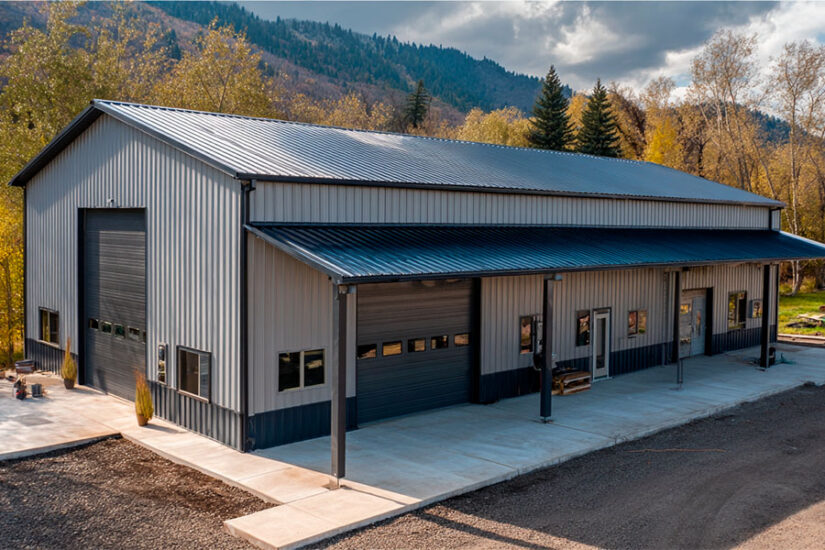
Three footprints come up more often than any other.
30×40 shouse (1,200 sqft total) – small. Often a single-person owner-operator or a retired couple. The split usually runs 20×40 shop, 10×40 living. The living side has a kitchenette, a three-quarter bath, a bed-and-living combined room, and a small loft for storage. This footprint works only if the buyer accepts that the kitchen is essentially in the same envelope as a working shop, with all that implies about noise, smell, and dust.
40×60 shouse (2,400 sqft total) – the most common. Usually a 40×40 shop with a 40×20 living section. The living side gets a real kitchen, a master bedroom, one or two additional bedrooms, and a full bath. Some layouts add a second-floor loft over the living area, taking advantage of the truss height. This is the size that delivers a recognizable house on one end and a recognizable shop on the other, without compromising either.
50×80 shouse (4,000 sqft total) – the family build. 50×50 shop with a 50×30 living section. The living side is a full house: three bedrooms, two baths, real kitchen with island, separate utility room, sometimes a covered porch. The shop side fits two vehicles plus a workbench wall and equipment storage. Truss heights usually run 14-16 feet to allow lift access on the shop side.
The framing decisions that change with size are not just spans. They are HVAC zoning, electrical service entry, water line routing, and septic sizing. In the field, the same owner often calls back six months after delivery asking about a separate electrical sub-panel for the shop, because the original single panel keeps tripping when the welder runs during a load-heavy moment on the living side.
What a Shouse Costs to Build in 2026
Cost depends on three variables that owners often underestimate: shell only versus turnkey, finish level on the living side, and regional labor rates.
The numbers below assume a delivered steel building package (shell, roof, walls, doors, trim), erected on a slab the owner provides, with the living side finished to mid-range residential standard. Site work, slab, septic, well, and utility connection are excluded.
| Footprint | Total sqft | Shell only | Shell + erected | Shell + erected + finished living side | Notes |
| 30×40 | 1,200 | $14,000-21,000 | $27,000-40,000 | $80,000-130,000 | Tight budget, owner-builder common |
| 40×60 | 2,400 | $24,000-38,000 | $48,000-70,000 | $150,000-240,000 | Most common build |
| 50×80 | 4,000 | $42,000-65,000 | $80,000-115,000 | $260,000-400,000 | Family build, full house finish |
| 60×100 | 6,000 | $60,000-95,000 | $115,000-165,000 | $380,000-580,000 | Operator + family, large shop bay |
The shell range varies by snow load, wind zone, and gauge. A 40×60 in Florida wind zone with 150 mph design speed lands at the top of the range. The same footprint in low-snow Tennessee lands near the bottom.
The finished-living number is where buyers get surprised. Owners who plan for $100/sqft of living area in the budgeting phase often spend $130-160/sqft when the build actually runs, because kitchen cabinets, plumbing fixtures, and HVAC upgrades creep upward once the framing is in. For the broader cost picture on metal building projects, the metal building cost guide breaks down where the dollars go across building types.
Cost Variables Most Buyers Miss
Slab. A shouse slab with the shop/house transition detailed correctly runs $7-12 per square foot of total footprint in most markets, before any radiant tubing or specialty pours. For a 40×60, that is $17,000-29,000 just for the foundation.
Plumbing rough-in. The shop side usually needs floor drains and a frost-proof hose bib. The living side needs full residential plumbing. Running both off one main without crossing the firewall in the wrong direction adds 2-4 days of plumber time.
HVAC. The two sides should be on independent systems, or one system with damper-controlled zones rated for the temperature differential. Cheap installs run one system and call it a day. Owners regret this within the first year, when the shop heater runs all winter trying to keep up with an uninsulated overhead door, while the living side overheats.
Septic. A shouse with a full residence triggers full residential septic sizing in most jurisdictions. The shop bathroom does not reduce the requirement.
Permitting. Some counties classify a shouse as commercial-residential mixed-use, which triggers a different permit fee and review timeline than a straight residential permit. Permit timelines have stretched from 3 weeks to 14 weeks in counties that classified the structure incorrectly on first review.
What Owners Actually Say After a Year
A pattern shows up six to nine months after delivery. The questions cluster into three buckets.
Diesel and oil smell. The transition door between shop and living area was sized for foot traffic but the seal was installed with a residential weatherstrip. Six months in, the buyer realizes that every time the shop runs at temperature, exhaust smell drifts under the door. One common fix is a commercial-grade door with a four-sided seal, plus weather stripping at the bottom. Total cost typically lands around $1,000-2,000. Owners who chose the four-sided seal during the original build rarely call about this.
Noise carry through the firewall. The drawings called for a one-hour fire separation, which the contractor built with two layers of 5/8 Type X drywall. That meets code. It does not meet a sleeping family’s sound tolerance when an air compressor cycles at 6 a.m. A common fix is sound-attenuating insulation added to the wall cavity during initial framing. That adds about $1,500-3,000 to the original build, and retrofits typically land in the $4,000-6,000 range.
Condensation on metal walls. Owners who insulated the living side and left the shop side bare metal often get condensation dripping down the shop interior walls during cold mornings. The usual fix is at least minimum vapor barrier and 2-3 inches of closed-cell foam on the shop side. The shop does not need full residential insulation, but it cannot be left bare if the living side is conditioned. The metal building insulation guide covers vapor barrier and insulation methods that apply to both sides of a shouse.
These calls are predictable. Owners who got walked through the choices during the build phase rarely make them.
Shouse by Buyer Type
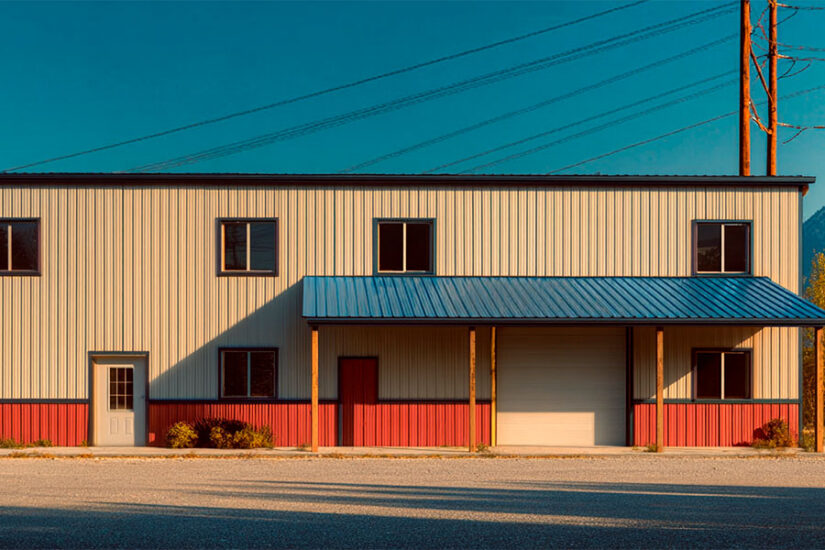
The same 40×60 footprint serves very different owners. The layout decisions that matter depend on who lives there.
The rancher. Shop side handles equipment maintenance, parts storage, sometimes calving overflow in early spring. Living side stays functional: mud room with a slop sink, pantry sized for bulk buying, master on the same floor as the laundry. Priority is durable finishes, washable surfaces, and electrical outlets in unexpected places.
The contractor. Shop side runs tool storage, vehicle bays for trucks and trailers, a workbench wall, sometimes a small office. Living side trends modern, kitchen often the centerpiece. Priority is a large vehicle door (often 14×14 minimum), a separate office entrance, and a bathroom in the shop so site-dirty visitors do not track through living space.
The hobbyist. Shop side runs woodworking, mechanical projects, sometimes a small fabrication setup. Living side is residential first, shop second. Priority is dust separation, dedicated 220V circuits, and more natural light than typical industrial builds. This segment often spends more per square foot because the shop is leisure space, not just utility space.
The mistake across all three is treating the shouse as one structure with two functions. It is two structures sharing a foundation. The decisions on each side should be made by someone who understands that function, not split-the-difference engineering.
Permits, Zoning, and Code
Three things to verify before signing a building order.
Zoning. Some counties allow shouses on agricultural-zoned land but not residential-zoned. Some allow them only on parcels above a certain acreage. A few do not allow them at all and require the shop and house to be separate structures with a minimum setback between them. The county planning department gives a direct answer in a single phone call.
Building code classification. Most jurisdictions classify a shouse under the IRC if the residential portion is the primary use, and under the IBC if the shop portion is. The difference matters because IBC requires different egress, sprinkler, and accessibility standards than IRC. Most steel building suppliers can provide drawings under either code depending on what the permit office requires.
Septic and well. Rural builds usually need both. Septic sizing depends on bedroom count and fixture count, which a shouse residence side triggers normally. Well capacity should account for the shop side if any hose bibs, equipment wash stations, or animal watering runs through the same line.
The permit packet that goes to the county should include the structural drawings, the foundation plan with the shop/house transition detailed, the electrical service plan showing how the panel is split or whether sub-panels are used, the plumbing diagram, the HVAC zoning plan, and the firewall section drawing. Submitting an incomplete packet is the most common reason for the three-month permitting delay that owners complain about.
Common Regrets Shouse Owners Share
Across many builds, the regrets cluster in five places.
The transition door should have been larger. A 36-inch residential door fits when the shouse is new and the shop side is mostly empty. A year later, when the shop is full of equipment and the owner needs to move a tool chest from one side to the other, that door is too small. Building a 48-inch or 60-inch double swing door during the original build typically adds under $1,000. Retrofitting later usually means cutting drywall, reframing the opening, and patching paint.
The shop electrical service was undersized. A plan calling for 100 amps to the shop side runs into trouble when a welder, an air compressor, and a small CNC mill share the same circuit and trip the breaker every other week. A retrofit to 200 amps after the slab is poured and the panel is installed often runs around $2,500-5,000. Adding the capacity during the original build typically costs a fraction of that.
The kitchen window did not get added on the shop-side wall. Most shouse plans put the kitchen against the shop firewall to keep the plumbing wet wall on one side of the structure. The result is a kitchen with no windows on the busiest wall. Owners realize this matters when winter arrives and the kitchen feels closed in during dinner. A common fix is a window on the long wall, ideally facing south or southeast. Sometimes it is just sliding the kitchen layout 12 feet during the design phase.
The mud room is too small. Shouse owners typically come from a working environment that involves dirty boots, work coats, and tools that travel between shop and house. A 4×6 mud room fills up within a month. Owners who built 6×10 or 8×10 mud rooms with hooks, a bench, and a slop sink rarely complain.
The slab was not sloped enough on the shop side. The drawings called for a quarter-inch per foot slope toward the floor drain. The contractor poured it flat. Every time a vehicle drips coolant or the floor gets washed, water pools instead of draining. There is no fix short of grinding and re-pouring. Owners who pushed back during the pour and watched the screed angle rarely run into this.
References
Sources worth cross-checking against on code classification, fire-rated separation, electrical service, slab specs, HVAC zoning, insulation, and septic design. All URLs verified live as of May 2026.
- International Code Council. International Residential Code (IRC), 2024 edition. Classification when residential portion is the primary use, foundation requirements, frost depth, bedroom and fixture counts for septic. codes.iccsafe.org
- International Code Council. International Building Code (IBC), 2024 edition. Classification for mixed-use and commercial-dominant builds, egress, fire-rated assemblies (Chapter 7), accessibility. codes.iccsafe.org
- National Fire Protection Association. NFPA 80, Standard for Fire Doors and Other Opening Protectives. Reference for the transition-door rating between shop and living area. nfpa.org
- National Fire Protection Association. NFPA 70, National Electrical Code (NEC), 2023 edition. Service sizing for residential plus workshop loads, sub-panel requirements, dedicated circuits for welders, compressors, and CNC equipment. nfpa.org
- American Concrete Institute. ACI 302.1R, Guide to Concrete Floor and Slab Construction. Reference for slab thickness, joint layout, slope to drains, and finish specs on the shop side. concrete.org
- ASHRAE. ASHRAE Standard 62.2, Ventilation and Acceptable Indoor Air Quality in Residential Buildings and Standard 62.1, Ventilation for Acceptable Indoor Air Quality (commercial). Reference for HVAC zoning between conditioned living space and a workshop with different temperature and air-quality requirements. ashrae.org
- Metal Building Manufacturers Association (MBMA). Metal Building Systems Manual. Trade-body engineering reference for steel kit design, snow and wind loading, and envelope detailing. mbma.com
- Building Science Corporation (Joseph Lstiburek and others). Research and guides on metal building envelopes, vapor barriers, and condensation control in mixed-temperature buildings. buildingscience.com
- US Department of Energy. Insulation R-value recommendations by climate zone. Reference for insulation depth on the living side and minimum vapor-barrier guidance on the shop side. energy.gov/energysaver/insulation
- US Environmental Protection Agency. SepticSmart – homeowner and contractor guidance on septic sizing and rural wastewater systems. epa.gov/septic
More in This Guide
- What is a barndominium? – for buyers leaning residential-dominant
- Pole barn house cost & plans – comparison structure with wood framing
- Metal building cost breakdown – broader cost framework
- How to insulate your metal building – applies to both sides of a shouse
Talk to a Shouse Design Rep
The most expensive shouse decisions usually get made before the slab is poured. Layout choices that cost a few hundred dollars to change on paper turn into tens of thousands once construction starts. The transition door, the electrical service, the slope of the shop slab, the firewall sound rating – every one of them is cheap on day one and painful to retrofit six months later.
US Patriot Steel has been delivering shouse packages across the lower 48 since March 2005. Kit-only buyers get drawings, materials, and erection instructions. Turnkey buyers get the same package with a contractor coordination layer.
Call (888) 415-1576 or use the quote request form with the footprint and shop/living split that fits the build. The first conversation usually settles the layout decisions that cost the most to change later.