
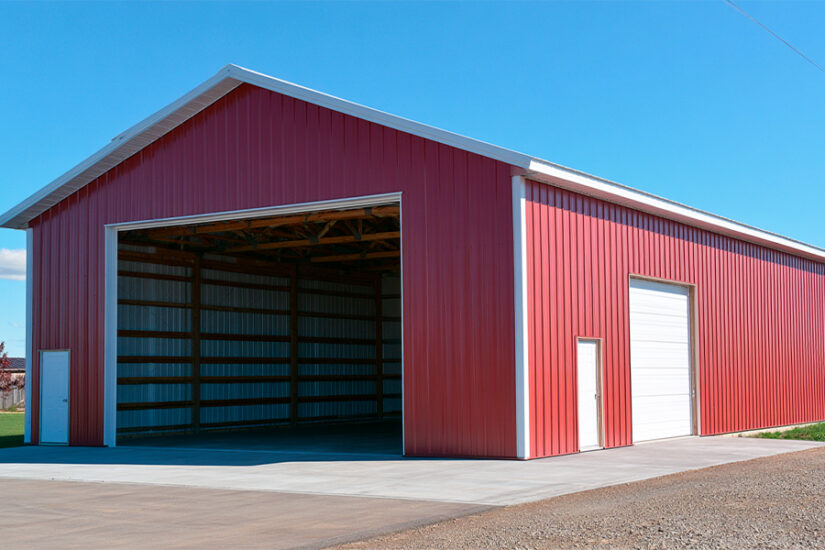

A 50×50 metal building kit runs $22,000–$45,000 for the steel shell. Add a concrete slab, erection, and basic site work and the number moves to $65,000–$110,000 for a basic enclosed structure. A finished shop, commercial space, or warehouse on this footprint typically lands between $85,000 and $145,000 depending on location, finish level, and use.
The 50×50 footprint is 2,500 square feet, which puts it in the most-requested size bracket for personal workshops, small commercial buildings, agricultural storage, and light industrial use. The clear span across 50 feet is achievable without interior columns using standard red iron framing, which is why this size is so common for shop and commercial builds.
This guide breaks the cost into real components, explains what pushes the number up or down, and covers the most common ways buyers use the 50×50 footprint.
Quick Answer
A 50×50 metal building (about 2,500 sq ft) runs $22,000–$45,000 for the steel kit alone and $85,000–$145,000 finished as a shop or commercial space. Where a given project lands depends on how far you take it:
- Kit only (steel shell): $22,000–$45,000. Frame, roof, wall panels, one or two standard doors.
- Kit + concrete slab: $37,000–$67,500. Above + 4-inch reinforced slab.
- Basic turnkey (enclosed, no finish): $65,000–$110,000. Kit + slab + erection + site prep.
- Finished shop or commercial space: $85,000–$145,000. Above + insulation, basic electrical, lighting.
Sources: HomeGuide metal building cost data (2026); Angi concrete slab cost data (2026); BuildingsGuide.com (2026).
What a 50×50 Metal Building Costs in 2026
The 50×50 footprint gives you 2,500 square feet of floor space. That’s 100 square feet more than the popular 40×60, at roughly the same price point, but with a squarer floor plan that suits shop layouts and commercial retail differently.
Steel costs have stayed elevated in 2026. Most manufacturers are reflecting increased input costs in kit quotes, and freight on large structural panels adds to the delivered price in ways that didn’t show as prominently before 2023. For this size building, expect quotes to vary 10–15% across suppliers for the same spec.
The table below reflects where real 50×50 projects land in 2026:
| Line item | Low end | High end | Notes |
| Steel kit | $22,000 | $45,000 | Red iron frame, roof panels, wall panels, standard doors |
| Concrete slab (4-inch, reinforced) | $15,000 | $22,500 | $6–$9/sq ft for 2,500 sq ft; varies by region |
| Site prep and grading | $2,500 | $15,000 | Flat cleared land is least expensive; sloped or wooded sites cost more |
| Erection / labor | $9,000 | $27,000 | Varies by region and crew availability |
| Insulation | $4,000 | $13,000 | Batt or spray foam; spray foam costs roughly twice as much installed but controls condensation as well as heat |
| Doors and windows | $2,000 | $10,000 | Overhead rollups, entry doors, windows beyond kit standard |
| Electrical (basic shop circuit) | $4,000 | $15,000 | Panel, lighting, outlets; HVAC adds more |
| Total (basic enclosed) | $65,000 | $110,000 | Finished shell, no interior build-out |
Interior finishing for a shop, office, or retail space moves the number higher from there.
The slab: What Concrete Costs on a 50×50
The concrete slab is one of the largest single line items and one of the most variable.
A basic 4-inch reinforced slab on a 50×50 footprint (2,500 sq ft) runs $15,000–$22,500 in most US markets at $6–$9 per square foot installed (Source: HomeGuide concrete slab cost data, 2026; Angi, 2026). That range covers materials, labor, rebar or wire mesh reinforcement, and a standard broom finish. It does not cover:
- Vapor barrier: $0.50–$1.00/sq ft additional
- Thickened edges for a perimeter footing: adds $1,500–$4,000
- Upgraded finish (epoxy coat, polish): $3–$10/sq ft additional
- Site drainage work before the pour
For a shop or commercial space, most contractors recommend a 5–6 inch slab with thickened edges under load-bearing walls. That adds $3,000–$8,000 to the slab budget but gives you a foundation that handles heavy equipment and properly anchors the frame.
For a full breakdown of slab thickness options and what each is engineered for, see the concrete slab guide for steel buildings.
What Drives the Price
Steel Grade: Red Iron vs Cold-Formed
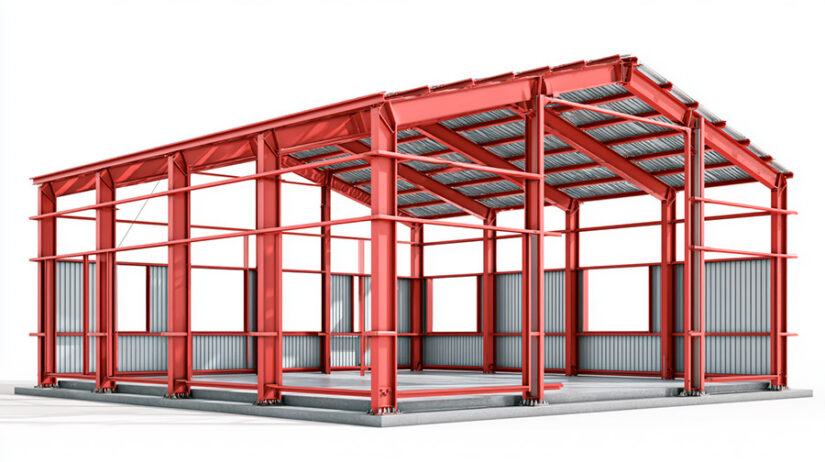
Most 50×50 buildings use red iron framing: hot-rolled I-beam columns and rafters that handle the 50-foot clear span without interior support columns. That uninterrupted floor space is the main reason buyers choose this footprint for shops, commercial retail, and light industrial use. Cold-formed (light-gauge secondary framing) appears in some economy kits and agricultural structures but carries more risk under snow and wind loads at this width.
For anything beyond storage use, specify red iron. The cost difference versus economy kits narrows when you factor in what you lose in engineering headroom.
Snow and Wind Loads
A 50×50 kit priced for Kansas at 90 mph wind and 20 psf ground snow load is a different structure from the same footprint priced for Minnesota at 90 psf snow or the Gulf Coast at 130 mph wind. The engineering behind those specs changes the steel schedule, and so does the price.
Expect to pay $3,000–$10,000 more for the same kit in high-snow or high-wind zones. Hurricane-rated framing for coastal Southeast and Gulf locations can add $5,000–$15,000. Get your local requirements before comparing quotes. A low quote sometimes means the kit is under-engineered for where you’re building.
Doors and Openings
Door specifications have an outsized effect on kit price. A standard kit might include one 10×10 rollup and one walk door. A shop with two 14-foot equipment openings, a 16-foot wide main rollup, and three windows costs noticeably more than the base quote. Each non-standard opening changes the framing, and large openings require additional header engineering.
Clear Span at 50 Feet
The 50-foot width is at the edge of what standard residential kits span. At this width, the primary frame needs to be engineered for a true clear span without interior posts, which adds slightly more steel than a 40×40 or 40×60 framing schedule. Buyers sometimes find that a 50×50 quotes close to or the same as a 40×60, since both footprints involve similar steel tonnage and engineering complexity.
Insulation
Spray foam costs about twice as much installed as batt insulation, but it seals against condensation and heat transfer. In humid climates, under-insulated steel buildings collect condensation on the inside of roof panels, which corrodes fasteners and damages stored equipment. Budget for insulation at the design stage rather than treating it as optional. How much insulation a 50×50 needs depends on where it stands, and metal building insulation by climate zone shows the recommended R-values for each region.
Common 50×50 Uses
Workshop and Personal Shop
A 50×50 shop gives you 2,500 square feet of clear-span workspace. That’s enough for three to four vehicle bays with room to work around them, a fabrication shop with a welding station and storage, or a woodworking shop with full tool clearance and a dust collection area.
The most common 50×50 shop build adds:
- Two or three 12×12 or 14×14 overhead rollup doors
- One 10-foot sidewall entry door
- 200-amp electrical service with shop circuits
- LED high-bay lighting
- Spray foam insulation (enough for temperature control)
Budget for a finished 50×50 shop: $85,000–$145,000 all-in, including slab, erection, insulation, and electrical. Site work is additional and varies too much by property to include in a flat estimate.
For shop configurations and door sizing options, see metal workshops.
Example scenario: A buyer in Tennessee built a 50×50 red iron shop for equipment storage and a small fabrication area. The kit ran $31,000. Slab, erection, two 14×14 rollup doors, LED lighting, and basic electrical brought the total to $97,000 before spray foam insulation.
Commercial and Retail Building
The 50×50 footprint maps well to small retail, a contractor’s office and storage combo, an auto service bay, or a light assembly space. At 2,500 square feet, it clears most local minimum-floor-area requirements for small commercial occupancies, and the square floor plan gives more flexibility for partition layouts than a longer, narrower rectangle.
Commercial builds typically add HVAC, partition walls, restrooms, and more finished electrical than a personal shop. Budget $100,000–$145,000+ for a turnkey commercial finish, depending on what goes inside.
Warehouse and storage
For pure storage, a 50×50 can be built more economically: batt insulation instead of spray foam, basic wiring, and a single large rollup door. A 50×50 storage building done lean can come in at the lower end of the turnkey range, around $65,000–$85,000 depending on site conditions.
Riding Arena and Agricultural Use
A 50×50 is a practical size for small riding arenas (lunging and flatwork use, not full-size competition work), hay and equipment storage, or livestock shelters. Agricultural builds often qualify for simplified permitting in rural counties, which can speed the project timeline.
For riding arena builds at this footprint and larger, the use case and footing requirements drive a separate cost conversation. Most competition arenas run larger, but a 50×50 covered arena works for private lunging and young horse training.
Kit vs Turnkey
The kit price a manufacturer quotes covers the structural steel: columns, rafters, roof panels, wall panels, trim, and anchor bolts. That’s the scope. Here’s what falls outside the kit quote every time:
- Concrete slab (poured by a separate concrete contractor)
- Erection labor (assembling the kit on your foundation)
- Site preparation and grading
- Electrical service and wiring
- Insulation
- Any interior work (framing, drywall, plumbing, HVAC)
- Permits and engineering stamps
- Freight (some manufacturers quote delivered, some quote FOB factory)
The gap between kit price and finished cost on a 50×50 is typically $43,000–$100,000 depending on finish level. Buyers who budget from the kit price and discover the rest during construction are the most common source of cost overruns in this category.
Turnkey means a general contractor manages the whole project: kit supply, foundation, erection, and whatever finish work you specify. The GC adds 15–25% on the work they coordinate, but you get a single contract and a single point of accountability. For buyers building for the first time or building on a remote site, turnkey is usually worth the margin.
One question to ask any quote: does “installed” mean bolted together on a slab, or fully finished with electrical and insulation included? The answer changes the number significantly.
For kit options on this footprint, see metal garage kits for a starting point on standard package configurations.
How a 50×50 Compares to Nearby Sizes
If 2,500 square feet is more or less than you need, here’s how the cost picture shifts:
| Size | Sq ft | Kit only | Basic turnkey |
| 40×50 | 2,000 | $18,000–$36,000 | $55,000–$95,000 |
| 50×50 | 2,500 | $22,000–$45,000 | $65,000–$110,000 |
| 40×60 | 2,400 | $25,000–$48,000 | $70,000–$120,000 |
| 60×80 | 4,800 | $45,000–$80,000 | $115,000–$195,000 |
The 50×50 and 40×60 are close enough in price that the choice usually comes down to floor plan preference. A 50×50 gives a squarer room, which suits shops and retail. A 40×60 gives a longer rectangle that suits vehicle storage and equipment bays.
Going to 60×80 doubles your floor space but also adds clear-span engineering complexity at 60 feet wide, which pushes the structural steel cost above what a simple linear scale would suggest.
For a full cost comparison across standard sizes, see the metal building cost guide.
For specific pricing on the 40×60 footprint, see how much does a 40×60 metal building cost.
For the 60×80 footprint and what drives its cost, see how much does a 60×80 metal building cost.
Permits and Lead Time
Most 50×50 metal buildings require a building permit. Residential agricultural exemptions exist in some rural counties, but don’t assume them. A commercial occupancy almost always requires permitting regardless of location.
Permit timelines vary. Rural counties often process in two to four weeks. Suburban and urban jurisdictions frequently run eight to sixteen weeks. Coastal and high-snow-zone areas with strict building codes can take longer. Start the permit application before ordering the kit. The two timelines can run in parallel, which saves weeks on the overall project.
Lead time on the kit itself runs 8–14 weeks from most manufacturers at current demand levels. Add permit time and you’re typically looking at four to six months from contract to slab pour. A finished commercial build with interior work is more likely six to ten months start to occupancy.
Next Step: Get a Quote for Your 50×50
The biggest variable in any 50×50 quote is your site and what you’re putting inside. A kit price is a starting point, not a project budget.
Call (888) 415-1576 or use the quote request form to talk through your build: footprint, use case, location, and timeline. US Patriot Steel supplies to 40+ states and can price the right structure for your actual project.
Frequently Asked Questions
A 50×50 metal building kit costs $22,000–$45,000 for the steel shell. Add a concrete slab and erection and the cost runs $65,000–$110,000 for a basic enclosed structure. A finished shop or commercial space on the same footprint typically runs $85,000–$145,000. The 50×50 footprint is 2,500 square feet, which is one of the most common sizes for personal workshops, small commercial buildings, and agricultural storage.
A 50×50 metal building with a concrete slab runs $37,000–$67,500 for kit plus slab, before erection and site work. A 4-inch reinforced slab on 2,500 square feet costs $15,000–$22,500 at $6–$9 per square foot installed (varies by region and soil conditions). Add erection labor and site prep and the all-in cost for a basic enclosed building is $65,000–$110,000.
On a 50×50 footprint (2,500 sq ft), kit cost runs $9–$18 per square foot. A finished shop or enclosed commercial building runs $26–$58 per square foot all-in, including slab, erection, insulation, and basic electrical. The per-square-foot cost on a 50×50 is similar to a 40×60 because both involve comparable steel tonnage and engineering complexity at that span width.
A 50×50 metal building kit price of $22,000–$45,000 covers the red iron primary frame, roof panels, wall panels, standard trim, and anchor bolts. It does not include the concrete slab, erection labor, site preparation, insulation, electrical, permits, or freight in some cases. Those items typically add $43,000–$100,000 to the finished cost, depending on finish level and location.
Yes. A 50-foot clear span is achievable with standard red iron framing without interior columns. This is one of the main reasons the 50×50 is popular for shops, small commercial spaces, and agricultural buildings. Clear span at 50 feet requires a fully engineered primary frame, not a light-gauge kit, and quotes should specify red iron to confirm.
A 50×50 (2,500 sq ft) and a 40×60 (2,400 sq ft) are within 100 square feet of each other and quote at a similar price: $65,000–$110,000 for basic turnkey. The 50×50 has a squarer floor plan; the 40×60 is longer and narrower. A 60×80 (4,800 sq ft) nearly doubles the floor space and runs $115,000–$195,000 for basic turnkey, with higher per-unit steel costs because the 60-foot clear span requires heavier primary framing.
- How much do metal buildings cost?: full cost comparison across all standard sizes and building types
- Concrete slab thickness guide for steel buildings: what thickness you need, reinforcement specs, and what different slab types cost
- How much does a 40×60 metal building cost?: cost comparison for buyers considering the neighboring size
- How much does a 60×80 metal building cost?: pricing for buyers who need more floor space
- Metal workshops: shop configurations, door sizing, and what a finished 50×50 shop looks like
References
- HomeGuide. How Much Does a Metal Building Cost? (2026). National per-square-foot pricing, kit and turnkey cost ranges by size. homeguide.com
- HomeGuide. How Much Does a Concrete Slab Cost? (2026). National per-square-foot slab pricing, labor and materials. homeguide.com
- Angi. How Much Does a Concrete Slab Cost? (2026 Data). Concrete slab cost ranges by size and region, materials and labor breakdown. angi.com