
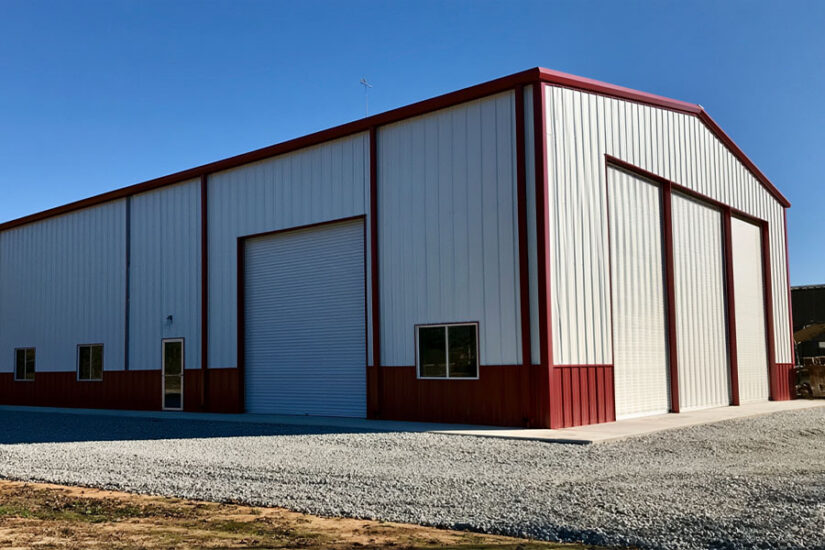

A 60×100 metal building kit runs $32,000–$68,000 for the steel shell. Add a concrete slab, erection labor, and site prep, and the number moves to $110,000–$195,000 for a basic enclosed structure. A finished warehouse, commercial building, or agricultural facility on a 60×100 footprint typically lands between $145,000 and $300,000 depending on location, finish level, and use case.
At 6,000 square feet, the 60×100 is one of the largest clear-span sizes most buyers consider without going full custom. It fits a mid-size warehouse, an agricultural equipment barn, a riding arena shell, a commercial shop, or a light manufacturing space. That range of uses creates a wide cost spread. This guide breaks it down by scenario.
Quick Answer
A 60×100 metal building (about 6,000 sq ft) runs $32,000–$68,000 for the steel kit alone and $145,000–$260,000 finished as commercial or warehouse space. Where a given project lands depends on how far you take it:
- Kit only (steel shell): $32,000–$68,000. Frame, roof panels, wall panels, standard doors.
- Kit + concrete slab: $86,000–$152,000. Above + 6-inch reinforced commercial slab.
- Basic enclosed (turnkey shell): $110,000–$195,000. Kit + slab + erection + site prep.
- Finished commercial/warehouse: $145,000–$260,000. Above + insulation, electrical, loading doors.
- Finished manufacturing/industrial: $200,000–$300,000+. Above + heavy electrical, HVAC, specialty fit-out.
Sources: buildingsguide.com (2026); metal-buildings.org (2026); steelbuildingkit.com (2026).
What a 60×100 Metal Building Costs in 2026
A 60×100 footprint is 6,000 square feet. That puts it firmly in commercial and agricultural territory. It’s enough for 10–12 standard vehicle bays, a mid-size distribution or storage warehouse, a covered riding arena with room for a rail, a large agricultural equipment barn, or a light manufacturing floor.
Steel prices in 2026 remain elevated above 2024 levels following tariff extensions on imported steel. Most kit manufacturers have passed those cost increases through to buyers, and quotes from reputable suppliers are running higher now than they were in late 2024. Get multiple quotes before locking a budget.
The table below reflects where real 60×100 projects land in 2026:
| Line item | Low end | High end | Notes |
| Steel kit | $32,000 | $68,000 | Red iron frame, roof, walls, standard doors; 26-gauge to 24-gauge |
| Concrete slab (6-inch, reinforced) | $54,000 | $84,000 | $9–$14/sq ft for 6,000 sq ft; 6-inch recommended for 60-ft span |
| Site prep and grading | $3,000 | $15,000 | Flat cleared land costs less; sloped or wooded sites cost more |
| Erection / labor | $12,000 | $35,000 | Varies sharply by region and crew availability |
| Insulation | $5,000 | $18,000 | Batt or spray foam; spray foam seals condensation risk better |
| Doors and windows | $3,000 | $18,000 | Loading dock doors, rollups, personnel doors beyond kit standard |
| Electrical (basic commercial circuit) | $8,000 | $40,000 | Panel, lighting, outlets; heavier manufacturing service adds more |
| Total (basic enclosed shell) | $110,000 | $195,000 | Finished shell with no interior build-out |
The $9–$14/sq ft slab range reflects reinforced commercial-grade concrete with anchor bolts and a standard smooth finish. Most national pricing guides for 2026 show 6-inch commercial slabs at $7–$12/sq ft; the $14/sq ft upper end applies to challenging sites, high-labor markets, or pump-truck pours. If your supplier data supports a tighter range, update accordingly.
Interior fit-out for offices, mezzanines, specialized mechanical, or insulated cold storage adds significantly to that number.
The slab: What Concrete Costs on a 60×100
The concrete foundation for a 60×100 building is a bigger line item than most buyers expect, and it’s often sized wrong when buyers try to cut costs.
A standard 4-inch residential slab is not adequate for a 60-foot clear-span building. The column loads from the primary steel frame are concentrated at the anchor bolt locations along the perimeter, and a 4-inch slab without proper perimeter footings won’t handle that load correctly. Most engineers specify a 6-inch slab with a thickened perimeter edge on a 60×100 commercial or agricultural build.
A 6-inch reinforced commercial slab on 6,000 square feet runs $54,000–$84,000 at $9–$14 per square foot installed (Source: buildingsguide.com, 2026; steelbuildingkit.com, 2026). That range includes:
- Rebar grid or heavy-gauge wire mesh
- Vapor barrier under the slab
- Anchor bolts for the steel frame
- Standard smooth finish
It does not include:
- Perimeter turned-down footings: add $6,000–$15,000 for a 60-foot span
- Upgraded finish (polished, epoxy-coated, or slip-resistant): add $3–$10/sq ft
- Site drainage work before the pour
- Pump truck if the site has slope or limited access: add $1,500–$3,500 per pour
For warehouse, manufacturing, or heavy agricultural use, also spec the floor for the point loads your equipment will place on it. A forklift working at capacity puts concentrated loads on a small area, and that changes the reinforcement spec. Get the slab designed for the actual use, not just the building footprint.
For a full breakdown of slab thickness options and reinforcement specs for steel buildings, see the concrete slab guide for steel buildings.
What Drives the Price on a 60×100
Red Iron Framing and Clear-Span Width
A 60-foot clear span is at the upper end of what standard pre-engineered building frames handle without interior columns. Getting there requires a heavier primary steel frame than a 40-foot or 50-foot span, and that shows up in the kit price.
Most 60×100 buildings use a red iron (hot-rolled I-beam) primary frame. This is the right choice for any clear-span building over about 50 feet wide. Cold-formed or light-gauge secondary framing appears in some economy kits, but the primary rafter-column system on a 60-foot span should be red iron. Specifying anything lighter to reduce kit cost is a real engineering risk in high-snow or high-wind zones.
Gauge and Frame Grade
Kit pricing varies by steel gauge. A 26-gauge wall and roof panel is the low end. A 24-gauge panel is heavier, more dent-resistant, and holds insulation better over time. On a 6,000 sq ft building, the difference between 26-gauge and 24-gauge panels adds $4,000–$12,000 to the kit cost but is usually worth it for any commercial or long-term agricultural use.
Snow and Wind Loads
The same 60×100 footprint engineered for Kansas at 90 mph wind and 20 psf ground snow is structurally different from the same building for Minnesota at 90 psf snow or coastal Louisiana at 130 mph wind. The steel is different, the connections are different, and so is the price.
Expect to pay $5,000–$15,000 more on the kit in high-snow or high-wind zones. Hurricane-rated frames for Gulf Coast and Southeast coastal sites can add $8,000–$20,000. The local code requirement is the spec to build to, not a national average. A low kit quote sometimes means the building isn’t engineered for where you’re actually building it.
Doors and Openings
A standard kit includes minimal door openings. A warehouse or distribution building with two 14-foot dock-height rollups, a 16-foot drive-through, and three personnel doors costs significantly more than the base quote. Each large opening changes the framing around it, and openings over 12 feet wide require additional header engineering. Specify your exact door count and sizes before accepting any kit quote.
Insulation
In a commercial or warehouse building, insulation has a direct cost. Spray foam costs about twice as much installed as batt, but it seals the building against condensation. In humid climates, an uninsulated or under-insulated steel building develops condensation on the underside of the roof panels, which corrodes fasteners and damages stored goods. Budget for insulation from the start, especially if you’re storing temperature-sensitive inventory or operating equipment year-round. For R-value targets by climate zone, see metal building insulation compared by type.
Common Uses for a 60×100 Building
Warehouse and Distribution
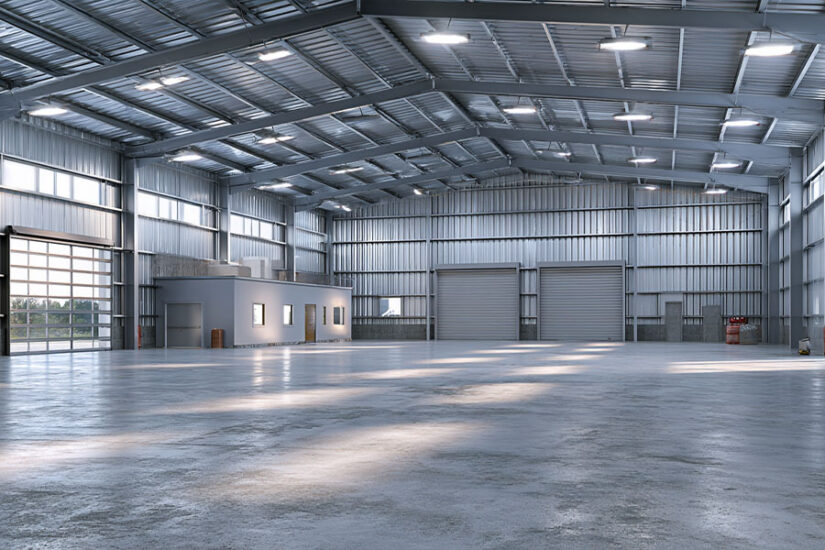
A 60×100 gives you 6,000 square feet of unobstructed floor space with a clear 60-foot width, which accommodates standard warehouse racking in double-deep or drive-in configurations. Two or three dock-height rollup doors along the 100-foot wall let a delivery truck back up while another side door stays in use.
Example scenario: a regional distributor using a 60×100 warehouse for product staging and delivery prep. The build includes two 14×14 dock-height rollups, one 16×14 drive-through on the end wall, LED high-bay lighting at 25 foot-candles, a 200-amp 3-phase service, and basic spray foam insulation. Finished cost in a mid-Atlantic market: $195,000–$240,000 all-in, including slab and erection.
For commercial warehouse configurations and specifications, see metal warehouses.
Commercial and Retail
A 60×100 commercial building works for auto dealerships, equipment sales, large-format retail, contractor yards, or any use that needs wide open interior space with a finished exterior. Commercial builds typically add a finished front facade (either metal panel or a masonry wainscot), office partitioning, and a more complex electrical layout than a basic warehouse.
Budget more for commercial builds: the finish requirements push total cost toward $200,000–$280,000 for a mid-level commercial fit-out.
For commercial metal building configurations, see commercial metal buildings.
Agricultural Equipment Storage
A 60×100 ag building fits large farm equipment: a modern combine, a large planter, a tractor, and implements with room to maneuver. The 60-foot clear width is wide enough for equipment with folded wing extensions. End-wall openings are typically 16×14 or 18×16 for combines with header attached.
Agricultural builds often skip finished insulation and complex electrical, which brings the cost down. A basic ag storage building on a gravel floor (no concrete slab) can be built for $60,000–$110,000 for kit and erection. Add a concrete floor and the number moves to $115,000–$160,000.
Riding Arena
A 60×100 steel shell works as an indoor riding arena. The 60-foot clear width is usable for flatwork and basic schooling with one rider, and the 100-foot length gives enough room for a short warm-up. It’s more constrained than the 80×200 or 100×200 arenas most serious programs build, but it works for private owners with limited land or budget.
An important note on indoor arena sizing: the industry standard for a useful dressage or jumping arena is larger than 60×100. If this building is for equestrian use, price the 60×100 but also ask about 60×120 or 80×150 before committing to the footprint.
Light Manufacturing
Light manufacturing uses, including fabrication, assembly, woodworking, or mechanical work, fit well in a 60×100 shell. The clear span lets you run overhead crane lines without obstructions. Manufacturing builds typically need 3-phase power, heavier electrical service (400-amp or higher), and sometimes dust collection or ventilation systems. That fit-out pushes finished cost to $220,000–$300,000+ for a fully outfitted manufacturing space.
Kit vs Turnkey: Where the Extra Cost Comes From
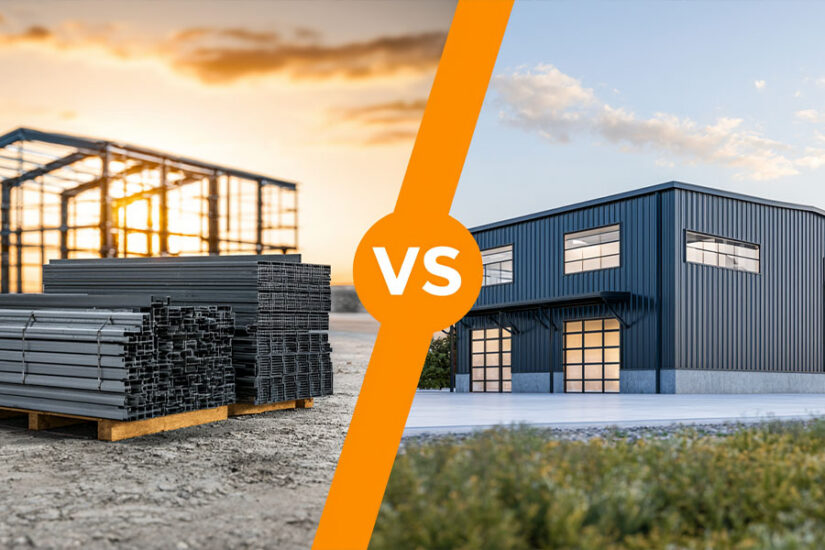
The kit price covers the structural steel: columns, rafters, roof panels, wall panels, trim, and anchor bolts. Everything that happens after the kit arrives on your site is an additional cost:
- Concrete slab (poured by a concrete contractor, billed separately)
- Erection labor (assembling the kit on your foundation)
- Site prep and grading
- Electrical service and wiring
- Insulation
- Interior partitioning, offices, mezzanines
- Permits and engineering stamps
- Freight (some manufacturers quote delivered, some quote FOB factory)
The gap between kit price and finished cost on a 60×100 is typically $80,000–$200,000 depending on finish level. Buyers who budget from the kit price and then discover the rest during construction are the most common source of cost overruns on commercial projects.
A turnkey contract means a general contractor manages the entire project: kit supply, foundation, erection, and finish work. The GC adds a 15–25% management margin, but you get a single contract and a single point of accountability. For buyers building commercial space for the first time, or building remotely, that accountability is usually worth the cost.
One thing to clarify with any quote: does “installed” mean bolted together on a slab, which is the standard for most kit-supplier quotes, or does it mean fully finished with electrical and insulation? The difference can be $80,000 on a 60×100 commercial build.
How a 60×100 Compares to Nearby Sizes
The 60×100 sits between smaller agricultural and workshop sizes and the larger commercial-scale buildings. Here’s how the cost picture shifts across adjacent footprints:
| Size | Sq ft | Kit only | Basic enclosed (turnkey shell) |
| 60×80 | 4,800 | $28,000–$58,000 | $85,000–$155,000 |
| 60×100 | 6,000 | $32,000–$68,000 | $110,000–$195,000 |
| 100×100 | 10,000 | $56,000–$110,000 | $185,000–$310,000 |
| 100×200 | 20,000 | $120,000–$220,000 | $370,000–$600,000+ |
The 60×80 figures represent conservative shell-only estimates. Some aggregators show wider ranges; these figures reflect basic enclosed shells without specialty fit-out.
The 60×80 saves roughly $25,000–$40,000 in kit cost over a 60×100. If the use case fits in 4,800 square feet, it’s worth pricing. For a detailed breakdown, see how much does a 60×80 metal building cost.
The jump from 60×100 to 100×100 increases the footprint by 67% and roughly doubles the structural complexity (the 100-foot clear span requires significantly heavier framing than a 60-foot span). The cost doesn’t quite double, but the engineering is in a different tier.
The 100×200 is a different class of project. At 20,000 square feet, it moves into large commercial and industrial territory with its own permitting, structural engineering, and site requirements.
For a full cost comparison across all standard sizes, see the metal building cost guide.
Permits and Lead Time
A 60×100 metal building at commercial scale requires a building permit in virtually every US jurisdiction. Agricultural exemptions exist in some rural counties but are typically limited to structures under a certain square footage, and 6,000 square feet is at or above that threshold in most states. Commercial and industrial uses require full permitting regardless of location.
Permit timelines vary significantly. Rural counties often process in four to eight weeks. Suburban commercial jurisdictions run eight to sixteen weeks. Industrial zones and coastal areas with additional review requirements (hurricane, flood zone, fire marshal) can run longer. Starting the permit application before ordering the kit lets both timelines run in parallel.
Kit lead time from most manufacturers runs 8–16 weeks at current demand levels. A realistic project timeline for a 60×100 commercial building: permit application starts at contract signing, kit ordered at permit submission, slab poured during permit review, kit arrives close to permit approval, erection begins within days. That sequence puts a basic enclosed shell at four to six months from contract to complete. A fit-out with electrical, insulation, and interior work adds two to four months.
Next Step: Get a Quote for Your 60×100
The biggest variable in any 60×100 quote is your site, your use case, and your location. A kit price is a starting point, not a project budget.
Call (888) 415-1576 or use the quote request form to talk through your build: footprint, use case, local code requirements, and timeline. US Patriot Steel supplies to 40+ states and can price the right structure for what you’re actually building.
Frequently Asked Questions
A 60×100 metal building kit costs $32,000–$68,000 for the steel shell. Add a concrete slab and erection and the cost runs $110,000–$195,000 for a basic enclosed structure. A finished warehouse, commercial building, or agricultural facility on the same footprint typically runs $145,000–$260,000 depending on finish level and location. Manufacturing and industrial fit-outs can reach $300,000 or more.
A 60×100 with a concrete slab runs $86,000–$152,000 for kit plus slab, before erection and site work. A 6-inch reinforced commercial slab on 6,000 square feet costs $54,000–$84,000 at $9–$14 per square foot installed. Add erection labor and site prep and the all-in cost for a basic enclosed shell is $110,000–$195,000.
Kit cost runs $5–$11 per square foot for a 60×100 steel building. A basic enclosed shell with slab and erection runs $18–$33 per square foot. A finished commercial building with electrical, insulation, and interior work runs $24–$50 per square foot. Industrial fit-outs can push above $50 per square foot.
A standard 60×100 kit includes the primary red iron frame (columns and rafters), secondary framing, roof panels, wall panels, trim and flashing, and anchor bolts. It does not include the concrete slab, erection labor, insulation, electrical, doors beyond the standard allotment, permits, or freight in most cases. Confirm exactly what’s in any kit quote before comparing prices.
Yes. A properly engineered 60×100 red iron frame clears 60 feet with no interior columns. This is the main reason buyers choose the 60-foot width: full unobstructed floor space for equipment, vehicles, or racking. The primary frame must be designed for the actual snow load and wind speed at your location. Verify the engineering specs on any kit before buying.
A 60×80 (4,800 sq ft) runs $85,000–$155,000 for a basic enclosed shell, saving roughly $25,000–$40,000 over the 60×100. A 100×100 (10,000 sq ft) runs $185,000–$310,000 for an enclosed shell, but requires significantly heavier framing because the clear span doubles. The 60×100 sits in a useful middle range for commercial and agricultural buyers who need more than a workshop but don’t need a large industrial footprint.
- How much do metal buildings cost? – full cost comparison across all standard sizes and building types
- 60×100 metal building – kit configurations, door sizing, and customization options for this footprint
- Concrete slab thickness guide for steel buildings – what thickness you need, reinforcement specs, and what different slab types cost
- Commercial metal buildings – configurations, occupancy types, and cost factors for commercial builds
- Metal warehouses – warehouse configurations, door sizing, and what a finished 60×100 distribution building looks like
- How much does a 60×80 metal building cost? – cost comparison for buyers considering a slightly smaller footprint
References
- BuildingsGuide.com. 60×100 Metal Building | Custom Steel Kits & Cost Guide. Kit pricing, standard configurations, and 2026 cost data. buildingsguide.com
- metal-buildings.org. 60 X 100 Metal Building Cost Guide. Turnkey cost breakdown and per-square-foot pricing data for 2026. metal-buildings.org
- SteelBuildingKit.com. Cost, Uses & Best Companies (2026) — 60×100 Steel Building Kit. Kit cost ranges and use-case breakdown. steelbuildingkit.com
- HomeGuide. How Much Does a Metal Building Cost? (2026). National per-square-foot data, slab cost benchmarks. homeguide.com