
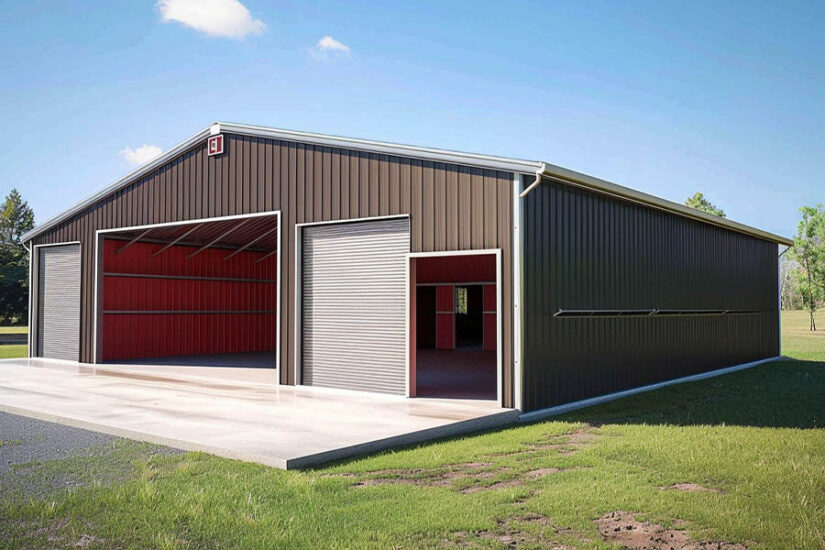

The red barn is one of the most recognizable images in American agriculture. It appears on postage stamps, greeting cards, and roadside murals. It represents something deeply rooted in the history of farming in this country. And yet, when farmers today actually sit down to plan a new barn, most of them choose steel. The question worth asking is not which one looks better – it is which one performs better, and whether a steel barn has to look any different from the classic red barn at all.
The answer to the second question is straightforward: it does not. Modern steel barns can be built in barn red, or in any of dozens of other colors, with rooflines and trim configurations that are visually indistinguishable from traditional wood construction. The first question – performance – has a longer answer, and it matters a great deal more to your operation than aesthetics.
Why Barns Were Red in the First Place
The tradition of the red barn is older than the United States itself, and it was never really about color. Early American farmers – particularly in New England in the late 1700s – needed a way to protect bare wood barn siding from the elements. They made their own paint from what they had on hand: linseed oil from flax seeds, skimmed milk, lime, and ferrous oxide – rust. The rust was the key ingredient. It killed fungi, mold, and moss, and it was available on every farm for free. The mixture dried fast, hardened to a plastic-like coating, and happened to turn the barn a deep, burnt red.
By the mid-1800s, as commercial paints became available, red remained the cheapest option. The 1922 Sears, Roebuck catalog sold red barn paint for $1.43 per gallon, while other paint colors cost at least $2.25 per gallon – nearly twice as much. The red barn spread across the country not because farmers loved the color, but because it was practical and affordable.
The tradition stuck long after the economics changed. Today, barn red is a deeply embedded cultural symbol – associated with hard work, rural heritage, and the American farm. It is a powerful visual identity. And it is one that a steel barn can carry just as well as a wood one.
Can a Steel Barn Look Like a Traditional Red Barn?
Yes – completely. This is the most common misconception about steel barns: that they look industrial, utilitarian, or out of place in a rural setting. Modern pre-engineered steel buildings are available with a full range of design options that replicate – and in many cases improve on – the classic barn aesthetic.
Color
Steel panels are factory-finished with high-performance coatings available in barn red, forest green, charcoal, white, brown, and dozens of other colors. Premium PVDF (Kynar 500) and SMP paint systems provide lasting color retention, resisting the fading and chalking that require wood barns to be repainted every 5–10 years. A steel barn painted barn red on day one still looks barn red twenty years later without repainting.
Roofline
Gabled, gambrel, and monitor rooflines – the classic shapes of American barns – are all standard options in pre-engineered steel. The gambrel roof, with its distinctive double-pitched silhouette, is one of the most requested profiles for agricultural steel buildings. Combined with cupolas and ridge vents, it is visually identical to a traditional wood-framed barn.
Color combinations and trim
Two-tone designs with contrasting trim colors, white corner trim against a red body, or a dark roof over light siding are all standard configurations. Wainscoting – a contrasting panel on the lower portion of the wall – adds visual depth and closely resembles the horizontal board-and-batten siding seen on traditional New England barns.
Popular Steel Barn Color Combinations
| Style | Wall / Body | Roof / Trim |
| Classic American | Barn Red | White trim, charcoal or dark roof |
| Traditional Farm | Forest Green | White trim, galvalume roof |
| Modern Ranch | Charcoal Gray | Black trim, matte black roof |
| Clean Farmhouse | Arctic White | Black or dark bronze trim |
| Rustic Country | Rustic Brown | Weathered iron or olive trim |
| New England | Dark Navy | White trim, steep gable roof |
Where Steel and Wood Barns Actually Differ: Performance
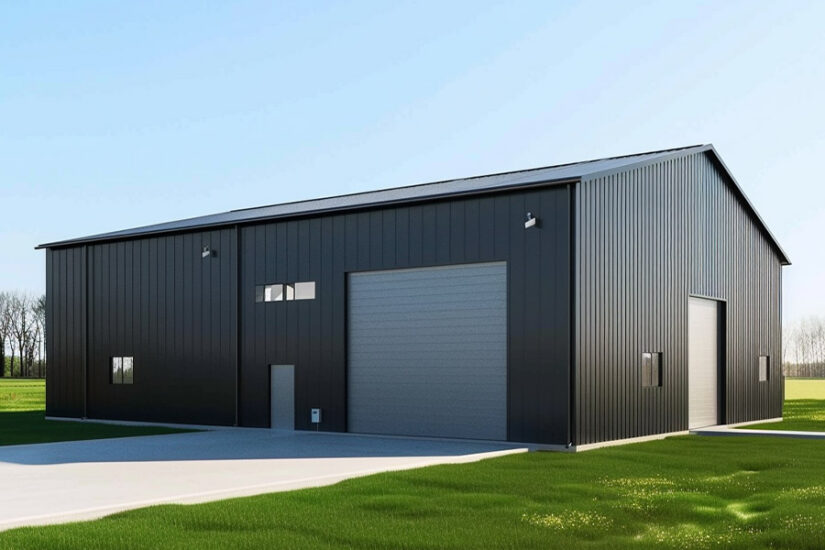
Appearance is a choice. Performance is physics. And on every meaningful performance metric, steel outperforms wood – not by a small margin, but decisively.
Lifespan
A well-built wood barn painted red has a typical structural life of 20 to 30 years before significant repairs become necessary. Sills rot, framing warps, and the painted exterior becomes a constant maintenance task. A steel barn, properly designed and anchored, lasts 50 to 100 years with minimal intervention. The paint does not peel, the framing does not warp, and there are no sills to rot.
Maintenance
The most enduring cost of a traditional red barn is maintenance. Annual upkeep for a wood barn – painting, staining, sealing, pest treatment, and structural repairs – typically runs $2,000 to $4,000 per year. The same tasks on a steel barn cost $400 to $800 annually. Over 20 years, that gap is real money: more than $60,000 in saved maintenance costs on a mid-size farm barn.
Fire resistance
This is the most consequential performance difference. Wood is combustible. It ignites at approximately 260°C (500°F) and feeds a fire once it starts. Steel is non-combustible – it earns a Class A fire rating under NFPA standards and does not ignite or spread flames. In a barn fire, the difference in material is the difference between a structure that can be saved and one that burns to the ground. Steel barns also typically qualify for 20–30% lower insurance premiums compared to wood-frame construction.
Structural spans
Traditional wood-framed barns are limited by the lengths lumber can practically span. Interior posts and columns are a standard feature – and a constant obstacle for equipment movement. Pre-engineered steel buildings offer clear-span interiors up to 150 feet or more with no interior columns. The working space inside a steel barn is unobstructed by definition, not by design compromise.
Weather and pest resistance
Wood absorbs moisture, swells, contracts, and becomes vulnerable to termites, carpenter ants, and rodents. Steel does none of these things. In regions with heavy snowfall, wind, or high humidity, the structural advantage of steel compounds over time as wood framing gradually degrades and steel does not.
Steel Barn vs. Red (Wood) Barn: Full Comparison
| Category | Steel Barn | Wood Barn |
| Available in Barn Red | Yes – factory-finished panels | Yes – painted wood |
| Color Longevity | 20+ years, no repainting | 5–10 years between repaints |
| Service Life | 50–100 years | 20–30 years |
| Fire Rating | Class A (non-combustible) | Class C (combustible) |
| Annual Maintenance | $400–$800 | $2,000–$4,000 |
| Insurance Premiums | 20–30% lower | Standard rate |
| Pest & Rot Resistance | Immune | Vulnerable |
| Interior Spans | Clear span up to 150’+ | Limited by lumber |
| Roofline Options | Gable, gambrel, monitor, custom | Gable, gambrel |
| Expansion | Modular – straightforward | Complex, costly |
Color, Climate, and Energy Efficiency
One performance consideration that connects appearance directly to function is color and its effect on interior temperature. Darker barn colors – deep red, charcoal, forest green – absorb more solar heat, which can be beneficial in northern climates where passive warming reduces heating costs in winter. Lighter colors – white, light gray, beige – reflect heat and are more effective in hot southern climates where keeping the interior cool is the priority.
This is not a trivial consideration for livestock facilities or equipment storage. Pairing the right panel color with insulated steel panels – which can achieve R-values up to R-30 – creates a building envelope that is actively responsive to your local climate. A properly configured steel barn can reduce heating and cooling costs by an estimated 40–50% compared to an uninsulated structure, regardless of color choice.
The Real Question: Tradition or Performance?
The red barn tradition started as a practical decision: linseed oil, rust, and whatever was available. Over time, that practical choice became a cultural identity – an icon of American agricultural heritage. There is nothing wrong with honoring that tradition.
But the farmers who first mixed linseed oil and rust to protect their barns were not making a sentimental choice. They were solving a real problem with the best materials available to them. Today, steel is the best material available – and it can carry the red barn aesthetic forward without compromise.
A steel barn painted barn red, with a gambrel roofline, white trim, and a cupola at the peak, is visually indistinguishable from a classic wood-frame barn. It will look that way in 30 years. The wood barn will not.
Build Your Steel Barn with US Patriot Steel
At US Patriot Steel, we build custom steel barns in barn red, forest green, charcoal, white – whatever fits your property and your vision. Every building is engineered for your climate and site, with full documentation for local permitting and a structural warranty included. Traditional look, modern performance. Request a free quote today.
Conclusion
The red barn is part of American agricultural identity – and it always will be. But the original red barn was built with the best materials its era had to offer. Today, that material is steel. A steel barn can look exactly like the red barn down the road, and it will still be standing long after that barn is gone.
If you are planning a new barn and want the classic look with none of the classic maintenance headaches, US Patriot Steel can build it. Contact us today for a free quote and a custom design consultation.
FAQ: Steel Barn vs. Red Barn
Yes. Steel panels are factory-finished in barn red and dozens of other colors using high-performance PVDF or SMP coatings. Unlike wood paint, these finishes do not require repainting every 5–10 years – they retain their color for 20 years or more.
Yes. Pre-engineered steel buildings are available with gambrel, gable, and monitor rooflines, cupolas, ridge vents, and two-tone trim configurations that are visually identical to classic wood-frame barn construction.
The tradition began in the late 1700s when farmers mixed linseed oil with ferrous oxide (rust) to protect bare wood from rot and moisture. Rust killed mold and fungi, and the mixture turned deep red. By the mid-1800s, red paint was simply the cheapest commercial option available. The color became a cultural tradition long after the practical reason faded.
Steel outperforms wood significantly over a 20-year period. A steel barn requires 80–85% less annual maintenance, lasts 2–3 times longer without major structural work, carries a Class A fire rating versus Class C for wood, and typically costs 20–30% less to insure. The higher upfront cost of steel is typically recovered within the first decade through maintenance savings alone.
Yes. Darker colors absorb more solar heat, which can be beneficial in northern climates during winter. Lighter colors reflect heat, keeping interiors cooler in hot climates. The effect is most significant on roof color. Pairing the right color with insulated steel panels maximizes energy efficiency for your region.
References
- HowStuffWorks – Why Are Barns Usually Painted Red?
- Modern Farmer – Why Are Barns Painted Red? (Thomas D. Visser, University of Vermont)
- The Old Farmer’s Almanac – Evolution of the American Barn
- Washington State DAHP – Barn Paint Colors (historic pigment documentation)
- NFPA – Barn Fire Safety Tip Sheet