“Roof style” refers to how the top panels of a building are oriented and how the roofline is finished at its edges. And this goes beyond appearances alone.
This choice affects how well a building sheds water or snow and how well it holds up over time. Thus, this decision is an important one. So, what are some of the standard options available? What roof styles are best for metal buildings? Let’s start with some basics first.
Why Roof Style Matters
Roof style directly impacts how a metal building performs. At the end of the day, water and snow need a clear path off the roof surface, and some designs encourage faster runoff than others. And a roof that doesn’t shed moisture efficiently can develop standing water or accumulate weight from snow, potentially shortening the building’s lifespan or leading to exhausting maintenance issues.
Beyond performance, roof style affects the building’s appearance. Some styles have a utilitarian appearance suited to agricultural or industrial settings. Other styles present a cleaner look, which may be more appropriate for residential or commercial properties.
You’ll also want to consider your climate; areas prone to high winds, heavy snow, or frequent storms may require different configurations than those in mild, dry climates.
Regular Roof Style
The regular roof style features a rounded or slightly curved profile at the roofline. In this design, roof panels are typically oriented horizontally, running from side to side across the structure.
This is often the most cost-effective roof configuration and is commonly used on carports, small storage buildings, and utility structures.
On top of this, regular roofs work adequately in mild climates where heavy precipitation is uncommon. They offer a straightforward appearance and are often chosen when budget is a primary consideration. However, the horizontal panel orientation can allow water to collect in the ridges between panels. In areas with frequent storms or freezing temperatures, this can become a problem.
Boxed-Eave Roof Style
The boxed-eave roof style introduces a more refined appearance through its finished edges. Instead of the rounded profile of a regular roof, boxed-eave buildings feature horizontal roof panels paired with “boxed” or squared-off eaves that give the roofline a cleaner, more traditional look. This design more closely resembles a conventional stick-built structure than the regular style.
Overall, boxed-eave roofs are popular for residential garages, workshops, and light commercial applications where visual appeal matters alongside functionality. The horizontal panels perform similarly to regular roof panels in terms of water flow, so this style is generally suited to areas with moderate weather.
Vertical Roof Style
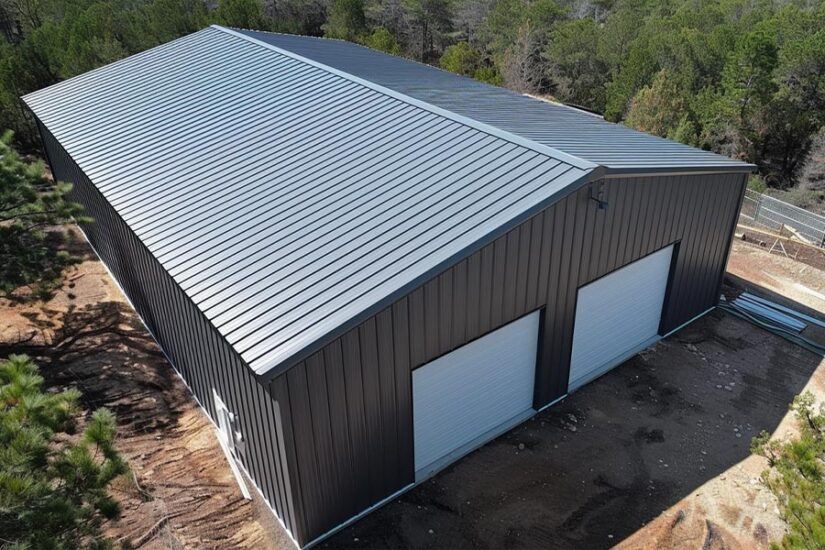
The vertical roof style orients the panels vertically, running from the roof peak to the eaves. This orientation creates a direct path for water and snow to travel off the roof surface.
This style is commonly selected for larger buildings, including barns, workshops, and commercial structures, as well as for buildings in regions with heavy snowfall or frequent rain. Ultimately, vertical panel orientation reduces the likelihood of water pooling on the roof, helping minimize long-term wear.
In northern climates or areas with significant precipitation, many people choose vertical roofs for their improved drainage characteristics.
Comparing Standard Metal Building Roof Styles
Each roof style has distinct characteristics, including panel orientation, appearance, drainage, and typical applications. Here’s a quick side-by-side comparison:
| Feature | Regular | Boxed-Eave | Vertical |
| Panel Direction | Horizontal | Horizontal | Vertical |
| Appearance | Rounded edges | Squared eaves | Traditional |
| Drainage | Standard | Standard | Improved drainage |
| Typical Use | Small storage or carports | Workshops or garages | Commercial buildings, big barns |
How Climate and Building Use Influence Roof Choice
Your specific climate is arguably the most important factor in selecting a roof style. For example, in regions with heavy snow loads, vertical roofs are strongly recommended to prevent excessive snow accumulation. Areas with significant rainfall benefit similarly from the improved drainage of vertical panels.
It’s also worth noting that buildings in open, windy areas may experience different wind loads depending on the roof configuration. Thus, this is something to keep in mind, too, when making your decision.
Additionally, consider how big the intended building will be and what purpose it will serve. For instance, a small carport used for vehicle storage has different requirements than a large agricultural barn or a commercial warehouse.
Lastly, the right roof style depends on where the building is located and how it will be used. Companies, like US Patriot Steel, typically guide buyers through these considerations to help choose an option that performs well in local conditions and meets your project’s goals.
Frequently Asked Questions
All three standard styles, regular, boxed-eave, and vertical, are commonly used. The most appropriate choice depends on the building’s location, size, and intended use rather than overall popularity.
Vertical roofs allow snow to slide off more easily due to their panel orientation. This makes them a common recommendation for buildings in areas with regular snowfall or heavy snow loads.
Yes, regular roofs are typically the most economical, followed by boxed-eave, with vertical roofs generally carrying a higher price point due to additional materials and labor involved in their construction.
Absolutely! Roof style has a noticeable impact on appearance. Overall, boxed-eave and vertical styles tend to present a more finished, traditional look compared to the utilitarian profile of a regular roof.
Availability can vary by manufacturer and building type. Some smaller structures may only be offered with certain roof configurations. Meanwhile, larger buildings often have access to all standard options. Yet, this will ultimately depend on the company doing the build.