
Wiring a metal garage or workshop is often necessary but also requires planning. Like other structures, electrical work must follow local codes and usually requires a licensed electrician. And yes, this includes any lighting, outlets, tools, or EV chargers. Below, we explore more closely what this all involves and how to add electricity to a metal garage or workshop on your property.
Why Electrical Planning Matters in Metal Buildings
It’s easy to leave electricity as a bit of an afterthought. But it ultimately shapes the layout of your space, how you can use it, and even how safe the space is to use.
For example, an electrical setup for a metal workshop likely requires more than lighting. You might need 240-volt circuits for heavy equipment or dedicated lines for an air compressor, welder, or future EV charger. And these aren’t decisions you want to make after the walls are already finished.
Getting the electrical layout right during the planning phase often saves money and headaches down the line, as retrofitting later can actually be more complex and potentially expensive.
Understanding the Basics of Power Supply
For most detached garages and workshops, power comes from the home’s main electrical panel and runs to a subpanel inside the building. The subpanel serves as a local distribution point, allowing you to run multiple circuits to different areas without routing everything back to the house.
Yet the required capacity really depends on how you intend to use the space. For instance, a workshop with a table saw, air compressor, and dust collector pulls far more power than a garage with overhead lights and a few wall outlets. When considering power in your metal building, you’ll thus want to determine the right panel size from the start.
Common Electrical Needs in a Garage or Workshop
Many people find they need more circuits than they initially expect. A few categories worth thinking through include:
- Lighting: This includes general overhead lighting and task lighting for workbenches or specific areas.
- Standard outlets: You may want these spread throughout your space, depending on your intended usage.
- Equipment or tool power: Welders, compressors, and large power tools often require dedicated circuits.
- Future upgrades: You’ll want to account for EV charging or compressors now, even if you might not need them immediately.
Wiring Methods for Metal Buildings
Metal conducts electricity, which means wiring needs to be properly protected and separated from the building’s surfaces.
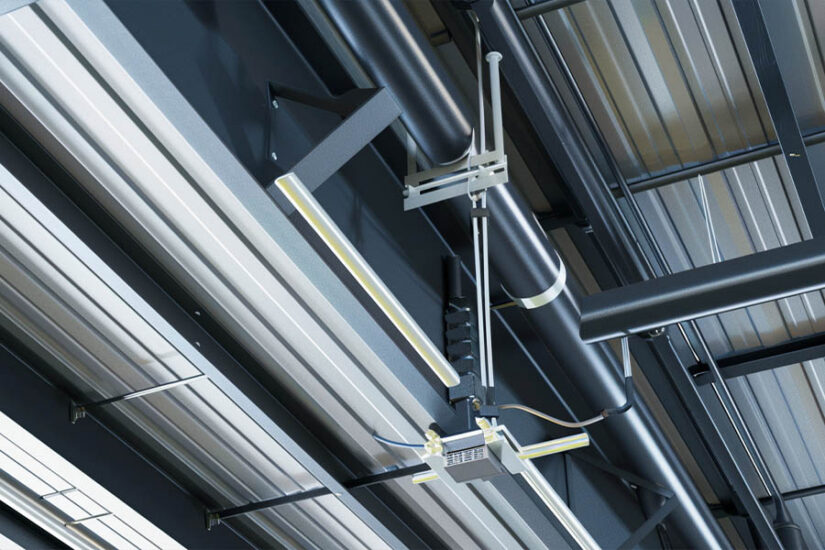
A common approach here is surface-mounted conduit. This is where the wiring runs through metal or PVC conduit attached to the walls and ceiling, making it practical, accessible, and easy to modify later, if needed.
If the interior will be finished with wall panels or framing, wiring can also be routed within the walls, as in a standard wood-framed building. But this method depends on the level of finish, intended use, and local code requirements.
Grounding and Safety Considerations
Since the structure itself is conductive, a properly grounded system provides a safe path for fault current, which is what protects both people and equipment if something goes wrong.
In fact, this is one of the reasons inspections exist. A licensed electrician and a proper permit ensure everything is done right.
Permits, Codes, and Professional Installation
Electrical work on a detached structure almost always requires a permit, and the work typically needs to be inspected before it’s put into use. While local codes vary, electrical installations should always meet the minimum safety standards, and have someone who is qualified to do the work.
This is why hiring a licensed electrician is important. They take care of this responsibility; on top of this, if something goes wrong later on, you have the records and permits proving there wasn’t any wrongdoing on your side of things.
Planning Electricity Before Building vs After Installation
Early planning ultimately improves efficiency and cost. Metal building or metal garage electrical planning can be not only expensive but also disruptive to any workspace if needed after construction. At the end of the day, pre-planning lets you run conduit before walls are finished, position your panel where it’s most useful, and fold electrical rough-in into the overall construction schedule.
Working with a provider, such as our team at US Patriot Steel, during the design phase gives you the opportunity to think through those decisions beforehand and potentially avoid higher costs and issues down the line.
How to Prepare Your Metal Garage for Electrical Setup
Before the electrician arrives, having a clear picture of your needs makes the process that much smoother. A few things to consider here include:
- Where do you want outlets? Consider workbench locations, tool storage, and any corners you’ll use regularly.
- Where will the panel go? It needs to be accessible, away from moisture, and near where power enters the building.
- Will you finish the interior? Insulated walls affect how wiring is routed – coordinating early avoids having to redo things.
- Any future upgrades? Roughing in for an EV charger or dedicated HVAC circuit while walls are open is worth the conversation.
Having proper electricity turns a basic metal shell into a functional, productive space. And overall, this is better done right the first time around, saving you headaches and costs later on.
Frequently Asked Questions
Yes, power typically runs underground from the home’s main panel to a subpanel in the garage. However, you’ll want to take into account local codes, permits, distance, and more.
In most cases, yes. A subpanel lets you run multiple circuits within the building and makes future upgrades much easier.
Not drastically, conduit is commonly used to keep wiring separated from the metal surfaces, and grounding usually gets extra attention due to how well metal conducts electricity.
In most cases, yes. Permits and inspection ensure everything is safe and done to code, preventing unexpected tragedies or disasters happening due to electrical installation.
Yes, but it may cost more than planning ahead from the get-go. Yet, adding electricity after the building is installed is still possible.