
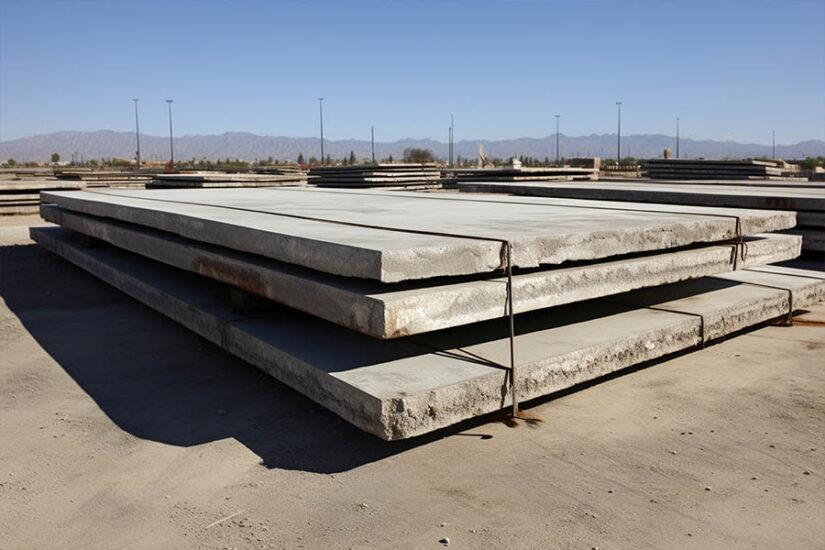
A concrete slab, in the context of steel buildings, is the flat, load-bearing foundation surface that supports the building frame and all interior activity. In most projects, it serves both as a structural element and as the finished floor. Steel columns, wall loads, vehicles, equipment, and storage systems all transfer forces into the slab and then into the supporting soil.
Slab thickness matters because it governs load capacity, crack resistance, and long-term performance. Slabs that are too thin are more likely to crack, rut, or experience joint failure – especially under concentrated point loads. Thickness must also be compatible with the steel frame, which transfers loads at specific locations rather than evenly across the floor.
As a general reference, light-use steel buildings often fall in the 4–6 inch range, while commercial and heavy-duty applications typically require thicker slabs and localized reinforcement. The correct thickness depends on use, soil, structure, and engineering – not rules of thumb alone.
Key Factors That Determine Slab Thickness
Concrete slab thickness is influenced by multiple interrelated factors. Understanding these drivers helps owners and builders evaluate whether a proposed slab design aligns with real-world use rather than minimum assumptions.
Building Use and Loads
The intended use of the building is the primary driver of slab design. Light-duty applications, such as basic storage or small workshops, place relatively low demands on the floor. Standard commercial uses – including service bays, light manufacturing, and small warehouses – introduce higher traffic and equipment loads.
Heavy-duty and industrial uses generate the highest stresses. Forklifts, trucks, RVs, storage racks, and fixed machinery apply significant point loads rather than evenly distributed weight. Steel building columns also concentrate loads at specific locations. Slab thickness and localized thickening must account for these forces to prevent cracking and long-term distress.
Soil Conditions and Subbase
Slab performance is inseparable from the soil beneath it. Bearing capacity, soil type, moisture sensitivity, and compaction quality all affect how loads are transferred. Well-compacted granular soils provide uniform support, while weak or expansive soils increase the risk of settlement and cracking.
A properly prepared granular subbase – typically crushed stone or gravel – helps distribute loads, improve drainage, and reduce slab movement. Where soil conditions are poor or inconsistent, engineers may specify thicker slabs, deeper subbases, or localized thickening rather than relying on slab thickness alone.
Building Size, Column Spacing, and Frame Type
The geometry of the steel building also affects slab behavior. Larger footprints and wider spans often result in higher column loads and longer load paths within the slab. As column spacing increases, bending stresses within the slab also increase.
Different frame types – such as clear-span or multi-span systems – transfer loads differently into the foundation. These factors influence not only overall slab thickness but also the need for thickened areas at columns, walls, and door openings.
Codes, Standards, and the Engineer’s Role
Concrete slab thickness is a structural decision governed by building codes and engineering standards. Load calculations, soil reports, reinforcement design, and joint layouts all factor into the final specification.
For steel buildings, slab design should always be reviewed and stamped by a licensed structural engineer. An engineered slab ensures compatibility with the steel frame, compliance with local codes, and reliable long-term performance.
Typical Slab Thickness Ranges for Steel Buildings
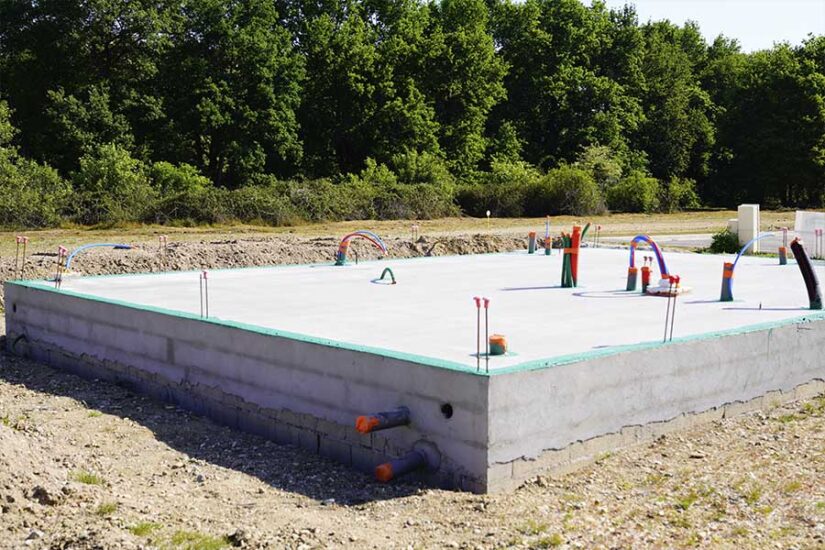
While slab thickness must always be engineered, industry practice provides useful reference ranges based on common building uses. These ranges help owners and builders set expectations early in the planning process.
Light-Duty Steel Buildings
For light storage buildings, hobby spaces, and small workshops, a 4-inch slab is commonly used when supported by a well-prepared subgrade. Loads are generally low and evenly distributed.
Even at this thickness, reinforcement and proper jointing are essential. A thin slab without crack-control detailing is far more likely to develop random cracking regardless of how light the use may seem.
Standard Commercial Steel Buildings
Many commercial steel buildings fall in the 5–6 inch range. Auto shops, service bays, and light warehouses benefit from the added thickness, which improves load distribution under vehicles, pallet jacks, and rolling equipment.
Stepping up from 4 inches to 6 inches often provides a meaningful increase in durability with relatively modest cost impact.
Heavy-Duty and Industrial Applications
Industrial floors frequently require 6–8 inches or more, particularly in forklift aisles, high-bay warehouses, and equipment-intensive environments. These slabs must withstand repeated dynamic loads and high point pressures.
Localized thickening is common in these buildings. Column pads, loading dock edges, and equipment foundations may be thickened to 8–12 inches or more without increasing the thickness of the entire slab.
Exterior Slabs Around Steel Buildings
Exterior slabs – such as driveways, overhead-door aprons, and loading areas – are exposed to vehicle traffic, weather, and freeze–thaw cycles. These areas often require equal or greater thickness than interior slabs, along with enhanced drainage and reinforcement.
Design Details That Affect Slab Performance
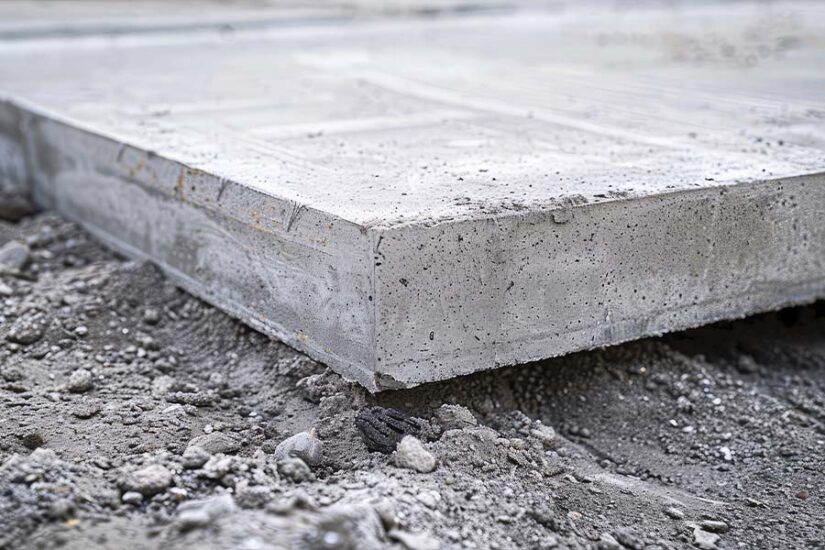
Thickness alone does not determine slab success. Reinforcement, jointing, subbase preparation, and load detailing all influence how the slab performs over time.
Reinforcement Options
Reinforcement improves crack control and load distribution but does not replace required thickness. Welded wire mesh provides basic shrinkage control, while rebar grids offer greater structural capacity. Fiber-reinforced concrete can further limit microcracking and improve impact resistance.
Joints and Crack Control
Concrete shrinks as it cures, making cracking inevitable without proper jointing. Control joints guide cracks into predictable locations, while expansion joints allow movement at walls and columns. Joint spacing and saw-cut timing are critical to effective crack control.
Subbase Preparation and Drainage
Uniform support beneath the slab is essential. Proper compaction, adequate granular base depth, and moisture control reduce settlement and curling. Exterior drainage must direct water away from slab edges to prevent erosion and long-term movement.
Thickened Edges and Column Areas
Steel buildings concentrate loads at columns and perimeter walls. Thickened edges and isolated column pads provide the required bearing capacity exactly where loads are highest, improving performance without unnecessary material cost.
Use-Specific Recommendations
Different steel building applications place unique demands on concrete slabs. Designing with these use-specific conditions in mind improves safety, durability, and operational efficiency.
Warehouses with racking require attention to slab flatness and concentrated rack-post loads. Vehicle bays and workshops benefit from thickened pads beneath lift posts and wheel paths. Agricultural buildings often justify thicker slabs due to heavy equipment and chemical exposure. In cold climates, frost protection and edge insulation become critical to prevent slab movement.
Cost vs. Performance: Finding the Right Thickness
Increasing slab thickness raises upfront construction costs, but it often reduces long-term maintenance, downtime, and repair expenses. Under-thick slabs are more prone to cracking, rutting, joint spalling, and structural distress – problems that are expensive and disruptive to fix after construction.
| Design Approach | Typical Thickness | Initial Cost Level | Long-Term Performance | Risk Profile | Best Fit Scenarios |
| Minimum Acceptable | 4–5 inches | Low | Adequate under ideal conditions | Higher risk of cracking and joint issues | Light-duty storage, minimal traffic |
| Standard / Balanced | 5–6 inches | Moderate | Reliable for most commercial use | Manageable with proper detailing | Workshops, service bays, small warehouses |
| Performance-Oriented | 6–8 inches | Moderately High | High durability, reduced maintenance | Low | Forklifts, racking, frequent vehicle traffic |
| Heavy-Duty / Industrial | 8+ inches (full or localized) | High | Maximum lifespan and load tolerance | Very Low | Industrial floors, loading docks, equipment pads |
The key decision is balancing minimum acceptable thickness against optimal performance for real-world use. Designing for how the building will actually operate – rather than minimum assumptions – typically delivers better long-term value.
Practical Checklist for Owners and Builders
Before finalizing slab design, owners and builders should confirm expected loads, soil conditions, future use plans, steel frame load paths, reinforcement strategy, and climate considerations.
As a planning reference:
- ~4 inches: Light storage, low traffic
- ~5–6 inches: Commercial shops, service bays
- ~6–8+ inches: Forklifts, racking, heavy equipment
- 8–12+ inches (localized): Column pads, loading docks
These ranges are guidelines only. Final slab thickness must always be engineered for the specific project, based on actual loads, soil conditions, climate, and applicable codes.
Final Thought
A concrete slab is not just a floor – it is a structural system. When properly engineered, detailed, and constructed, it supports the steel building’s performance, adaptability, and value for decades. Investing in the right slab thickness upfront is one of the most effective ways to protect the long-term success of a steel building project.
Call Us: (888) 415-1576