
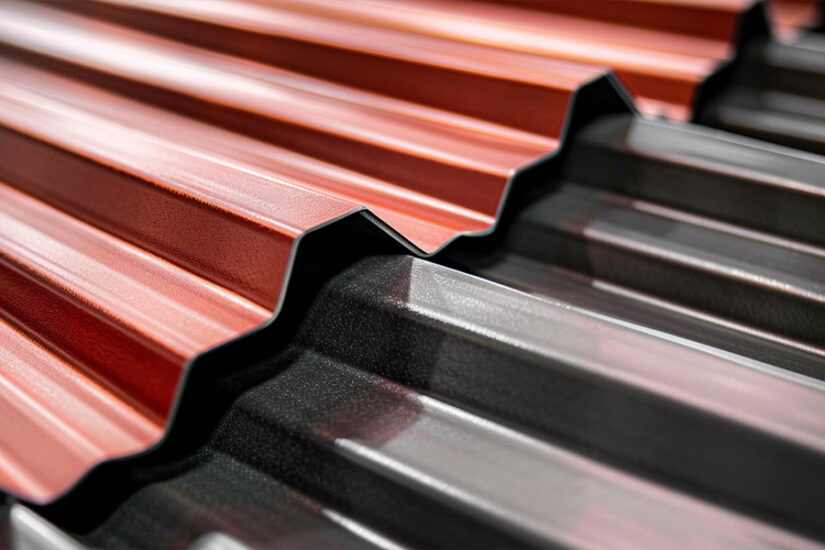
Corrosion is one of the most common causes of premature deterioration in metal buildings. A steel structure without adequate corrosion protection can begin showing surface rust within a few years – and in aggressive environments, structural degradation can follow within a decade. A steel building with the right coating system, matched to its environment and properly detailed, can remain structurally sound and visually intact for 50 to 100 years. The difference between those two outcomes is largely determined before a single panel leaves the factory.
This guide covers the coating systems used in modern metal buildings: what they are, how they work, and which combination makes sense for different environments and budgets. Coating performance in the field depends on more than the paint spec – installation quality, detailing at cut edges and fasteners, drainage design, and maintenance all play a role. Understanding the full picture helps you ask the right questions before you build.
How Corrosion Develops in Metal Buildings
Rust is iron oxide – the product of iron reacting with oxygen and moisture. Bare steel exposed to the elements will begin to oxidize relatively quickly. Left unprotected, oxidation spreads inward, progressively weakening the material over time.
In agricultural environments, several factors accelerate the process. Animal waste produces ammonia, which is aggressive toward certain metal coatings. Coastal regions add salt-laden air. In high-humidity climates, condensation cycles keep metal surfaces intermittently wet – exactly the condition that drives ongoing corrosion even where rainfall is moderate.
Modern metal buildings address this through a layered protection system: a corrosion-resistant substrate as the foundation, topped by a factory-applied paint system that seals the surface from UV, moisture, and chemical exposure. Each layer does a different job, and both matter.
Where Rust Usually Starts on a Metal Building
Coating failures rarely happen uniformly across a wall panel. In practice, corrosion tends to begin at specific weak points in the building envelope – places where the protective system is thinnest, mechanically stressed, or exposed to concentrated moisture. Knowing where to look makes maintenance far more effective.
- Cut edges and trim: When steel panels are cut to length on-site, the freshly exposed edge has no coating. This is the most common starting point for rust on metal buildings. Factory-produced panels have treated edges; field cuts require immediate touch-up with compatible primer or sealant.
- Fastener penetrations: Exposed fastener heads, loose washers, and holes drilled through panels create direct pathways for moisture into the substrate. Self-sealing fasteners with neoprene washers help, but their effectiveness depends on correct installation torque – overtightening compresses the washer and reduces its seal.
- Panel overlaps and seams: Water that enters a lap joint can wick along the overlap by capillary action and remain trapped, creating a sustained wet contact zone against the steel. Proper sealant application and adequate overlap dimensions are critical details that affect long-term performance significantly.
- Roof penetrations: Vents, conduit, and pipe penetrations cut through the roof panel at points that receive direct rainfall and pooling. Flashing and collar seals at each penetration are essential; inadequate detailing here is a reliable predictor of early moisture intrusion.
- Base trim and foundation transition: The base of a metal wall, where the panel meets the foundation or grade, accumulates ground splash, debris, and standing water after rain. Soil contact with panel edges can wick moisture into the wall system for extended periods. Proper base trim clearance – typically 2 to 4 inches above grade – and adequate drainage around the perimeter reduce this risk considerably.
- Scratches from handling and equipment: Impact damage from farming equipment, feed delivery, and routine barn activity removes local coating and exposes bare steel. Touched up promptly with factory-matched paint, these are cosmetic. Left untreated, they become the origin points of spreading corrosion.
The Two Steel Substrates: Galvanized vs. Galvalume
Before any paint is applied, the steel panel itself carries its first line of corrosion defense through its metallic coating substrate. The two dominant options in modern metal building construction are galvanized steel and Galvalume steel – and they behave differently depending on the environment.
Galvanized steel
Galvanized steel is carbon steel hot-dipped in molten zinc, forming a metallurgically bonded protective layer. Zinc provides sacrificial protection: if the coating is scratched, the surrounding zinc corrodes preferentially before the underlying steel does. Galvanized steel has been used in construction for generations and performs reliably in moderate inland environments, with a typical service life of 20 to 30 years before visible corrosion under normal conditions.
For animal confinement buildings – barns, horse stables, poultry facilities, livestock housing – galvanized is the preferred substrate. Ammonia from animal waste reacts adversely with the aluminum content in Galvalume, accelerating corrosion in enclosed spaces with poor ventilation. In these applications, specifying the highest zinc level (G-100: 1.0 oz of zinc per square foot) provides the most reliable long-term interior performance.
Galvalume steel (ASTM A792)
Galvalume coats carbon steel with an alloy of 55% aluminum, 43.4% zinc, and 1.6% silicon, standardized under ASTM A792. The aluminum component provides a denser, longer-lasting corrosion barrier; the zinc maintains sacrificial protection at cut edges; the silicon improves adhesion during panel forming.
In most outdoor environments, Galvalume outperforms standard galvanized. Field data collected over decades suggests a service life of 40 to 60+ years in rural settings without perforation – significantly longer than galvanized under equivalent conditions. Galvalume also reflects more solar radiation, reducing heat build-up and thermal stress on paint systems above it. For roofing, exterior siding, and non-animal-contact storage buildings, it is generally the stronger substrate choice.
Galvanized vs. Galvalume: Substrate Comparison
| Factor | Galvanized (Zinc) | Galvalume (Al-Zn) |
| Standard | ASTM A653 | ASTM A792 |
| Coating | Pure zinc | 55% Al + 43.4% Zn + 1.6% Si |
| Typical Service Life | 20–30 years | 40–60+ years |
| Corrosion Resistance | Good in moderate environments | Superior in most environments |
| Sacrificial Protection | Yes – zinc corrodes first | Yes – zinc protects edges |
| Animal Waste / Ammonia | Preferred for animal confinement | Avoid in direct animal contact |
| Heat Reflectivity | Moderate | Higher – aluminum reflects more |
| Best Application | Livestock barns, stables | Roofing, siding, open storage |
Paint Systems: Polyester, SMP, and PVDF
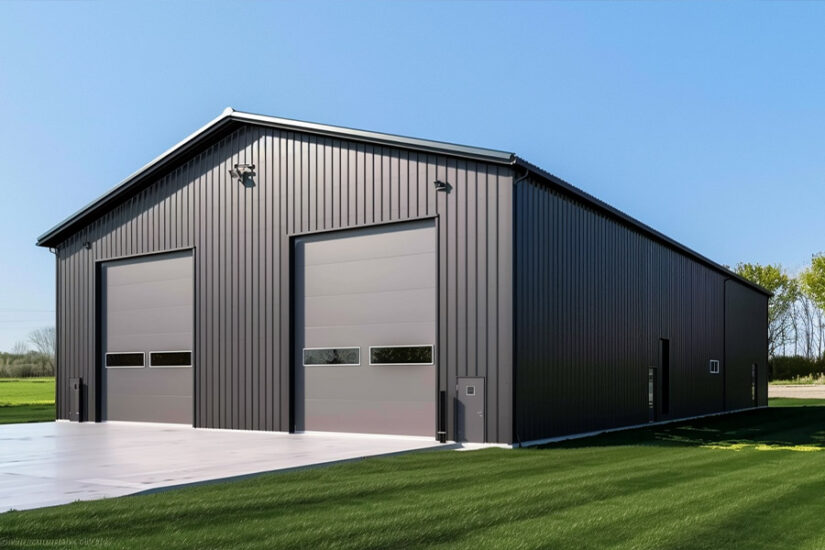
The metallic substrate handles corrosion from the steel side. The factory-applied paint system handles it from the surface – sealing the panel from UV radiation, moisture, and chemical exposure. Three paint systems dominate the market, each representing a different position on the cost-versus-performance curve. None of them is universally right; the best choice depends on your budget, your environment, and how long you need the finish to hold.
Polyester (PE) – the budget option
Polyester coatings are hard, scratch-resistant, and cost-effective. Their limitation is UV durability: expect visible fading and surface chalking within 10 to 15 years in most climates, and sooner in high-UV regions. Warranties typically run 10 years or less for fade and chalk. Polyester is a practical choice for low-visibility agricultural storage – equipment sheds, hay storage, back-of-property buildings – where long-term appearance is not a priority and the budget is the constraint.
Silicone-Modified Polyester (SMP) – the practical middle ground
Adding silicone to polyester resin meaningfully improves UV resistance, gloss retention, and chalk resistance. SMP coatings are also harder than PVDF, which makes them more resistant to scratching and handling damage – a real advantage in working farm environments where panels take regular impact from equipment and activity. Warranties run 10 to 20 years for fade and chalk. For the majority of agricultural buildings, commercial storage facilities, and mid-grade construction where appearance matters but premium longevity is not the primary driver, SMP represents a sound and cost-effective specification.
One technical consideration: the hardness of SMP that makes it scratch-resistant also makes it slightly less flexible. In some cases, micro-fractures can develop at panel bends during manufacturing, creating potential entry points for moisture. Proper fabrication processes minimize this risk, and for most applications it is not a deciding factor – but it is worth understanding when comparing SMP to more flexible systems.
PVDF / Polyvinylidene Fluoride (Kynar 500®) – the long-term investment
PVDF is the premium option, and it earns that position through chemistry. Coatings qualifying as Kynar 500® must contain at least 70% PVDF resin – a fluoropolymer whose molecular bonds are largely transparent to UV radiation rather than absorptive. Where polyester and SMP resins absorb UV energy and gradually break down, PVDF does not degrade in the same way. The practical result is exceptional color and gloss retention over very long service periods.
Buildings finished with PVDF coatings in the 1960s have been documented maintaining their surface integrity decades later. A McElroy Metal installation in Louisiana recorded no visible fading or chalking on PVDF panels after eight years, while SMP panels on the same building showed measurable color shift. Warranties typically run 30 to 40 years for fade and chalk, with additional coverage against chipping, peeling, and cracking. PVDF is also more flexible than SMP, reducing the risk of micro-fractures at panel bends during fabrication.
The premium over SMP at the paint system level is roughly 15 to 35%. For high-visibility buildings, harsh coastal or industrial environments, or any structure where repainting costs would be prohibitive, that premium is typically recovered over a 15 to 20-year period. For a basic farm storage building on a tight budget, it may not be the right call.
Paint System Comparison: PE vs. SMP vs. PVDF
| Factor | Polyester (PE) | SMP | PVDF / Kynar 500® |
| UV & Fade Resistance | Limited | Moderate | Excellent |
| Chalk Resistance | Limited | Good | Excellent |
| Scratch Resistance | Good | Very Good | Good (more flexible) |
| Typical Fade Warranty | 5–10 years | 10–20 years | 30–40 years |
| Cost vs. PE baseline | Baseline | +10–20% | +15–35% |
| Best Environment | Low UV, interior | Most farm / commercial | Coastal, high-UV, industrial |
| Ideal Use Case | Low-visibility storage | Working farm buildings | High-visibility & long-term |
Which Coating System Is Right for Your Building?
The honest answer is that the right coating depends on your specific situation – environment, budget, building use, and how long you expect to own the structure. Here is a practical framework for most common scenarios.
| PE is enough when… | SMP is the smart default when… | PVDF is worth the upgrade when… |
| Budget is the primary constraint Building is low-visibility or back-of-property Moderate climate, inland location Appearance maintenance is acceptable every 10–15 yrs Short-term ownership horizon | Standard farm or agricultural building Equipment storage, hay barns, workshops Moderate to high UV exposure You want solid performance without the PVDF premium 10–20 year ownership horizon | Coastal or high-salt environment High-UV region: Southwest, Gulf Coast, high altitude Building is publicly visible or front-of-property Repainting would be logistically difficult or costly 25+ year ownership horizon Industrial or chemical exposure zone |
Coating Specifications by Environment
Combining the right substrate with the right paint system is where coating performance is really determined. Here are the most common scenarios:
- Inland agricultural / rural: Galvalume substrate with SMP paint covers most farm buildings well. For animal confinement specifically, switch to G-100 galvanized substrate – SMP or PVDF can still be used on exterior-facing surfaces.
- High-humidity / heavy rainfall: Galvalume’s denser aluminum barrier provides better long-term protection than galvanized in persistently wet environments. PVDF adds meaningful additional moisture resistance at the surface level.
- Coastal environments (within 5 miles of saltwater): Salt spray accelerates corrosion of both substrates. Galvalume performs better than galvanized in salt exposure. Specialty coastal PVDF formulations – such as Fluropon® Coastal, which carries a 25-year limited warranty – are the most defensible specification for oceanfront or near-coast locations.
- High-UV regions (Southwest, Gulf Coast, high altitude): SMP fades noticeably within 8 to 10 years at high UV loads. If long-term color retention matters, PVDF is the more cost-effective choice when total life-cycle cost is considered.
- Industrial / chemical exposure zones: PVDF resins resist a wide range of solvents and industrial chemicals where other paint systems degrade. For buildings near processing facilities, feedlots, or areas with airborne chemical exposure, PVDF provides a meaningful performance advantage.
Maintenance That Extends Coating Life
Even the best coating specification performs better with basic maintenance. Simple practices extend coating life and allow early identification of any issues before they develop into structural problems.
- Annual inspection: Walk the perimeter and check cut edges, fasteners, and base trim for any early signs of rust or coating failure. Catching these early keeps repairs simple and inexpensive.
- Touch-up paint: Factory-matched touch-up paint applied promptly to scratches and cut edges stops corrosion before it establishes. Most manufacturers supply touch-up kits with the original building package.
- Wash in coastal and industrial environments: Annual washing removes accumulated salt, sulfur compounds, and debris that concentrate corrosive agents against the coating surface. In mild inland environments, this is less critical.
- Maintain drainage: Standing water at roof seams, around fasteners, and at base trim accelerates corrosion exactly where coatings are most mechanically stressed. Keep gutters clear and ensure the perimeter grades away from the building.
US Patriot Steel: Specified for Your Environment
Every US Patriot Steel building is specified with the substrate and paint system that fits its region and application – not a one-size-fits-all package. We work with galvanized and Galvalume substrates and offer SMP and PVDF paint systems across our full product line. Whether you are building a livestock barn in the Midwest, a storage facility on the Gulf Coast, or a commercial building in the Pacific Northwest, our team will help you specify the right coating combination for your climate, use case, and budget. Request a free quote today.
Conclusion
Corrosion in metal buildings is not inevitable – it is largely a function of how well the coating system is matched to the environment, how carefully the building is detailed at its vulnerable points, and how consistently basic maintenance is performed. A well-specified, well-built steel building with the right substrate and paint system is one of the most durable agricultural or commercial structures you can put on your property. The key is making the right call at the specification stage. At US Patriot Steel, that conversation is part of every project – substrate, paint system, environment, and budget together. Contact us today for a free quote, and let us help you build something that lasts.
FAQ: Anti-Rust Coatings in Metal Buildings
Galvanized steel is coated with pure zinc; Galvalume with an alloy of 55% aluminum, 43.4% zinc, and 1.6% silicon (ASTM A792). Galvalume typically provides longer corrosion resistance in most outdoor environments – 40 to 60+ years versus 20 to 30 for standard galvanized. However, galvanized is the correct substrate for animal confinement buildings, where ammonia from animal waste can react adversely with Galvalume’s aluminum content.
PVDF (Polyvinylidene Fluoride) is a premium fluoropolymer paint resin used in high-performance metal building coatings. To qualify as Kynar 500®, a coating must contain at least 70% PVDF resin. Its molecular structure is largely resistant to UV breakdown, giving it exceptional fade and chalk resistance over decades. Warranties typically run 30 to 40 years – significantly longer than standard polyester or SMP alternatives.
A properly coated and detailed metal building resists corrosion for decades under normal conditions. Rust typically starts at specific weak points: cut edges, fastener penetrations, panel seams, and base trim areas. These are manageable with proper installation detailing and routine maintenance. Galvalume steel under ASTM A792 is rated for 40+ years without perforation in rural environments; galvanized performs well for 20 to 30 years under similar conditions.
It depends on the building. For high-visibility structures, coastal or industrial environments, or any project where repainting would be difficult or expensive, PVDF typically pays for itself over 15 to 20 years. For a basic farm storage building in a moderate inland climate, SMP is often the more practical choice – it delivers solid performance at a lower upfront cost.
G-100 galvanized substrate is the recommended specification for interior surfaces in animal confinement buildings. For exterior-facing surfaces, SMP or PVDF paint can be applied over the galvanized substrate. Avoid Galvalume for any interior surface in direct contact with animal waste and the ammonia it produces.
References
- ASTM A792 — Standard Specification for Steel Sheet, 55% Aluminum-Zinc Alloy-Coated
- McElroy Metal — Galvanized vs. Galvalume: 49+ Years of Field Testing Data
- McElroy Metal — Kynar 500® PVDF vs. SMP: Real-World Performance Data
- Englert — Galvalume vs. Galvanized: Corrosion Resistance and Application Guide
- NFPA — Barn Fire Safety Tip Sheet