
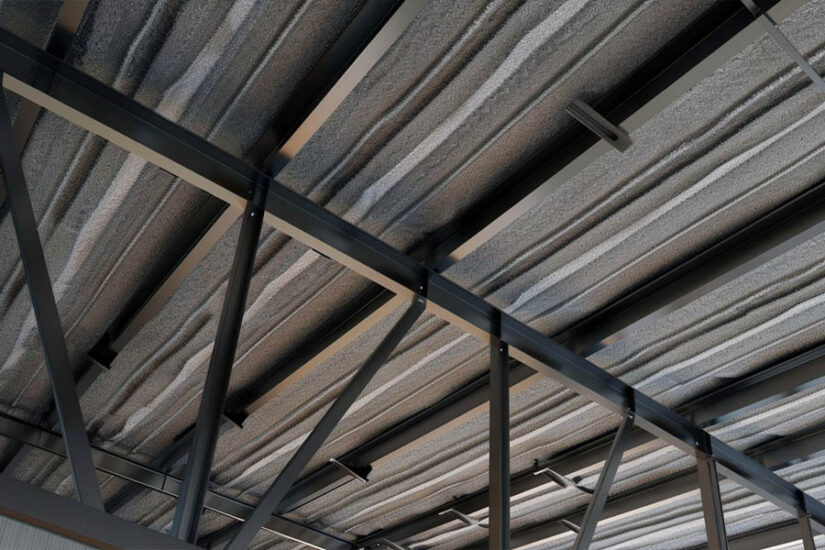

Any moisture on a metal building can lead to rot, mold, or rust. And this isn’t ideal in any case.
Condensation, however, happens when a warm interior environment comes into contact with a cold surface. In turn, you end up with a wet film lining the inside of your metal roof or building. Unfortunately, this can quickly damage the building and potentially any items inside it.
So, let’s take a closer look at what you can do to prevent and stop metal building condensation.
Why Condensation Forms in Metal Buildings
Metal actually conducts temperature really well. This means the building’s surface easily adapts to changes in outside temperature. But this is also why condensation forms in the first place.
As mentioned above, metal roof condensation often happens when warm air meets the cold metal surface. You’ll commonly see this in garages during the spring or fall, workshops with limited airflow, and storage buildings that stay closed for long durations.
Simply put, higher indoor humidity means there is more moisture that can condense. So, should you be worried? And how can you prevent moisture in your metal building?
Why Condensation Is a Problem
At the end of the day, moisture buildup on metal surfaces can lead to mold, rust, and corrosion. This is especially true along any seams or fastener points.
Additionally, any tools, equipment, or vehicles stored inside can be damaged by prolonged or repeated exposure to moisture. On top of this, moisture trapped inside can create an uncomfortable interior atmosphere and even air quality concerns.
While this won’t happen immediately, repeated issues accumulate, making condensation a worthwhile issue to address now rather than later.
Insulation as a Primary Solution
If you’re wondering how to stop condensation in a metal building, the core prevention method is simple: insulation. Insulation ensures the interior temperature doesn’t drop as quickly as the outdoor temperature, which prevents condensation from forming.
Common insulation approaches include:
- Fiberglass
- Rigid boards
- Spray foam
Ultimately, the right choice will depend on your climate and how you use your space. For instance, fiberglass is cost-effective, which is why it’s commonly chosen. Meanwhile, rigid boards tend to fit tighter against walls and roofing. Yet, spray foam offers insulation and sealing all in one go.
It’s always important to do your due diligence and research each one, weighing the pros and cons before committing. However, insulation might not fully solve the condensation problem.
Proper Ventilation and Airflow
When humid air builds up, it still needs somewhere to go. And this is why proper ventilation and airflow are essential to ensuring your metal building or metal roof condensation doesn’t become a bigger problem.
Some great options here may include:
- Ridge vents along the roof peak: These let warm, moist air escape as it rises.
- Wall vents and louvers: These bring in fresh air and keep things circulating.
- Gable vents: These work well in buildings with open peak ends.
Where insulation slows temperature transfer, proper airflow and ventilation remove humid air, preventing it from settling on interior surfaces.
Vapor Barriers and Moisture Control Layers
A vapor barrier is a film or membrane that slows moisture from moving through walls, roofing, or floors before it can reach the metal. It’s usually placed on the warm side of the insulation (often the interior-facing side) and under concrete slabs to block ground moisture from rising through the floor.
In turn, this means moisture can’t reach the cold surfaces, and thus, no condensation will form.
Managing Internal Moisture Sources
Interestingly, sometimes the problem isn’t the outdoor temperature but rather what activities are happening inside the metal structure. For example, driving wet vehicles, washing equipment indoors, running engines without proper ventilation, or storing materials that leak moisture as they dry can increase interior humidity.
Being aware of these activities can help you properly ventilate your space or perform any moisture-causing activities outside your metal building. For instance, this could mean letting your vehicle air out and dry outside.
Choosing the Right Roofing and Building Design
Condensation in a metal garage or building is preventable, starting at the design stage. When planning your construction, keep in mind that the roof pitch can affect airflow, and that your insulation choices (or lack thereof) can also affect whether condensation forms.
When building, it’s important to take your specific climate into account. Particularly humid climates may require more robust ventilation and insulation. A knowledgeable provider, such as US Patriot Steel, can ensure your design is suitable for your specific climate and use.
How to Reduce Condensation in Existing Metal Buildings
If condensation is already a problem, you have a few options, including:
- Adding ventilation
- Improving airflow
- Adding insulation
- Using dehumidification
Generally, the goal is to reduce any surface temperature differences, lower indoor humidity, and give moisture somewhere to go (instead of settling on your metal structure).
Frequently Asked Questions
Yes, this is a common problem, particularly in climates with cold nights and warm days, or in buildings without insulation.
Over time, it can! However, appropriate insulation and ventilation can reduce this risk.
Not always. An open-sided structure in a dry climate may not need it. But for garages, workshops, or buildings with significant temperature swings, insulation is generally worthwhile to avoid issues down the line.
It helps, but works best alongside insulation. Moving humid air out addresses only one part of the problem; slowing the surface temperature helps ensure that condensation and moisture don’t form in the first place (or form very little).
Yes, retrofitting insulation, adding vents, and using dehumidifiers are all viable options post-construction.